
Horse Barding
Full-body armor for the war horse
Names in Other Languages
 마갑한국어
마갑한국어Horse Barding · 군마의 전신 보호 갑옷
 馬鎧日本語
馬鎧日本語軍馬の全身保護甲冑
 馬甲繁體中文
戰馬的全身防護鎧甲
 RossharnischDeutsch
Ganzkörperpanzer für das Streitross
 BardeFrançais
Armure intégrale pour le cheval de guerre
 BardaEspañol
Armadura integral para el caballo de guerra
 BardaPortuguês
Armadura integral para o cavalo de guerra
 Kirys końskiPolski
Pełna zbroja dla konia bojowego
 Конский доспехРусский
Полный доспех для боевого коня
Horse barding is the full-body armor made to guard the warhorse of the medieval European knight, a top-grade piece of war gear famed for craft and cost no less than the knight's own harness. Five parts come together to wrap the horse completely: the chanfron over the head, the crinet over the neck, the peytral over the chest, the flanchard over the flanks, and the crupper over the haunches. It began in the 12th century as a mail trapper laid over a cloth caparison, and by the 15th century a full plate barding of two smooth shells wrapping chest and rump was complete, its weight reaching 30 to 40 kilograms. Together with the knight's own armor it meant that one horse had to carry more than 100 kilograms, so the barding was usually put on only just before battle and stripped off on the march to be carried by another horse. Its price matched a knight's harness, so only the highest nobility could afford it, and so the barding stood as a symbol of both the splendor and the limits of medieval mounted war.
Origin
The origin of horse barding goes back to 12th-century Europe, where it began as a mail trapper laid over a cloth caparison. As plate armor began to cover the knight from the late 14th century, the wish arose to give the horse the same protection, and in the late 15th century, in the time of Maximilian I, the full plate barding reached its height. From the chanfron covering only the head, parts were added in turn for neck, chest, and haunches, until at last a single suit wrapped the whole horse. This growth came from the rising threat of the longbow, the crossbow, and the polearms of the foot soldier, which sought to break the mounted charge, and from the tournament, a ritualized mounted contest that demanded splendor in war gear.
Features
- Full-body protection of chanfron, crinet, peytral, flanchard, and crupper
- Began as mail barding in the 12th century, peaked as plate barding in the 15th
- Total weight of the peak barding reached 30 to 40 kilograms
- Together with the knight's armor the horse bore more than 100 kilograms
- Stripped off on the march and put on only just before battle
- Priced as a knight's harness, owned only by the highest nobility
Stories
Horse barding was the gear that kept the knight's warhorse alive on the field so that the force of the medieval mounted charge could be brought home to the end. The chanfron covered the face and brow that were the first exposed, the crinet covered the long and thick neck, the peytral covered the chest that bore the front of the charge, the flanchard covered the flanks, and the crupper covered the haunches that the foot soldier reached as he was overrun. As the longbow and the crossbow of the foot soldier sought the horse beyond the knight's armor, the barding became urgent, and as the tactic of striking the horse's legs and flanks with the poleaxe and the halberd to bring down the rider took hold, the flanchard that covered the flanks grew. In the tournament, too, the barding was used as part of the ritual of display, dressed with the family arms and a splendid caparison.
Weakness
The greatest weaknesses of horse barding were its weight and its cost. With 30 to 40 kilograms of plate laid on the warhorse's back and the knight's own armor added above it, the horse had to run bearing more than 100 kilograms, and so mobility and stamina fell greatly and a long march was simply not to be borne. The price matched a knight's harness or more, so the common knight often kept only the chanfron, and the full barding was the realm of kings and the highest nobility. From the late 14th century, too, the growth of the longbow and the crossbow and then of firearms began to pierce even thick plate, so the barding could no longer ensure full protection for all its cost, and in the 16th century, with the age of firearms, it lost its place on the battlefield quickly.
Cultural Significance
Horse barding stood as the clearest symbol of the splendor and the standing of the medieval knight. A barding was made with the same craft as a knight's armor, woven in the same workshop with the same arms and the same livery, making rider and horse seem one body to the eye. In the tournament the barding lay at the heart of the ritual of display, with the splendid caparison covered in the family arms, and to own one was itself proof of great wealth and family standing. The Maximilian-era armoring workshops of the Holy Roman Empire raised the bardings of emperors and princes to works of art, and surviving pieces in the Wallace Collection in London, the Royal Armouries in Leeds, and the Kunsthistorisches Museum in Vienna carry their craft to this day.
In Popular Culture
Horse barding appears often as a visual device for the prestige of the knight in Western films, period dramas, and games set in the Middle Ages. The scene of a warhorse dressed in a barding and caparison covered in the family arms bearing a knight with a lance in a tournament is drawn as the very heart of the medieval mounted contest. Fiction often makes the barding too light, however, leaving out the hardship the horse bore under its weight, and exaggerates by drawing every knight as if in full barding. In games the barding is treated as a high-grade piece that raises a knight character's standing, and in some RPGs and strategy games a careful system equips each part of the horse on its own.
Trivia
- The price of a full barding matched a knight's harness or more, so the full piece was in truth the realm of kings and the highest nobility, while the common knight often kept only the chanfron.
- Because a horse could not run for long under the weight of its barding, the barding was carried by a separate packhorse on the march and put on the warhorse only just before battle.
- The story that a knight was so heavy that he had to be hoisted onto his horse by crane is a 19th-century invention; an actual knight in full harness could mount his horse on his own and swing his sword.
Related
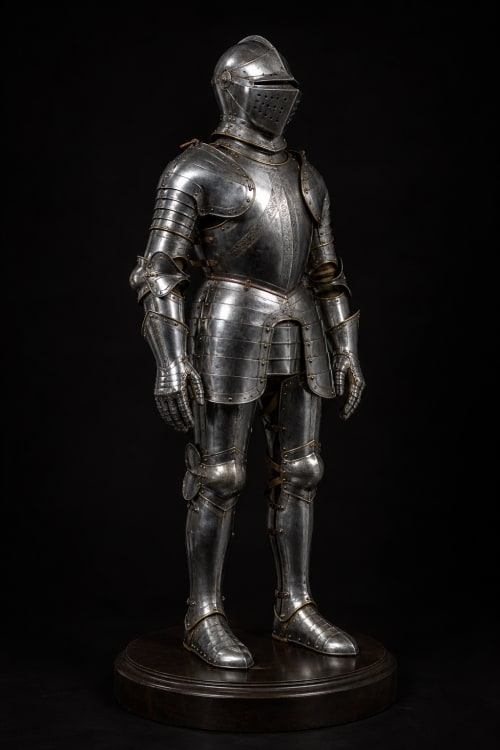
Plate Armor
Full-body steel armor of the medieval knight
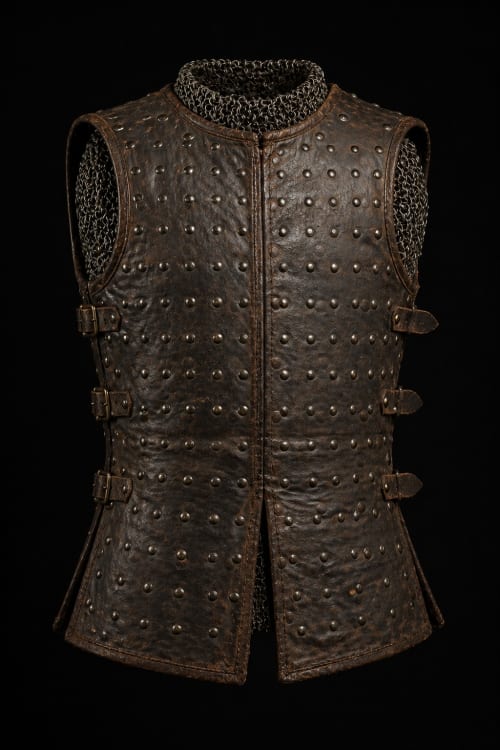
Coat of Plates
Transitional armor with iron plates riveted inside fabric
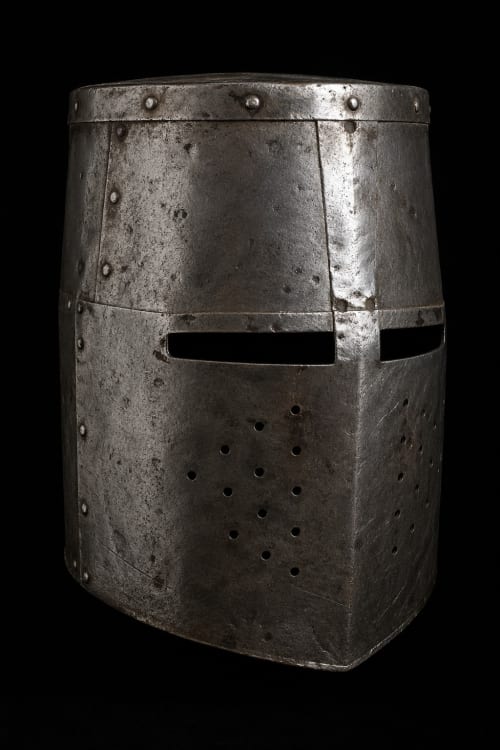
Great Helm
Barrel-shaped helmet enclosing the entire head
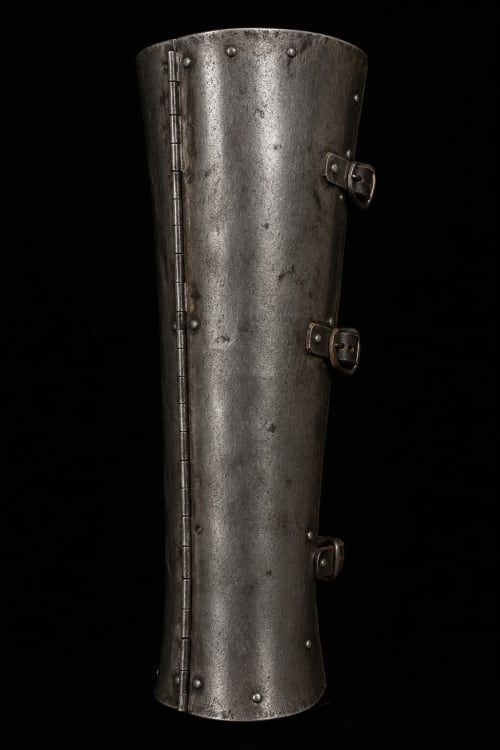
Vambrace
Tubular forearm armor of the medieval knight
Heater Shield
Classic triangular shield of the medieval knight
Gauntlet
Articulated metal glove of the medieval knight
Armet
Close-fitting Italian helmet of the 15th century
Kite Shield
Large kite-shaped shield of the Norman knight
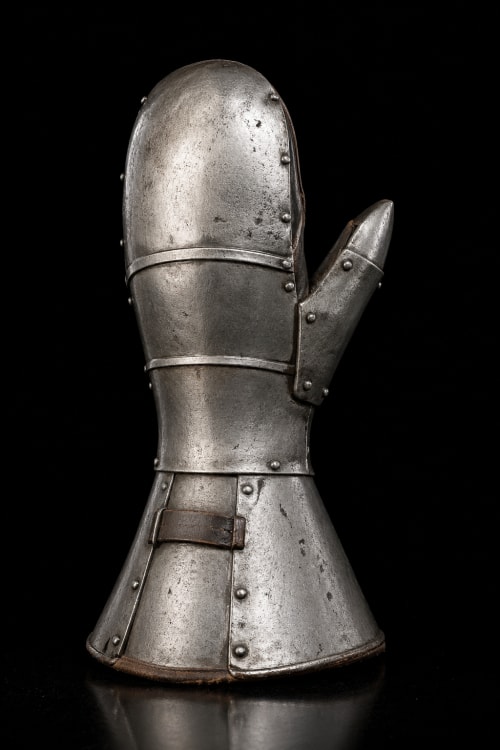
Mitten Gauntlet
Mitten-style metal gauntlet with unified finger shell
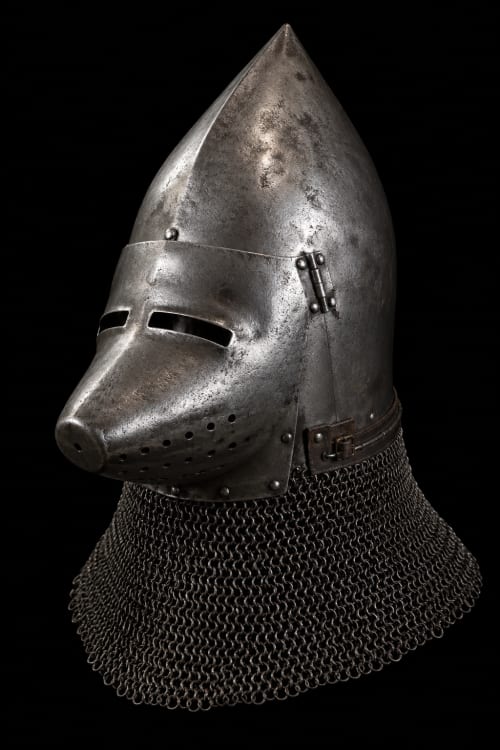
Bascinet
Pointed medieval helmet with detachable visor
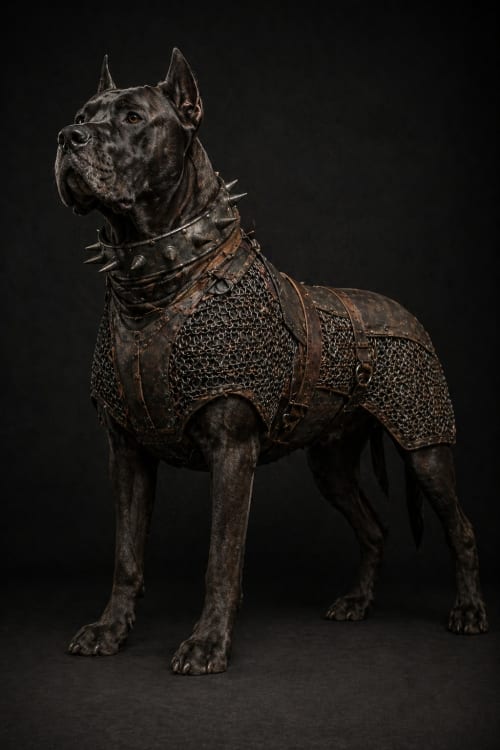
War Dog Armor
Protective armor for military canines
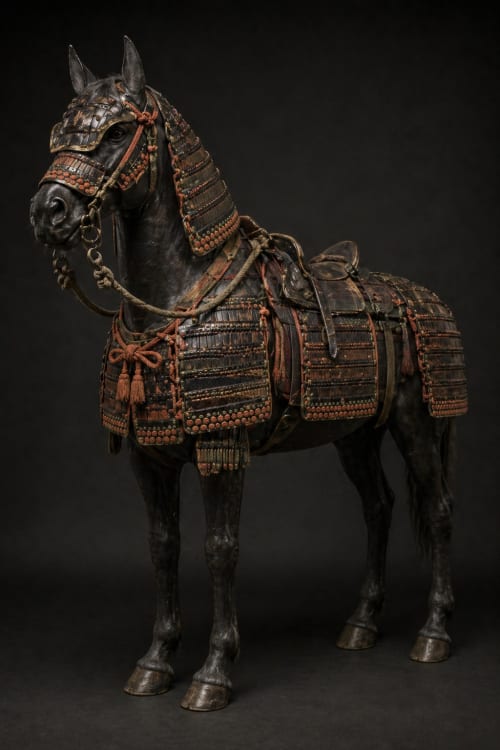
Uma-yoroi
Japanese horse armor of the samurai era