
Great Helm
Barrel-shaped helmet enclosing the entire head
Names in Other Languages
 그레이트 헬름한국어
Great Helm · 머리 전체를 감싸는 원통형 투구
 グレートヘルム日本語
頭部全体を覆う樽型の兜
 大頭盔繁體中文
完全包覆頭部的桶形頭盔
 TopfhelmDeutsch
Tonnenförmiger Helm, der den gesamten Kopf umschließt
 HeaumeFrançais
Casque en forme de tonneau couvrant toute la tête
 YelmoEspañol
Casco en forma de barril que cubre toda la cabeza
 Elmo grandePortuguês
Capacete em forma de barril cobrindo toda a cabeça
 Hełm garnczkowyPolski
Beczkowaty hełm zakrywający całą głowę
 ТопфхельмРусский
Бочкообразный шлем, закрывающий всю голову
The great helm is a fully enclosed European knight’s helmet of the late 12th to 14th century — a cylindrical or bucket-shaped steel canister that encloses the entire head, face, and upper neck. Early versions had a flat top; later ones were rounded or coned into a “sugarloaf” shape to deflect blows. A narrow eye slit (occularium) and a scatter of small breathing holes were the only openings, giving the best protection of its day at the cost of severely limited sight and ventilation. It was not worn against the head directly but pulled over a padded coif, a mail coif, and sometimes a small skullcap (cervelliere), which spread the shock of a blow. Iconic of the crusader and the 13th-century heavy horseman, it was the heavy, solid “battle canister” donned just before the mounted charge.
Origin
The great helm grew out of the nasal helm — which guarded only the nose — and the enclosed helm with its added faceplate, fused into a closed form covering the whole head. Around 1180–1220 the faceplate steadily grew until the cylindrical shape set, and the helm reached its height in the 13th century. The rounded “sugarloaf” form appeared in the late 13th and 14th centuries to shed blows more effectively. German speakers called it the Topfhelm (“pot helm”), and the later bucket form the Kübelhelm. In the 14th century it was eclipsed for field use by the more open-sighted bascinet, and its lineage continued in the jousting-only “frog-mouth” helm (Stechhelm).
Features
- Cylindrical/bucket steel enclosure covering head, face, and upper neck
- Flat-topped early form, later sugarloaf (coned) top to deflect blows
- Narrow eye slit (occularium) and scattered small breathing holes
- Worn over a padded coif, mail coif, and sometimes a cervelliere
- Heraldic crest mounted on the crown for identification
- Weight roughly 2.5–4 kg; jousting versions heavier still
Stories
Because of its weight and stifling closeness, knights usually kept it off on the march and in camp, donning it only just before the mounted charge or a serious clash and wearing only the cervelliere or bascinet beneath until then. In the instant of the couched-lance charge, the canister enclosing the whole face was the last barrier against an oncoming lance point or blade. It was standard kit on 13th-century crusader battlefields and at tournaments across Europe, and in the chaos of a broken line — where its blindness became a liability — it was often pulled off or pushed back at once.
Weakness
Its gravest weakness was drastically restricted sight and air. The narrow slit left the flanks and the ground almost invisible, leaving a knight defenseless against a side blow or a fall from the saddle, and the few small holes made breathing so poor that hard fighting brought on heat and oxygen starvation. The whole canister rested on a single point above the head, concentrating load on the neck and shoulders, and being hard to remove it was lethal in water or fire. These flaws became decisive with the arrival of the visored bascinet in the 14th century.
Cultural Significance
By hiding the face completely, the great helm paradoxically drove the explosion of heraldry. With the face unseen, the shield, the surcoat, and the three-dimensional crest atop the helm stood in for identity — and to this day a Western coat of arms is drawn as a shield surmounted by a helm bearing a crest. The funeral achievements of Edward the Black Prince of England — helm, crest, shield, and gauntlets — survive in Canterbury Cathedral and preserve that image. The helm became the visual emblem of the crusading knight and of medieval chivalry, and the archetype for the bucket-shaped “knight’s helmet” we still picture today.
In Popular Culture
The enclosed cylindrical helm has hardened into the visual sign of the “medieval knight” and appears in countless games and films. The Mount & Blade series features it directly as the top-tier “Great Helmet,” the bucket helms of Dark Souls and Elden Ring and the knight-faction designs of For Honor all echo the great-helm family, and in tabletop RPGs and miniature wargames it is the standard helmet of the medieval knight figure. On screen it is a fixture of crusader and medieval war films such as Kingdom of Heaven, and a target of parody in Monty Python and the Holy Grail.
Trivia
- A complete set of funeral achievements of Edward the Black Prince (d. 1376) — a great helm with a lion crest, a shield, and gauntlets — hangs above his tomb in Canterbury Cathedral, a rare survival of genuine 14th-century equipment.
- Once the face was hidden, the crest atop the helm became the only means of identification, and this hardened into the heraldic convention of placing a helm and crest above the shield in a coat of arms.
- The jousting descendant, the “frog-mouth” helm (Stechhelm), was designed so the eye slit lined up with the eyes only while the rider leaned forward into the lance; on impact the head snapped back, raising the slit above the eyes and shielding them from splinters.
Related
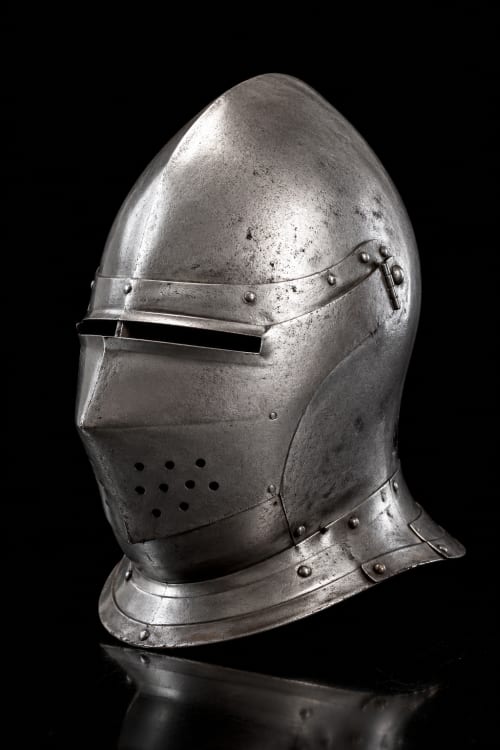
Armet
Close-fitting Italian helmet of the 15th century
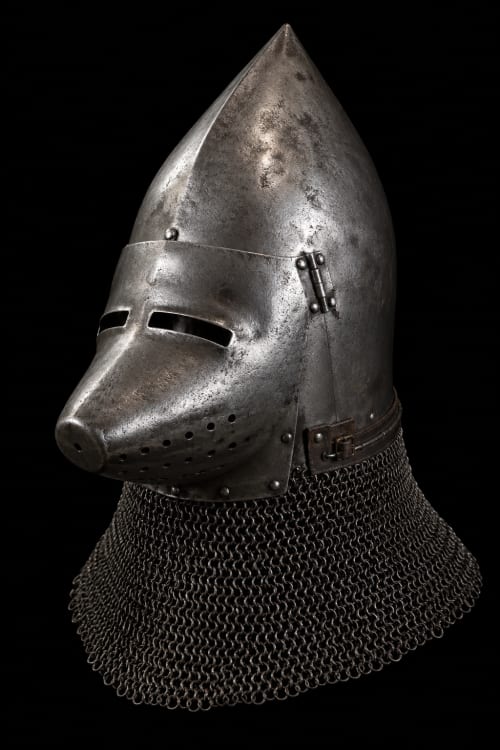
Bascinet
Pointed medieval helmet with detachable visor
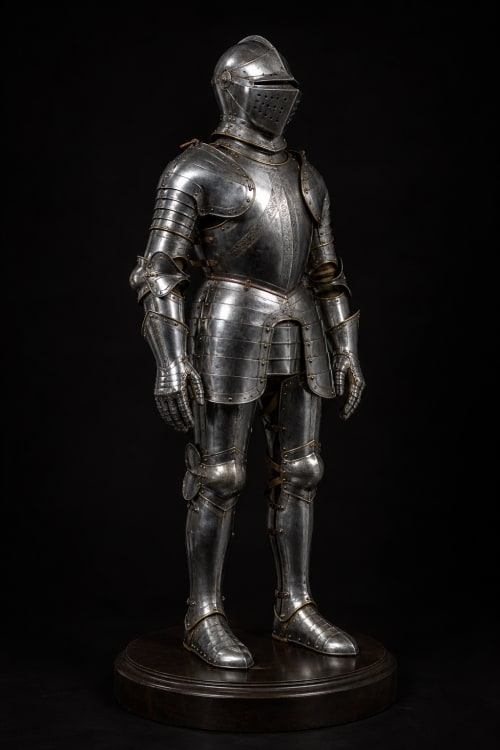
Plate Armor
Full-body steel armor of the medieval knight
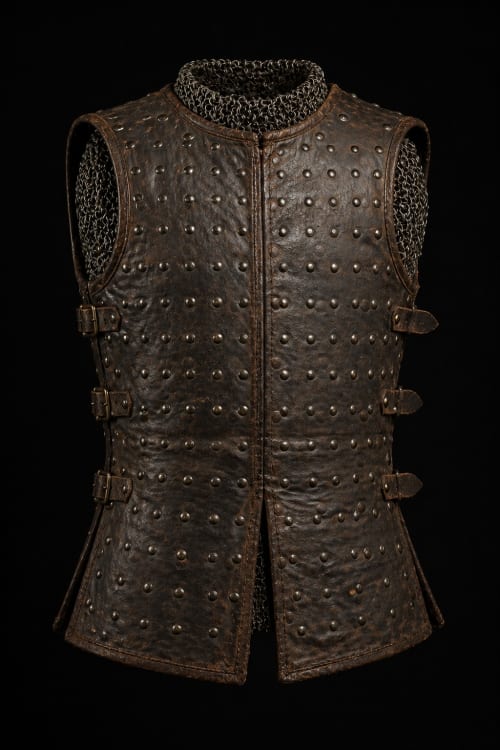
Coat of Plates
Transitional armor with iron plates riveted inside fabric
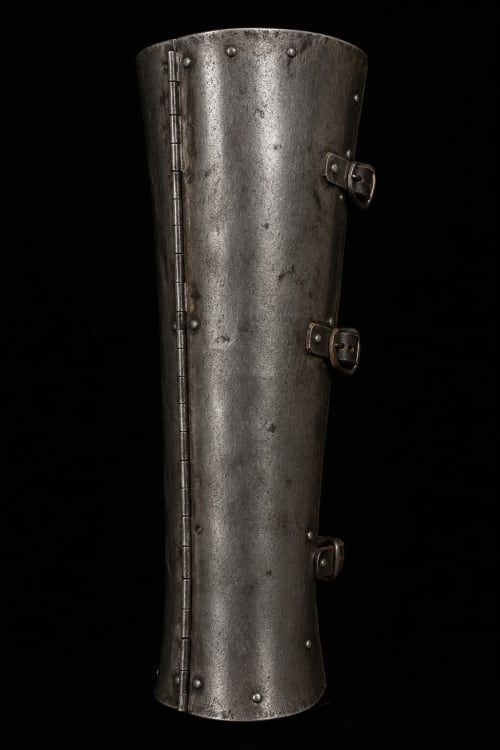
Vambrace
Tubular forearm armor of the medieval knight
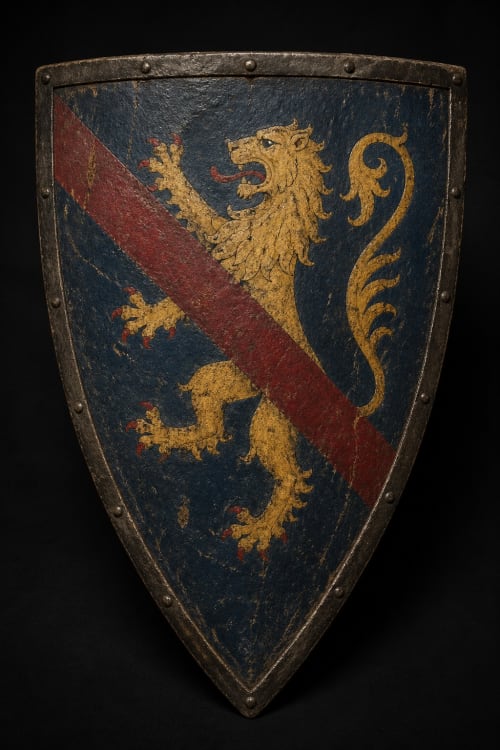
Heater Shield
Classic triangular shield of the medieval knight
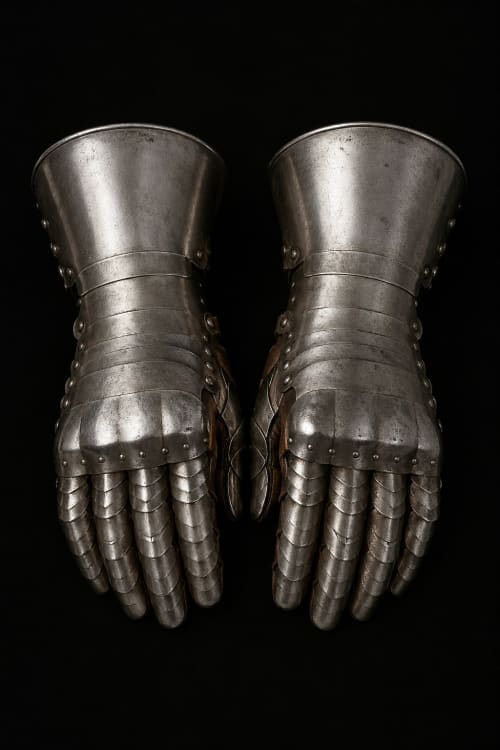
Gauntlet
Articulated metal glove of the medieval knight
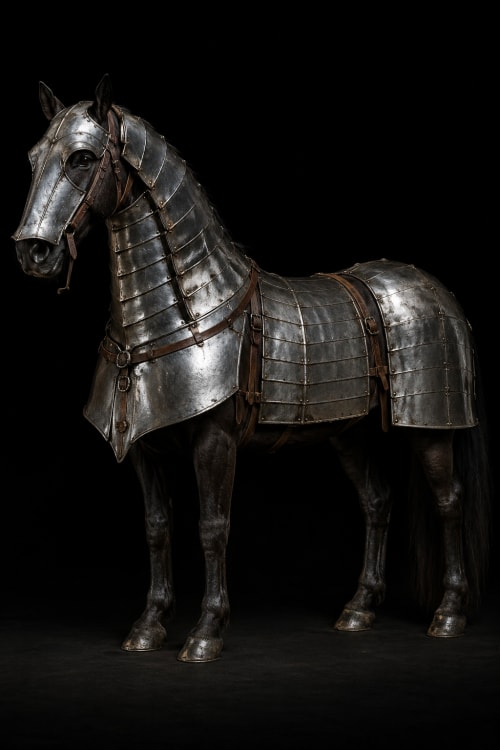
Horse Barding
Full-body armor for the war horse
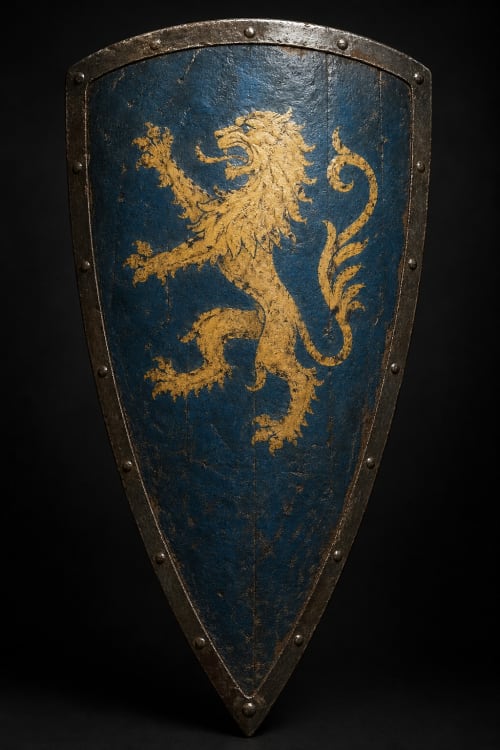
Kite Shield
Large kite-shaped shield of the Norman knight
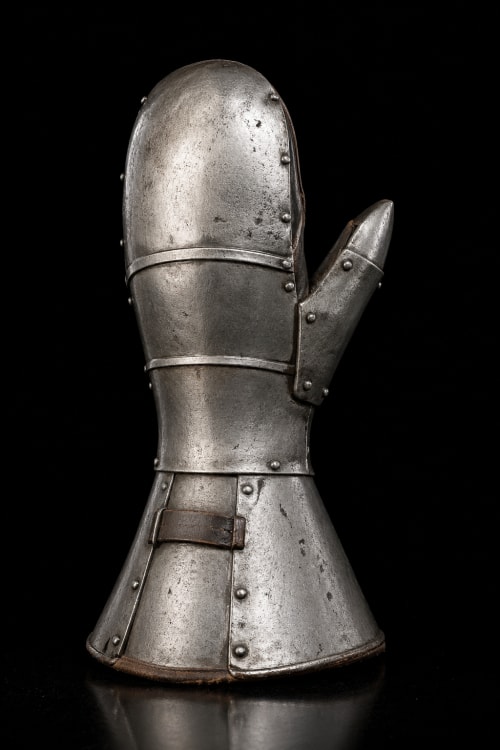
Mitten Gauntlet
Mitten-style metal gauntlet with unified finger shell
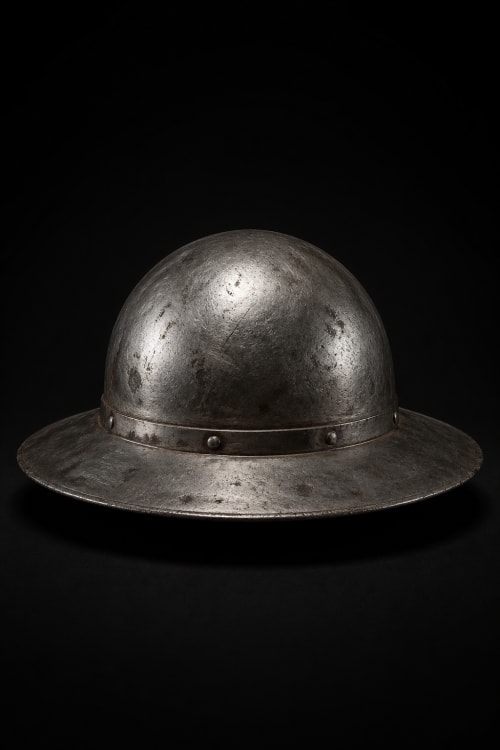
Kettle Hat
Broad-brimmed infantry helmet shaped like an inverted pot
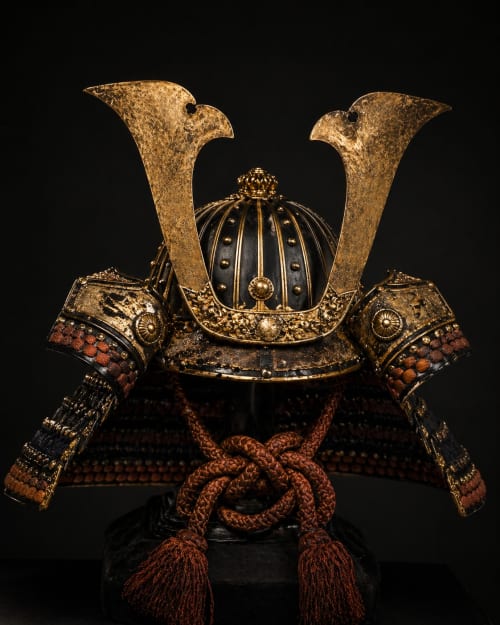
Kabuto
Traditional helmet of the Japanese samurai