LoreArc

Nature

12 items tagged with "Nature"

🐉Spirits(3)
hamadryad
📸 2

Hamadryad

Intermediate

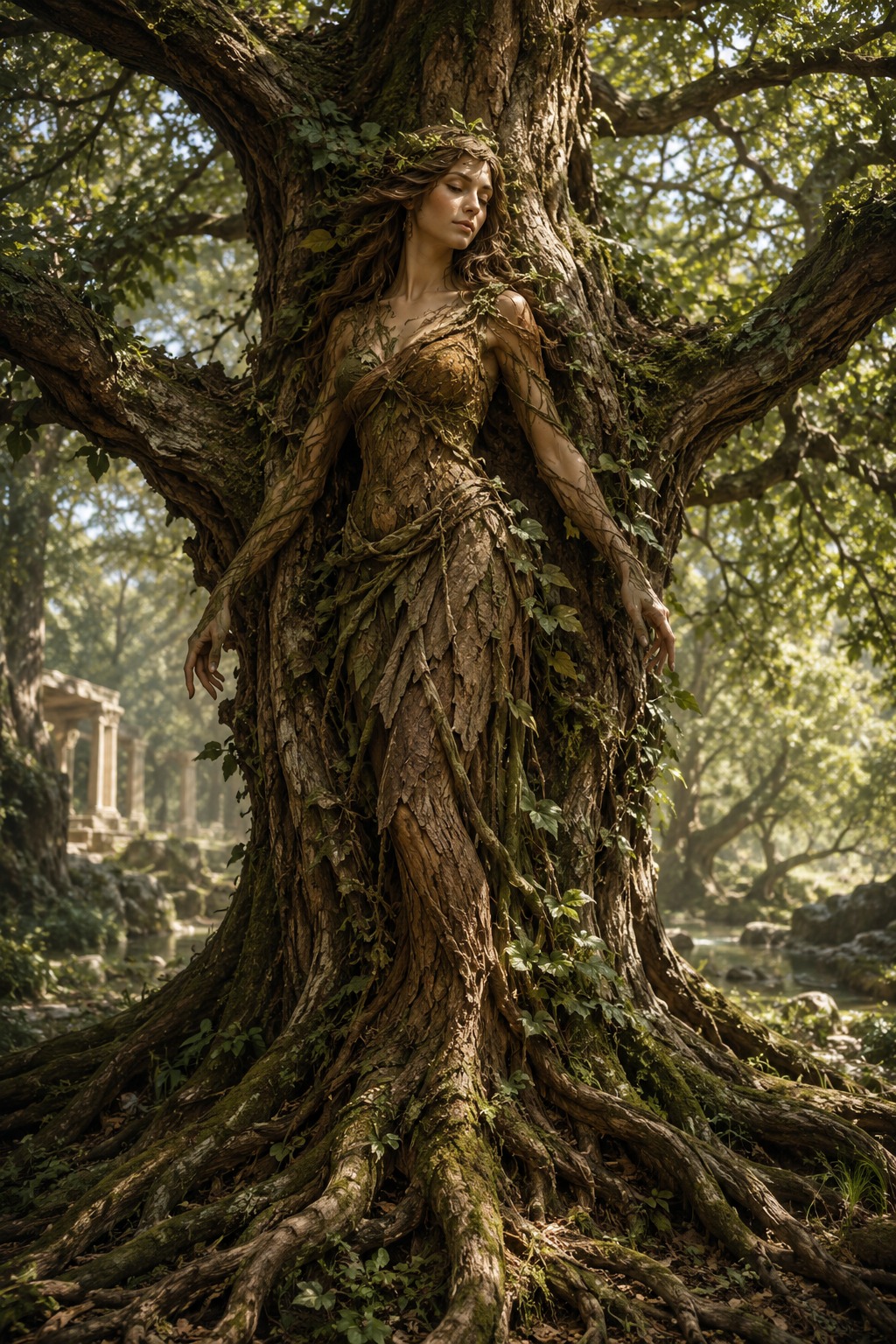
Greek Tree Spirit Bound to a Single Tree

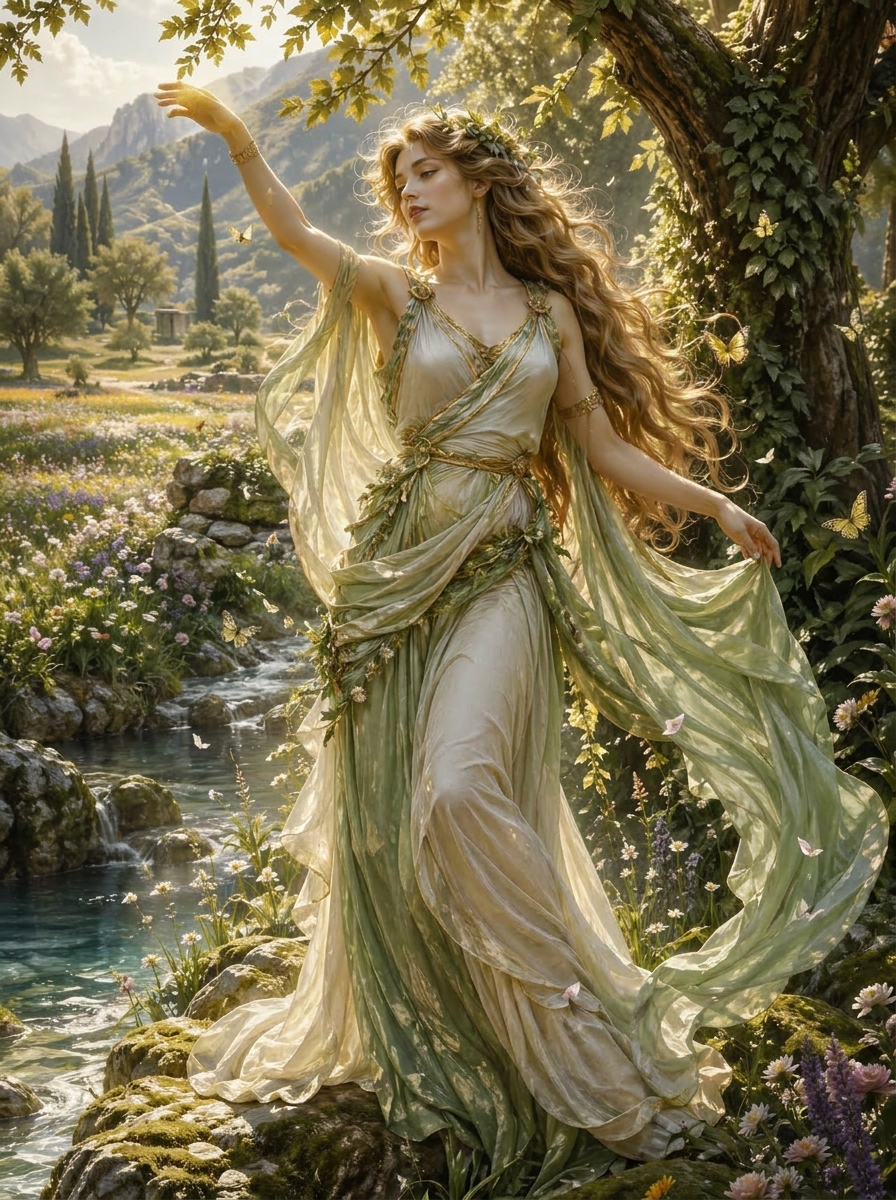
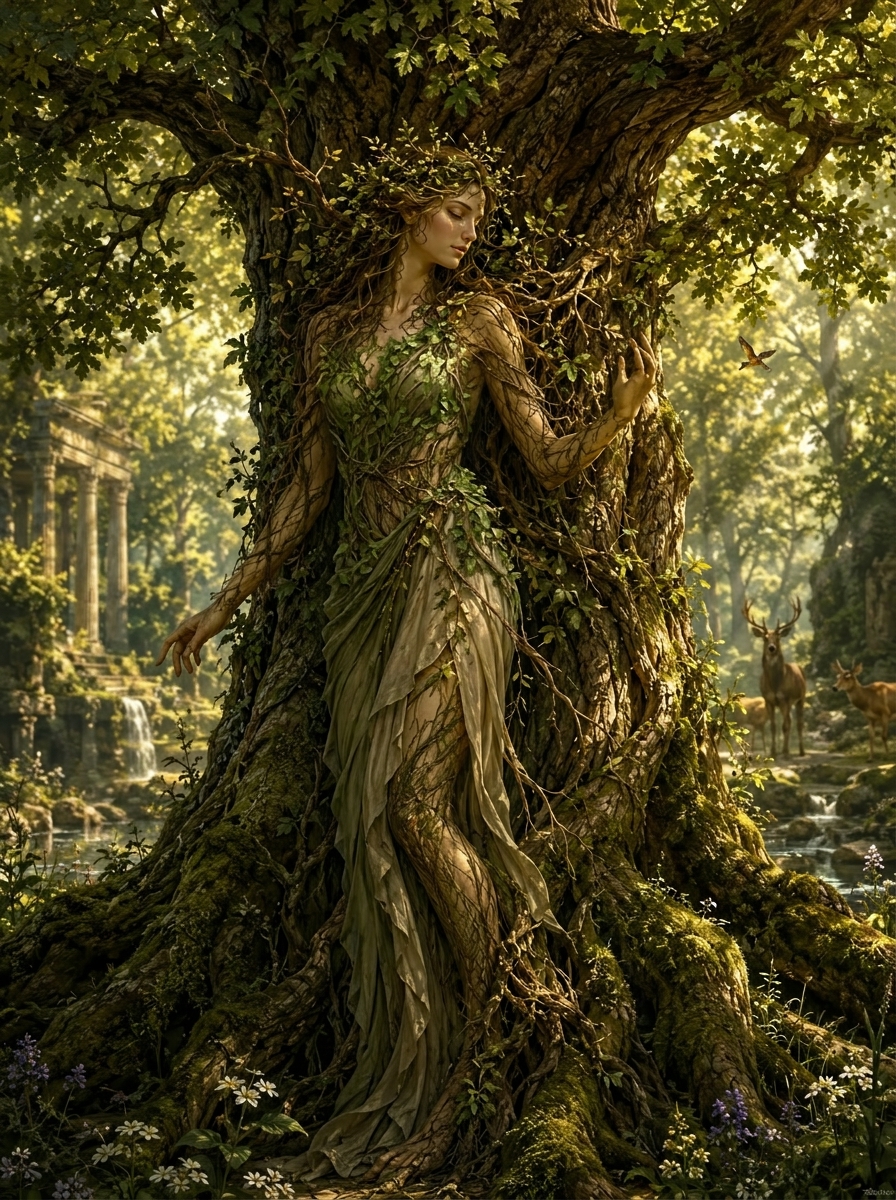
The Hamadryad (Greek Hamadryas, plural Hamadryades, English Hamadryad) is the canonical tree-spirit iconography of Greek mythology — unlike the general Dryad, permanently bound to a single specific tree — sharing the lifespan and fate of that tree as the decisive canon. The etymology is the compound of the Greek hama ('with, together') and drys ('oak, tree'), meaning 'with the tree' — the decisive canonical vocabulary — and while the general Dryad (Dryas) is a free spirit dwelling in all trees, the Hamadryad is the decisive adaptation canon permanently bound to a single tree. The decisive textual canon is the fragmentary canon of the Precepts of Chiron of the c. 700 BCE Greek poet Hesiod (Hesiodos) — quoted by the c. 1st-century Greek writer Plutarch (Ploutarchos) in Chapter 11 of On the Decay of Oracles (De Defectu Oraculorum) — that the Hamadryad's lifespan equals nine generations of crows (about 9 years times 9 equals 81 years), and the canon of lines 476-485 of Book 2 of the Argonautica (Argonautika) of the 4th-3rd-century-BCE Alexandrian poet Apollonius Rhodius (Apollonios Rhodios, 295-215 BCE) — in which the Phrygian shepherd Laelaps does not cut down the Hamadryad's oak, and the Hamadryad blesses him — is the decisive canon. The decisive Latin-literary canon is the canon of lines 738-878 of Book 8 of the Metamorphoses of the Roman poet Ovid (Publius Ovidius Naso, 43 BCE - 17 CE) of c. 8 CE — the decisive canonical tragedy in which the Thessalian king Erysichthon (Erysichthon) cuts down a great oak of Demeter's sacred grove and kills the Hamadryad, and Demeter sends the spirit of hunger Limos (Limos) to punish him with eternal hunger so that he ultimately eats himself.

🐉Humanoids(6)
satyr

Satyr

Satyr · The Half-Beast — Forest Folk of Wine, Music, and Revelry

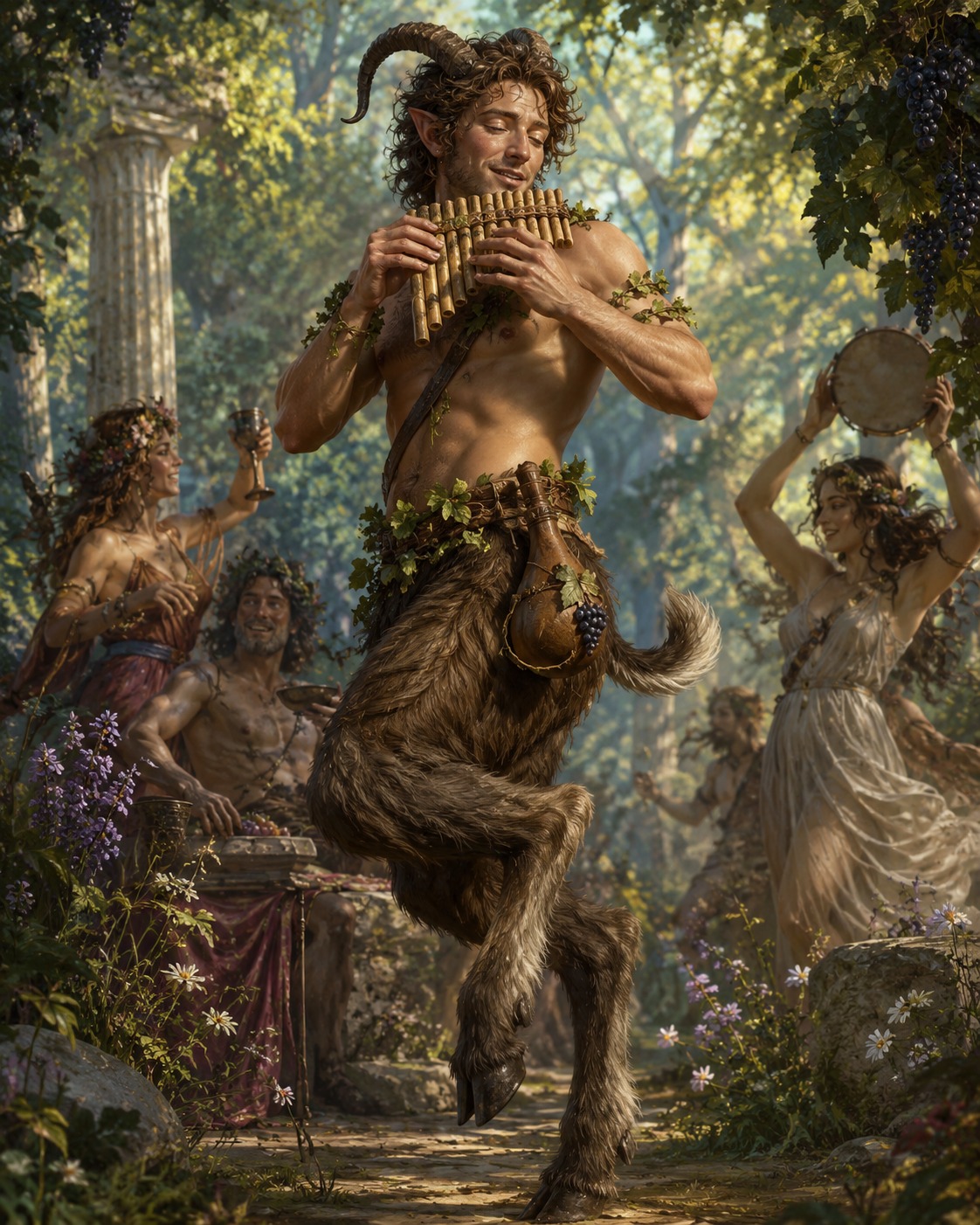
The satyr (ancient Greek Σάτυρος, Latin satyrus) is a half-human, half-beast nature spirit of Greek mythology, the riotous follower of the god of wine and madness Dionysos. The earliest attestations are in Hesiod's 'Catalogue of Women' fragment 10 (c. 700 BCE, which calls them 'a useless mischievous race') and the Homeric Hymn to Pan (number 19, late seventh century BCE); the visual canon is fixed in Attic black- and red-figure pottery of the sixth and fifth centuries BCE, with the François Vase (Ergotimos and Kleitias, c. 570-560 BCE, National Archaeological Museum of Florence) and the Brygos Cup (c. 480 BCE, British Museum) as the standard sources. The earliest Greek satyr was originally a horse-tailed, horse-eared theriomorph, but in the Hellenistic period (late fourth century BCE) the satyr fused with the Roman Faunus (a forest and pastoral god from the cult of Numa Pompilius) and the goat-legged, horned, goat-tailed iconography came to prevail. In the fifth-edition Dungeons & Dragons 'Mythic Odysseys of Theros' (Wizards of the Coast, 2020), satyrs stand 150 to 180 centimetres tall, with a human upper body, hoofed goat legs, short curled horns, a short goat tail and a wild curly head of hair and beard on the human portion. Racial traits are +2 Charisma, +1 Dexterity, Magic Resistance (advantage on saving throws against magic), Mirthful Leaps (double jump distance) and the signature Reveler trait that lets them play a syrinx or aulos with charm and fascination effects. They live in herds in woodlands and fields, accompanying the maenads in the Dionysian thiasos. The iconography is carried into the Renaissance through Botticelli's 'Venus and Mars' (1483, National Gallery, London) and Michelangelo's 'Bacchus' (1497, Bargello Museum, Florence), through Debussy's 'Prelude to the Afternoon of a Faun' (1894), Disney's 'Fantasia' (1940), and Mr. Tumnus in C.S. Lewis's 'The Lion, the Witch and the Wardrobe' (1950).
yaksha

Yaksha

Yaksha · Nature Spirit of India and Buddhism — A Two-Faced Spirit Guarding Treasure

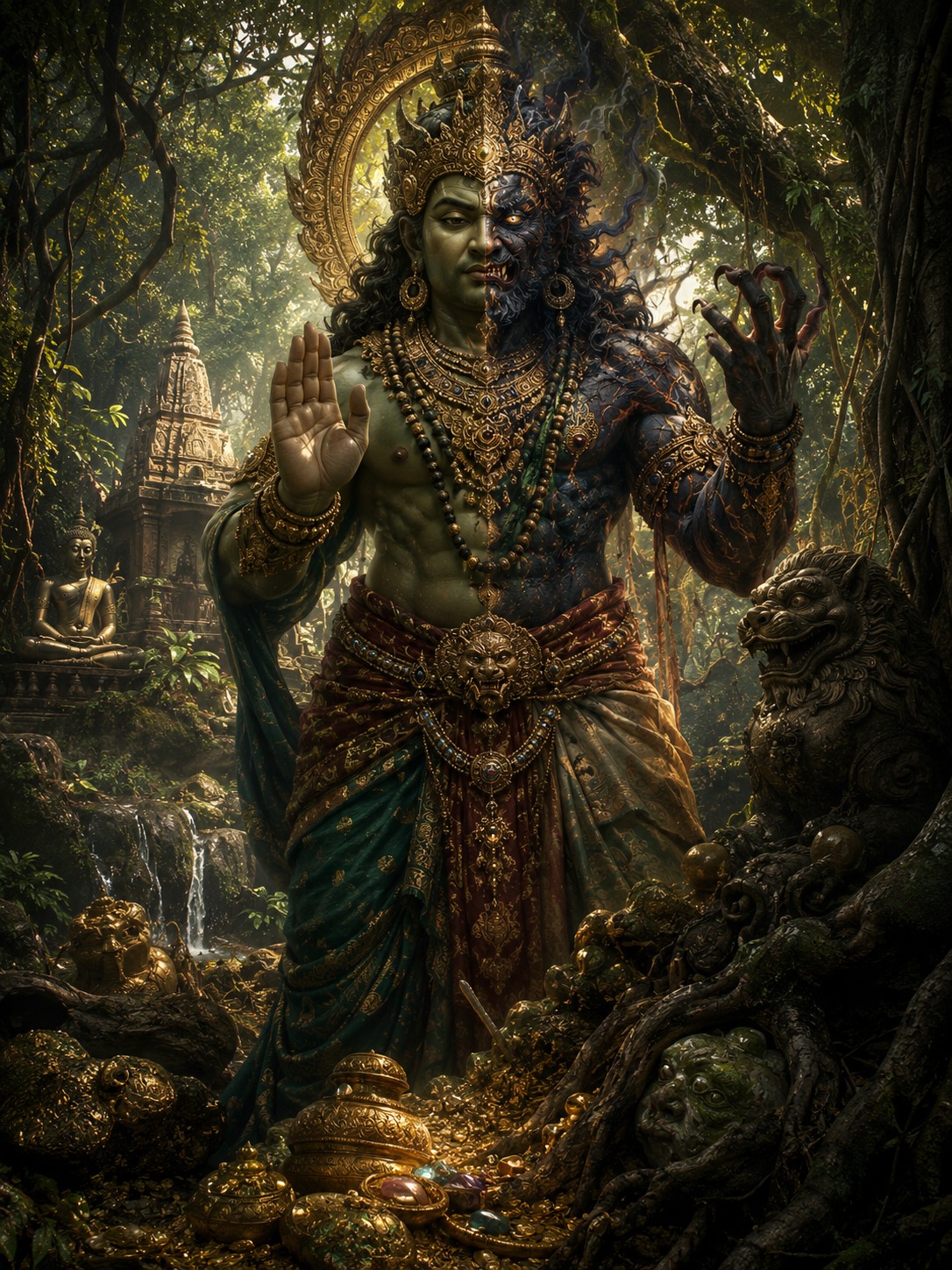
The Yaksha (Sanskrit Yakṣa; Pali Yakkha) is the canonical iconographic figure of an ambivalent spirit, originating in ancient Indian nature-and-treasure spirit belief, absorbed into both Hinduism and Buddhism, and transmitted to East Asia. The Yaksha is the guardian of forests, trees, ponds, and underground treasure, an attendant of the wealth-god Kubera (Sanskrit Kubera), both a benevolent guardian deity granting abundance and fertility, and a fierce demon that devours humans. The decisive textual canon is the Yakṣa Praśna (the Yaksha's Questions) of the Vana Parva (Book of the Forest) of the Mahabharata, compiled between the fifth and third centuries BC — in which the eldest of the Pandava brothers, Yudhishthira, answers the questions of a Yaksha (revealed to be the god of justice, Dharma, in disguise) and revives his slain brothers — establishing the decisive canon of Yaksha iconography. The Yaksha and Yakṣī reliefs of the Bharhut stupa in Madhya Pradesh, India, of the second to first century BC — the oldest extant Yaksha visual canon — are the iconographic canon. After the transmission of Buddhism, the Yaksha was canonised as one class of the Eight Legions (Aṣṭasena) attendant on Vaiśravaṇa (the Buddhist identification of Kubera), and the character Xiao of miHoYo's video game Genshin Impact, released in September 2020 — as the sole surviving Yaksha of the Seven Yakshas of Liyue — settled the twenty-first-century global gaming canon.

🌿Materials(1)