
Morion
Crested open helmet of the Spanish conquistadors
Names in Other Languages
 모리온한국어
Morion · 스페인 정복자의 볏 달린 투구
 モリオン日本語
16世紀スペイン発祥の鶏冠型兜
 莫里翁盔繁體中文
16世紀源自西班牙的雞冠形頭盔
 MorionDeutsch
Spanischer Kammhelm des 16. Jahrhunderts
 MorionFrançais
Casque à crête espagnol du 16e siècle
 MorriónEspañol
Casco con cresta de origen español del siglo XVI
 MoriãoPortuguês
Capacete com crista de origem espanhola do século XVI
 MorionPolski
Hiszpański hełm z grzebieniem z XVI wieku
 МорионРусский
Испанский гребенчатый шлем XVI века
The morion (Spanish morrion) is the open helmet that grew up in 16th- and 17th-century Europe, and its mark is the high comb that rises down the middle of the skull and the broad brim that comes to a point at front and back. The face is wholly open, so that sight, breath, and hearing are far better than under a closed helmet, and the helmet suited the long marches and field labor of the 16th-century army. The high middle comb is not mere decoration but a piece of structural reinforcement that turned aside the downward blow of a sword or a flail, and the broad brim covered the shoulder and neck against arrows and stones dropping from above. Its simple form let it be beaten out in large numbers, and so it became the standard headgear of the Spanish tercio, and through the colonial garrisons of the New World and the guards of court in Europe it passed on, until even today the Pontifical Swiss Guard at the Vatican wears the polished morion as part of its ceremonial.
Origin
The origin of the morion lies in early 16th-century Castile, and its name is most often held to have come from the Spanish morro, a rounded head or a knoll, though the trace of its origin has not been settled into a single line in scholarship. It began in the lower-combed form called the cabasset and about the 1540s the comb morion, with its thick middle comb raised high, took root and soon became standard among the Spanish and Holy Roman armies. It is often said that the conquistadors of Cortes (1519-1521, Mexico) and Pizarro (1532, Peru) wore this helmet in their conquests, but the conquistadors of that time actually wore the broad-brimmed kettle hat and the sallet of the earlier 15th century, and the high-combed morion as we picture it became common only from the middle of the 16th century, a generation later. So the morion is more truly the helmet of the Coronado expedition into North America (1540-1542) and of the tercio of Philip II's age than of the conquest of Mexico and Peru themselves.
Features
- High comb rising down the middle of the skull and a broad brim pointed at front and back
- Wholly open face giving good sight, breath, and hearing
- The standard helmet of the Spanish tercio infantry
- The middle comb as reinforcement that turned the downward blow aside
- The broad brim that covered shoulder and neck against arrows, stones, and falling things
- A simple form fit for beating out in large numbers
Stories
The morion was the commonest headgear of the European infantry of the 16th and 17th centuries, and within that field it held its most marked place among the Spanish tercio. In the tercio, in which pikemen with the long pike and shooters with the arquebus and the musket made one unit, the pikeman placed the comb morion on his head along with breast and back plate, ready for the head-on clash and for the downward blow, and the shooter wore the same morion or its variant the cabasset, with its smaller brim, to keep sight and hearing alive. From the 1540s in the New World, Coronado's expedition into North America and the later conquering parties in Chile and Peru wore this helmet, and the colonial garrisons of the Caribbean kept the morion until the early 18th century. In Europe itself, as the Thirty Years' War wore on in the mid-17th century, the morion gave way in the field to the round-brimmed beaver hat and the casquet, and it took on the new role of ceremonial headgear for the guards of court and the palace watch.
Weakness
The greatest weakness of the morion was that the face stood wholly bare. With no visor set to keep sight and breath alive, it gave almost no protection against arrows, bullets, sword points, and spear points coming from the front. The brim turned a blow falling from above, but a cut driving deep from the side had its limit, and the man had to lean on the thick leather collar and the coif within for the rest. By the 1540s, when the comb morion took root, no helmet could fully stop the front bullet of the arquebus anyhow, but a face wholly open did make a slanting musket ball harder to deflect, and easy to pierce straight through. In the end, from the mid- to late 17th century, as the light beaver hat replaced the common infantryman's headgear, the morion vanished from the field and remained only in the seat of ceremony.
Cultural Significance
The morion was more than a piece of headgear: it became an icon of the age of European overlordship and the conquest of the New World in the 16th and 17th centuries. In the paintings of Diego Velazquez and in the later history paintings, the conquistador and the tercio infantryman were drawn almost without fail with the polished comb morion on the head, and this impression set the form of conquistador equals morion that holds firm to this day. The Pontifical Swiss Guard, founded by Pope Julius II in 1506, took up the morion as part of its ceremonial dress as it formed in the 16th century, and to this day the polished morion borne by them in the Vatican is the best-known living face of the morion. The Kunsthistorisches Museum in Vienna, the Residenz armory of Munich, the Royal Armoury in Madrid, and the Royal Armouries in Leeds hold many splendid 16th- and 17th-century morions that carry on their craft.
In Popular Culture
The morion appears almost without exception in films, period dramas, and games about the conquest of the New World and 16th- and 17th-century Spain. The polished morion of the Spanish conquerors making their way down the Peruvian jungle in Aguirre, the Wrath of God (1972) is one of the most striking visual signs, and the morion seen briefly at the close of Mel Gibson's Apocalypto (2006) bears a like weight. Strategy games such as Age of Empires II, Empire: Total War, and Europa Universalis IV set the morion everywhere as the mark of the Spanish army, and Assassin's Creed II and Assassin's Creed IV: Black Flag often draw it as the headgear of 16th- and 17th-century Spanish guards. Films often draw the morion, however, as if it were worn even in Cortes's day in 1519, and so often miss the gap of a generation in history.
Trivia
- The name of the morion is most often held to have come from the Spanish morro, a rounded head or a knoll, but the trace of its origin has not been settled into a single line in scholarship.
- It is often said that the early conquerors of the New World, Cortes (1519-1521) and Pizarro (1532), wore this helmet, but the conquistadors of that time wore the older kettle hat and sallet, and the high-combed morion took root only from the 1540s onward.
- The Pontifical Swiss Guard, founded by Pope Julius II in 1506 and unbroken to this day, keeps the polished morion as part of its ceremonial, so that the Vatican is one of the rare places where a 16th-century helmet remains in living service.
Related
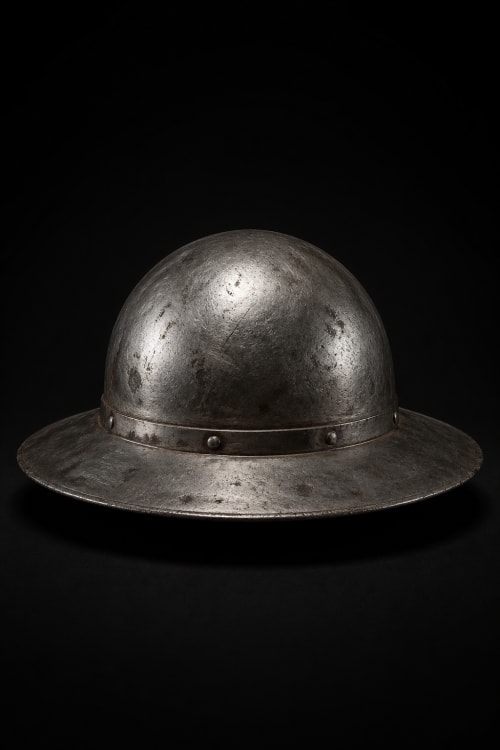
Kettle Hat
Broad-brimmed infantry helmet shaped like an inverted pot
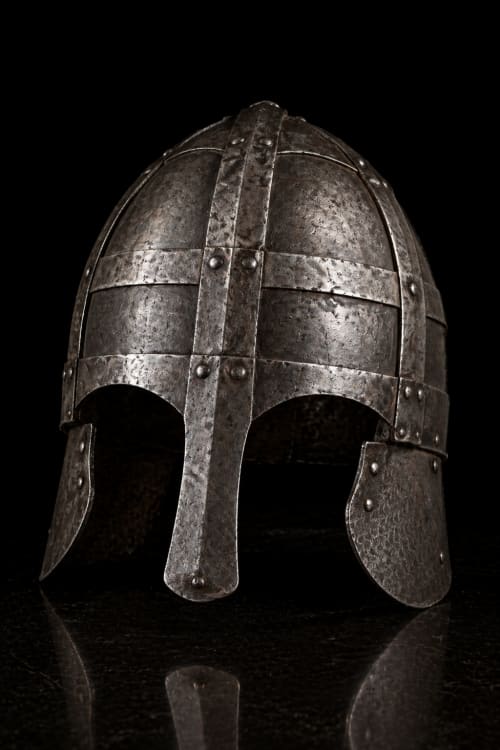
Spangenhelm
Framework helmet of crossed metal bands

Brigandine
Armor of small iron plates riveted between fabric layers
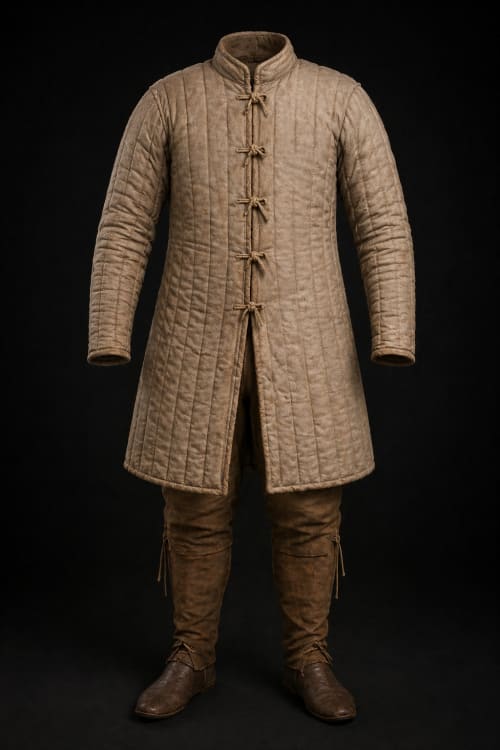
Gambeson
Quilted padded defensive garment
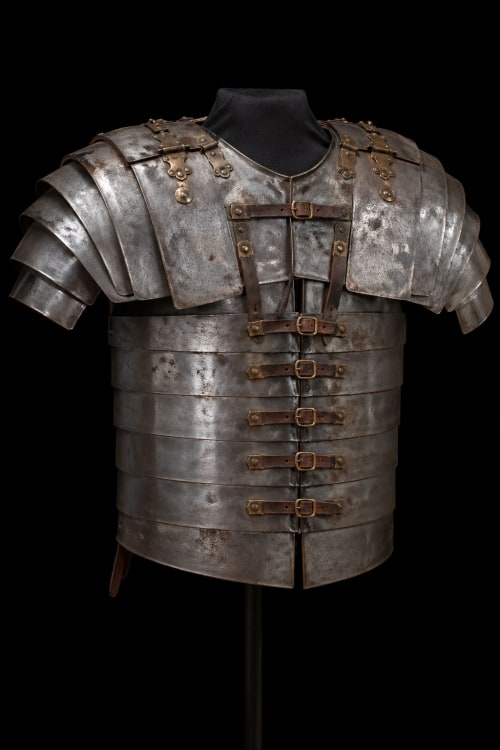
Lorica Segmentata
Segmented plate armor of the Roman legions
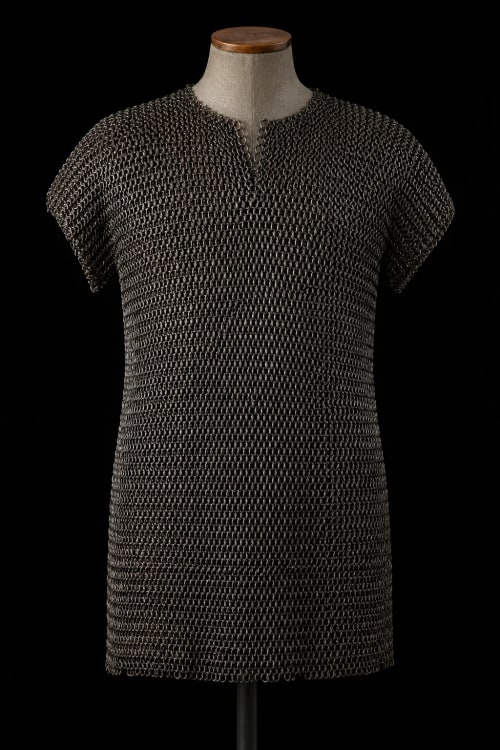
Chainmail
Flexible armor of interlocked metal rings
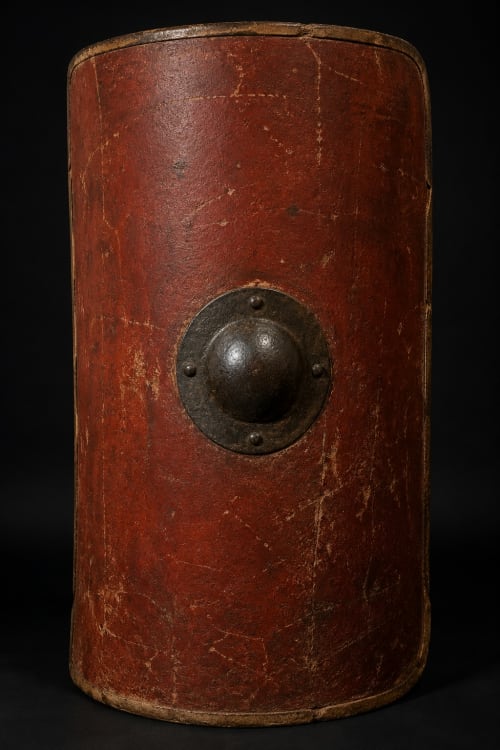
Scutum
Curved rectangular shield of the Roman legions
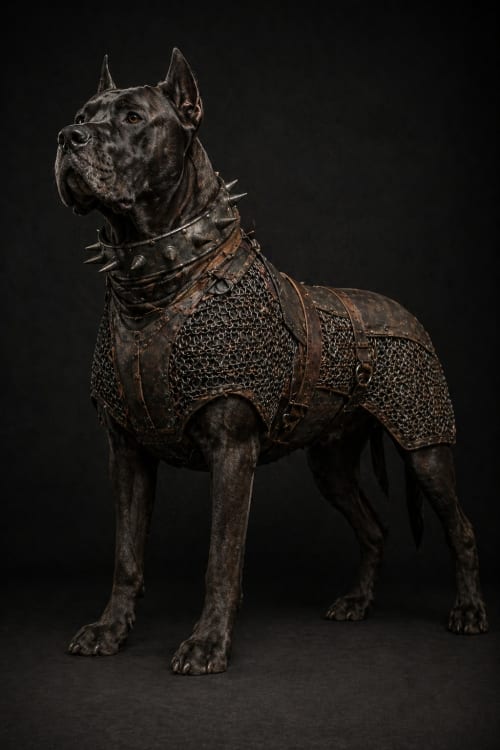
War Dog Armor
Protective armor for military canines
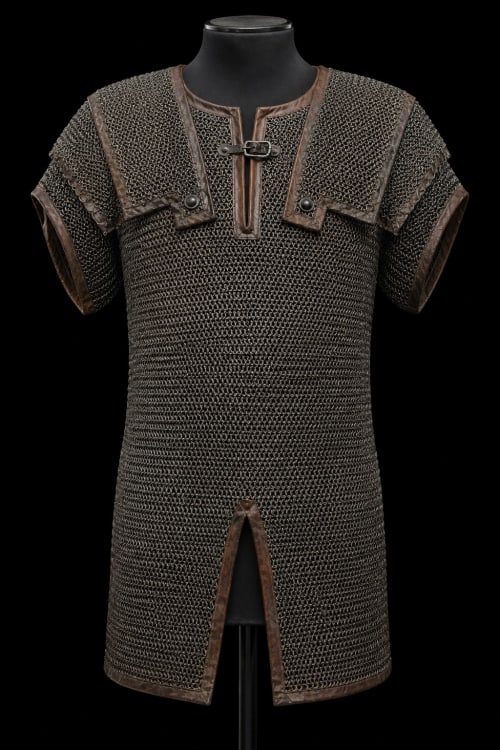
Lorica Hamata
Roman legionary chainmail armor
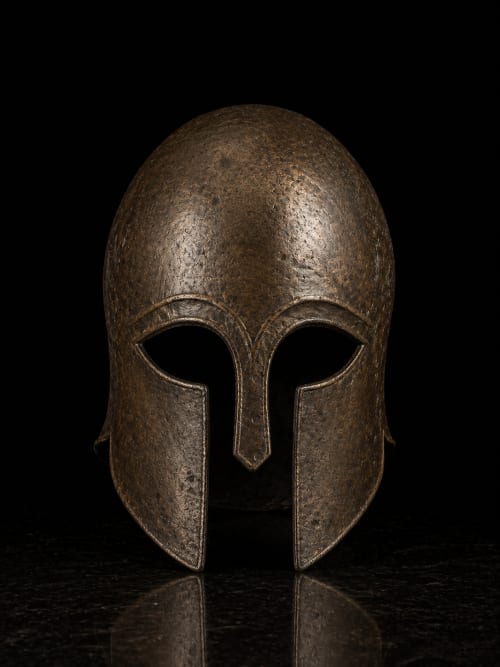
Corinthian Helmet
Iconic full-face helmet of ancient Greece
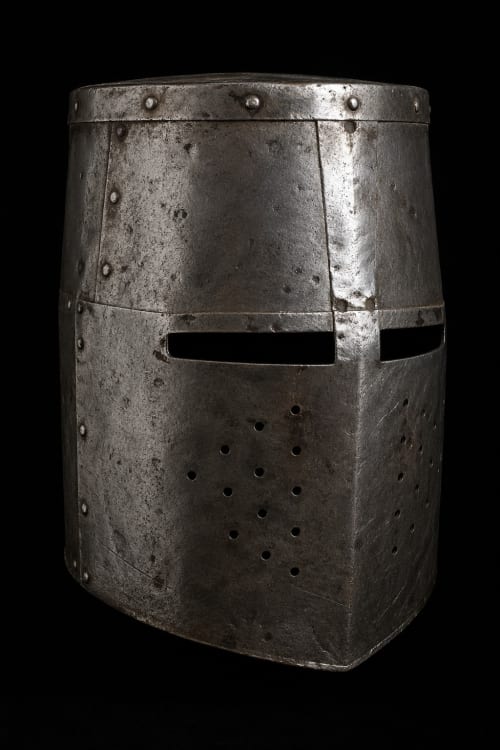
Great Helm
Barrel-shaped helmet enclosing the entire head
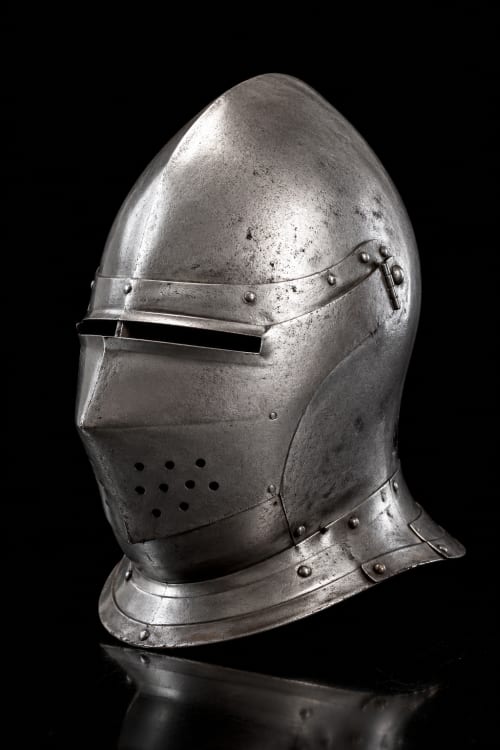
Armet
Close-fitting Italian helmet of the 15th century