
Round Shield
Viking circular wooden shield
Names in Other Languages
 라운드 실드한국어
Round Shield · 바이킹의 원형 목재 방패
 ラウンドシールド日本語
古代から中世まで広く使われた円形盾
 圓盾繁體中文
從古代到中世紀廣泛使用的圓形盾牌
 RundschildDeutsch
Von der Antike bis zum Mittelalter weit verbreiteter Rundschild
 Bouclier rondFrançais
Bouclier circulaire largement utilisé de l'Antiquité au Moyen Âge
 Escudo redondoEspañol
Escudo circular ampliamente usado desde la Antigüedad hasta el Medievo
 Escudo redondoPortuguês
Escudo circular amplamente usado da Antiguidade ao Medievo
 Tarcza okrągłaPolski
Okrągła tarcza szeroko stosowana od starożytności do średniowiecza
 Круглый щитРусский
Круглый щит, широко использовавшийся от Античности до Средневековья
The round shield is the branch of shield made of a flat disk of one round face, and its clearest form is the round shield carried by the Viking warrior of Scandinavia in the 8th to 11th centuries. It was made of light wooden planks (mostly linden or fir), some seventy-five to ninety centimeters across, joined together with the grain alternating, with an iron boss at the center to cover the man's fist, and within the boss a short handle held in one hand. Weighing three to five kilograms, it was light enough to be swung freely in one hand, compared to the great kite shields and round targes of the same age, and the boss itself was used as a weapon, struck straight at the face or sword-hand of the enemy. In the shield wall (skjaldborg), in which the warriors stood in a single line and overlapped their shields slightly, the same shield held its greatest seat, while a warrior bearing one alone, with sword and axe each in a hand, flowed back and forth and fought.
Origin
The round shield itself stood at the earliest place where human hands made a shield, and the aspis of Greece, the parma of the Roman cavalry, and the round shields of the Celts and Germans all stand in the same line. The place where the flat one-handed round shield of the Viking, as we picture it, took root is held to be late 7th-century Scandinavia, with the round shields of the earlier Germanic peoples and of the Anglo-Saxons as its parent. The splendid round shield with an ornamented boss from the Sutton Hoo ship burial in eastern England of the early 7th century stands at the earliest seat of the same line. The same form passed into the standard of the Viking age in the late 8th century, and at the Gokstad ship burial in Norway of about 880, sixty-four round shields painted in alternating black and yellow were brought to light together, showing at one glance how a single shield of the same age stood in line at the camp. The same line slowly gave way to the kite shield from the late 11th century, but it lived on in the hand of the foot soldier until the 14th century.
Features
- A flat round wooden disk some seventy-five to ninety centimeters across
- A structure in which a round iron boss at the center covered the fist
- A central grip of a short bar within the boss, held in one hand
- A light weight of about three to five kilograms, swung freely in one hand
- In the shield wall (skjaldborg), it stood in a single line to make a wall
- Painted with bold geometric devices and mythic figures to mark the warrior's identity
Stories
The round shield was the paired tool of the Viking warrior who held it in one hand and a sword or axe in the other. The same single piece often turned the enemy's stroke aside, rather than catching it flat, by holding the center with the boss out at an angle, and the same boss was often struck straight at the face or hand of the enemy. The great seat was the formation called the shield wall, in which warriors standing in a single line slightly overlapped the same shields and made one great wall that caught arrows, spears, and axe blows alike. At the Battle of Maldon in eastern England in 991, and at the three battles of Fulford, Stamford Bridge, and Hastings, fought in one year of 1066 in England, the foot of both sides struck with the same shield, and the Bayeux Tapestry of Hastings shows the shield wall of round shields of the Anglo-Saxon housecarls in a single line carved into its weave. When the warrior stood still, the shield was slung on the back, and on the march it was carried with a leather strap, the guige, over the shoulder.
Weakness
The greatest weakness of the round shield grew from its lightness. Being borne in one hand and freely swung, it was woven of thin wooden planks, and so a heavy axe blow easily split it, and two or three shields in one fight were often broken, and so the Viking sagas often handle the same shield as if a piece to be used up. The front was firm enough, but the side and the leg of the man bearing it were always bare, and so an enemy who came around the side reached the hand directly. The boss was itself used as a weapon, and so when the boss was struck off by an enemy's blow, the hand at that place was wounded at once. So the sagas often set down that the work of nailing on a new boss and changing a broken shield was the work of every day. As the larger kite shield and the heater shield that followed it took the same seat from the late 11th century, the same shield slowly gave up its place in the hand of the foot soldier.
Cultural Significance
The round shield is the clearest visual sign of the Viking warrior culture, and the colors and devices painted on its face were a single piece of painting that told the identity of a saga-age warrior from afar. The sixty-four round shields painted in alternating black and yellow brought to light at the Gokstad ship burial in Norway are the clearest piece of evidence of that seat, showing at a glance how one shield of about 880 stood in line at one place. The splendid round shield with an ornamented boss from the Sutton Hoo ship burial in eastern England of the 7th century, with the bold animal devices on the boss, fills the earliest seat of the same line. Above all, the Vikings had the rite of laying the same shield beside the dead warrior, and the saga literature often sets down that the breaking of the same shield was a single act that marked both the warrior's resolve and his readiness to meet death. So the round shield stood as a single piece on which the identity and the soul of a man of one age both dwelled, not as a single piece of war gear alone.
In Popular Culture
The round shield is the clearest visual sign in films, period dramas, and games about the Viking and Anglo-Saxon age. The flat round shields borne by the Viking warriors in The 13th Warrior (1999), the Thor films, and The Northman (2022) are its most familiar face, and the period dramas Vikings (2013-2020) and The Last Kingdom (2015-2022) fill almost every scene with the same shield, painted boss and all. The action RPGs Assassin's Creed Valhalla (2020) and God of War: Ragnarok (2022) render the figure of the Viking warrior bearing the round shield in one hand and the axe or sword in the other, and the strategy games Total War Saga: Thrones of Britannia and Crusader Kings III set the same shield at the seat of the 9th to 11th-century foot. Films, however, often draw the round shield too thick and hardly ever show it breaking, and so blur the truth that the same piece was at heart a piece to be used up at one seat.
Trivia
- At the Gokstad ship burial in Norway of about 880, sixty-four round shields painted in alternating black and yellow were brought to light together, and these stand as the clearest source for how a single Viking shield stood in line at one seat.
- At the Battle of Hastings, fought in 1066 in England, the kite shield of the Norman and the round shield of the Anglo-Saxon met at one place, as carved into the Bayeux Tapestry, and so the same year shows that it was also a place where a single shield left an age behind.
- The Viking saga literature often sets down that the work of changing a broken shield for a new one was the work of every day, and above all, the rite of laying the same shield beside the dead warrior held the round shield as a single piece on which both the warrior's identity and his soul dwelled, not as a single piece of war gear alone.
Related
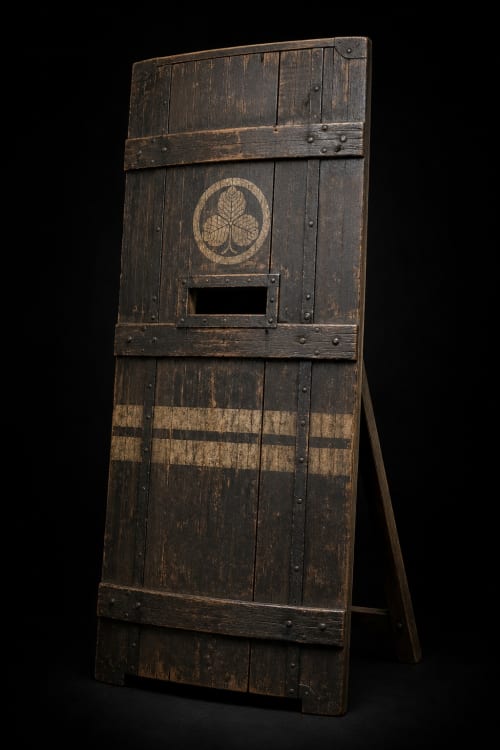
Tate
Large standing shield of feudal Japan
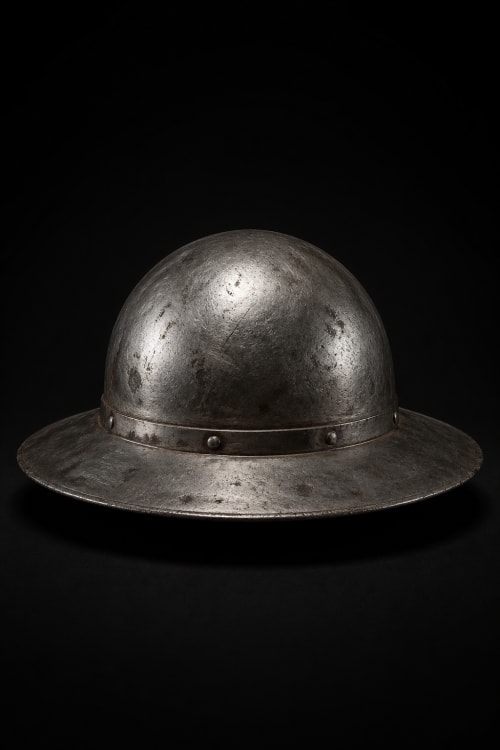
Kettle Hat
Broad-brimmed infantry helmet shaped like an inverted pot

Brigandine
Armor of small iron plates riveted between fabric layers
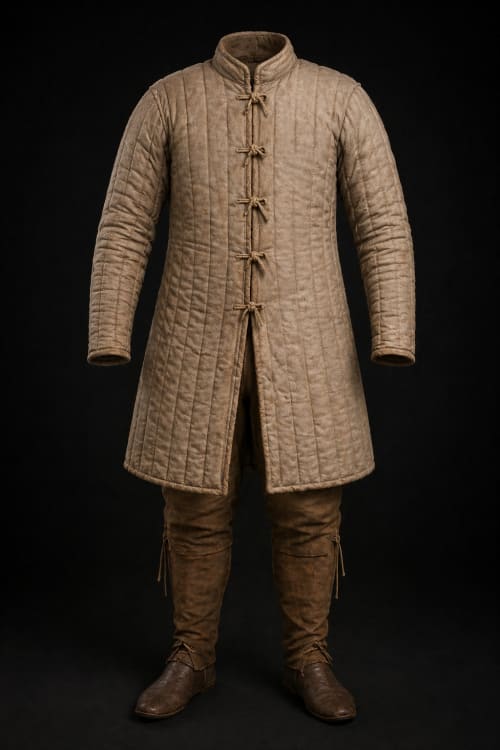
Gambeson
Quilted padded defensive garment
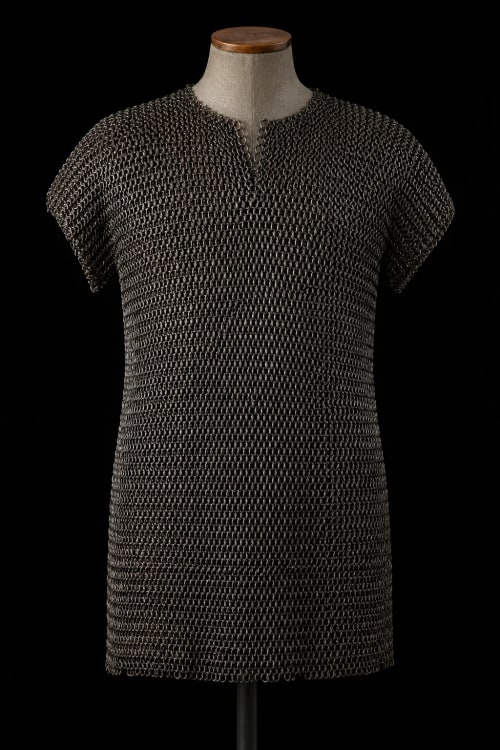
Chainmail
Flexible armor of interlocked metal rings
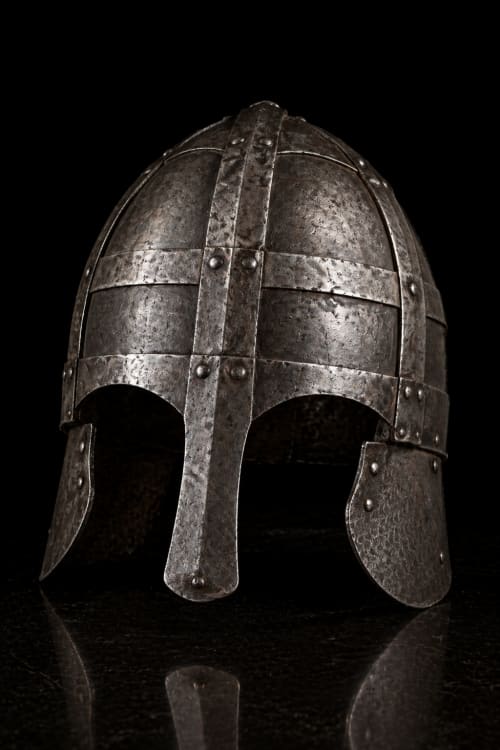
Spangenhelm
Framework helmet of crossed metal bands
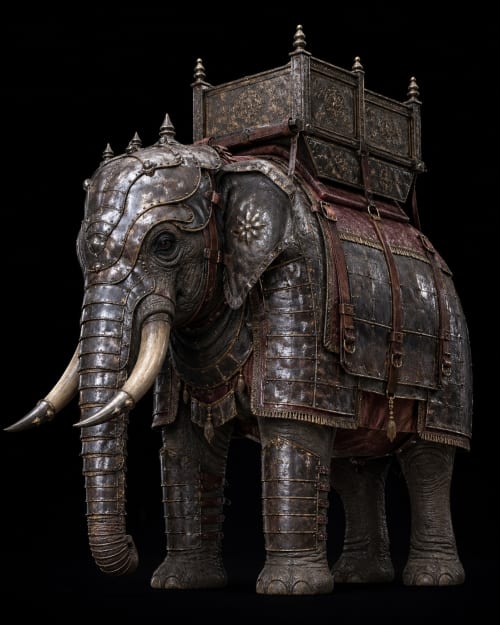
Elephant Armor
Full-body armor for the war elephant
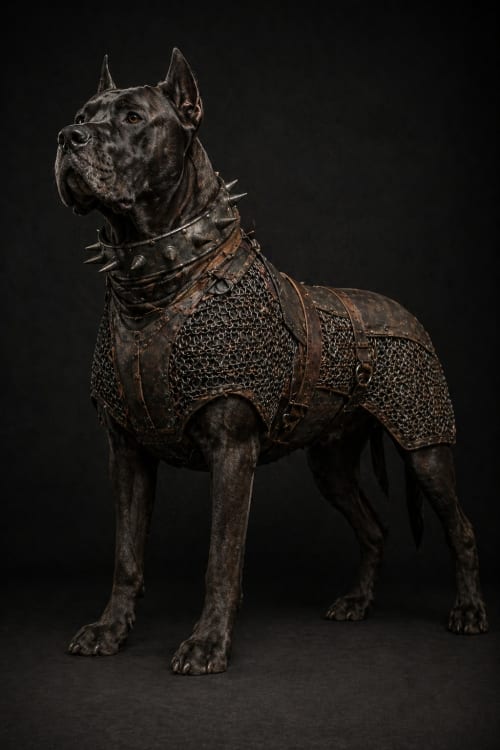
War Dog Armor
Protective armor for military canines
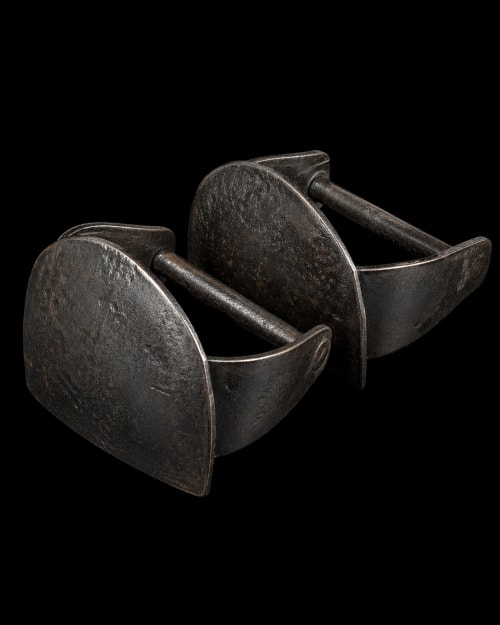
Tekko
Okinawan metal knuckle guard
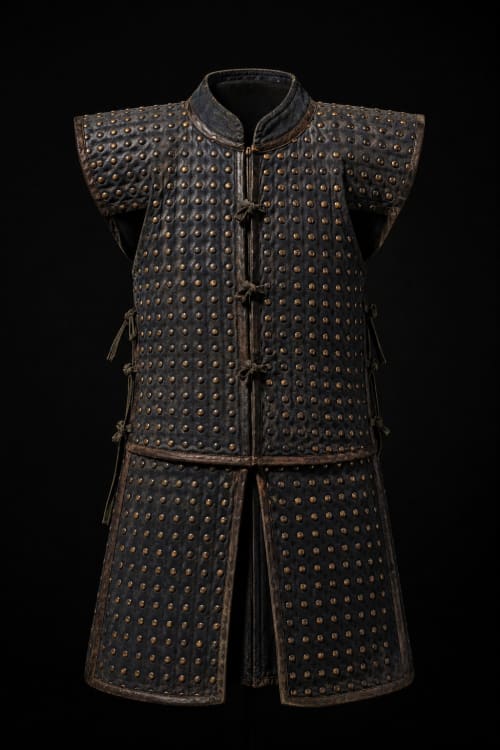
Dujeong-gap (Eastern Brigandine)
Korean armor with brass-studded iron plates
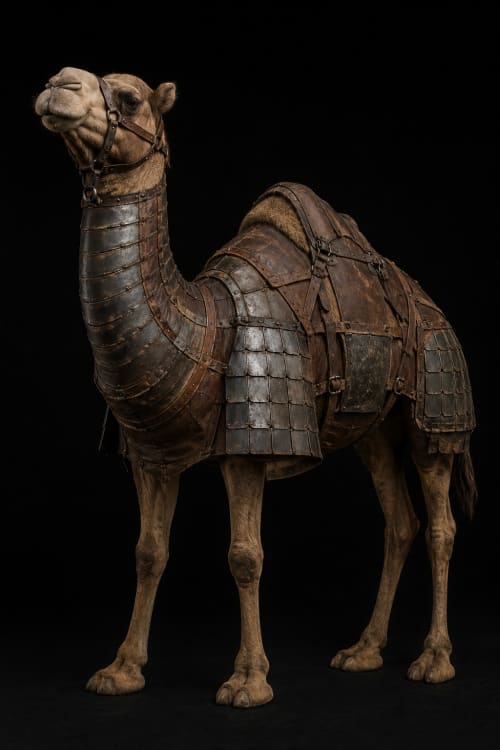
Camel Armor
Protective equipment for war camels
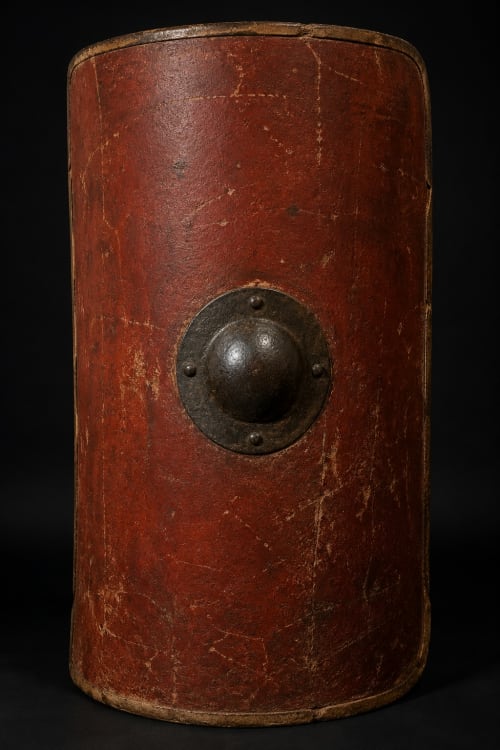
Scutum
Curved rectangular shield of the Roman legions