
Wyvern
Wyvern · Type of Dragon — Legendary two-legged, winged reptilian creature
Names in Other Languages
 와이번한국어
Wyvern · 드래곤의 일종 — 두 다리와 날개를 가진 신화 속 생물
 ワイバーン日本語
Wyvern · ドラゴンの一種 — 二脚と翼を持つ伝説の生物
 飛龍繁體中文
Wyvern · 龍類之一 — 擁有雙足與雙翼的傳說生物
 WyvernDeutsch
Wyvern · Drachentyp — Legendäres, zweibeiniges, geflügeltes Fabelwesen
 VouivreFrançais
Wyvern · Type de dragon — Créature légendaire à deux pattes et deux ailes
 GuivernoEspañol
Wyvern · Tipo de dragón — Criatura legendaria de dos patas y alas
 WyvernPortuguês
Wyvern · Variedade de dragão — Criatura lendária bípede e alada
 WywernaPolski
Wyvern · Rodzaj smoka — Legendarne stworzenie z dwiema nogami i skrzydłami
 ВивернаРусский
Wyvern · Разновидность дракона — Легендарное существо с двумя ногами и крыльями
The wyvern is the two-legged, bat-winged dragon of medieval European heraldry and folklore, named from Old English 'wivere' (viper) — itself from Latin 'vipera' — and distinguished from the four-legged Western dragon by the absence of forelegs (the wings serve as arms) and by a long barbed tail terminating in an arrow-shaped venomous sting. The heraldic form was codified in late twelfth-century Anglo-Norman heraldry under Henry II, and Juliana Berners's 'Boke of Saint Albans' (1486) is the first English manual to set the wyvern apart from the four-footed dragon as a distinct heraldic beast. The Welsh red dragon Y Ddraig Goch became an official badge of the Tudor dynasty after the battle of Bosworth in 1485, and nineteenth-century English heralds harmonised it with the four-legged form as a 'four-footed wyvern'. The same silhouette has been adopted in J.R.R. Tolkien's Fell Beasts in 'The Lord of the Rings' (1954-55), the wyverns of FromSoftware's 'Dark Souls' (2011), the Rathalos line of Capcom's 'Monster Hunter' series (2004- ), the dragons of 'The Elder Scrolls V: Skyrim' (2011), and the dragons of HBO's 'Game of Thrones' (2011-2019).
Origin
The direct origin lies in late twelfth-century Anglo-Norman heraldry. The Bayeux Tapestry (late eleventh century, Bayeux, Normandy) shows Norman dragon standards of the proto-wyvern type. The most authoritative texts are Juliana Berners's 'Boke of Saint Albans' (1486, British Library IB.55712) and John Guillim's 'A Display of Heraldrie' (1610), the latter fixing the definition 'two legs, two wings, serpent tail'. Etymologically 'wyvern' descends from Old English 'wivere' (eleventh century) through Middle English 'wyvere' to the sixteenth-century form 'wyvern', sharing a root with Latin 'vipera'. The heraldic image spread widely across English county and family arms — Wessex, Mercia, the lords of Leicestershire — and survives in modern badges including the Leicestershire county flag.
Features
- Two legs and a single pair of bat-like wings; no forelegs
- Long barbed tail ending in an arrow-shaped venomous sting
- Name from Old English 'wivere' (viper), Latin 'vipera'
- Distinguished from the four-footed dragon in Juliana Berners's 'Boke of Saint Albans' (1486)
- Breathes either venom or fire, depending on the heraldic tincture
- Continuous silhouette from twelfth-century Anglo-Norman heraldry to modern fantasy gaming
Stories
Used throughout medieval European heraldry as a family, regional and knightly emblem, with the Welsh flag, the Mercian wyvern and the Wessex wyvern as its enduring landmarks. In modern fantasy — Tolkien, D&D, 'Monster Hunter', 'Dark Souls', 'Skyrim', 'Game of Thrones' — the wyvern silhouette has eclipsed the four-legged dragon as the standard flying monster.
Weakness
With only two legs the wyvern is poorly balanced on the ground and less agile than the four-legged dragon, and twelfth-century bestiaries describe it as less intelligent than the canonical dragon. It depends on flight, and so suffers under anti-aviation magic and disciplined archery.
Cultural Significance
The wyvern is a product of Celtic-Norman fusion: the Welsh red dragon Y Ddraig Goch, the green wyvern of Wessex and the golden wyvern of Mercia are all expressions of regional identity, and the form became central to English royal heraldry from Henry VII onwards.
In Popular Culture
Bayeux Tapestry (late eleventh century), Anglo-Norman heraldry (twelfth century), Juliana Berners's 'Boke of Saint Albans' (1486), the Tudor Bosworth banner of Henry VII (1485), John Guillim's 'A Display of Heraldrie' (1610), the Fell Beasts of Tolkien's 'The Lord of the Rings' (1954-55), D&D 'Monster Manual' (1977; fifth edition 2014), 'Monster Hunter' (Capcom, 2004- ), 'Dark Souls' (FromSoftware, 2011), 'The Elder Scrolls V: Skyrim' (Bethesda, 2011) and HBO's 'Game of Thrones' (2011-2019).
Trivia
Strict heralds point out that the dragons of 'Game of Thrones' — Drogon, Rhaegal and Viserion — have two legs and two wings and are therefore, by the textbook definition, wyverns rather than dragons; the BBC and the College of Arms made the same observation publicly in 2017.
Related
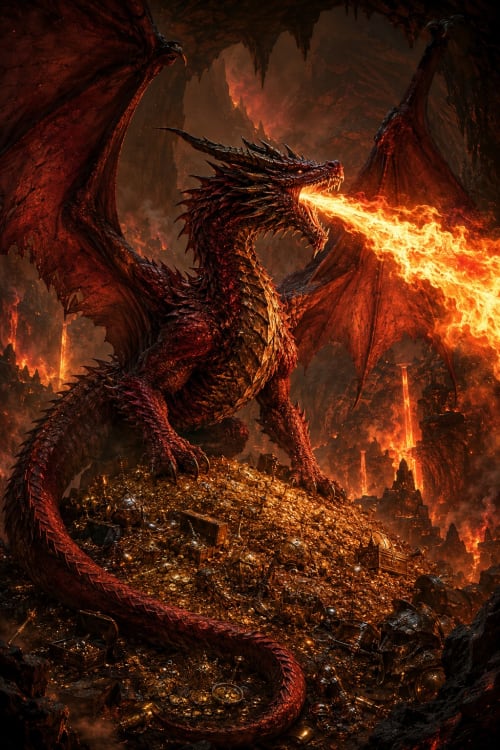
Red Dragon
The Tyrant of Flame
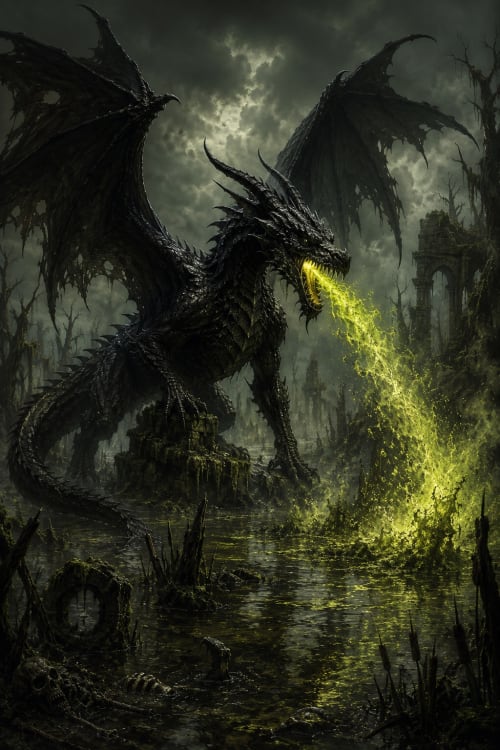
Black Dragon
Acidic Tyrant of the Swamps
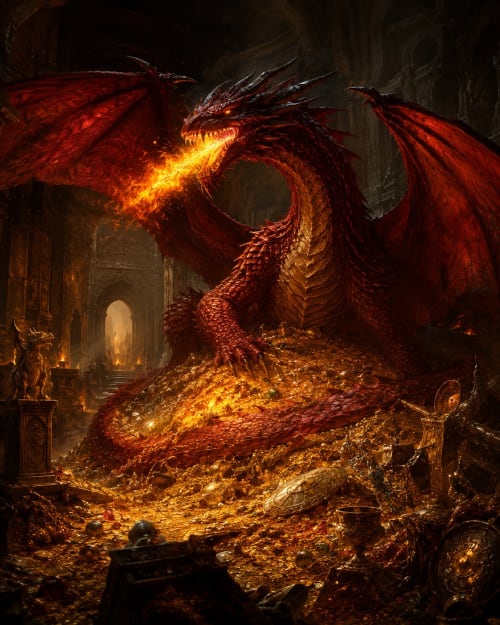
Smaug
Tolkien's Gold-Hoarding Fire Dragon
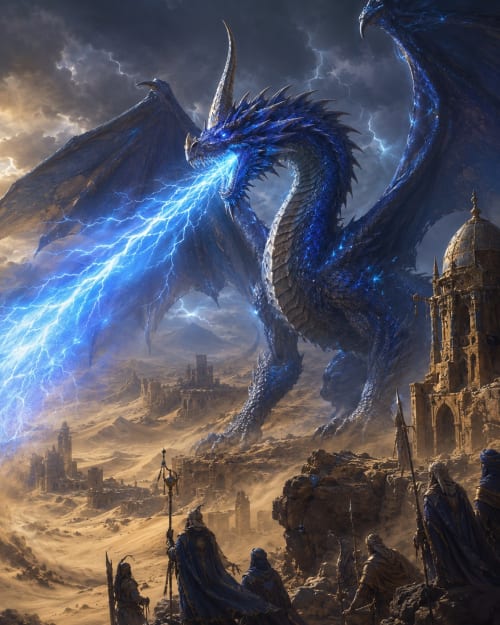
Blue Dragon
Lightning Lord of the Desert
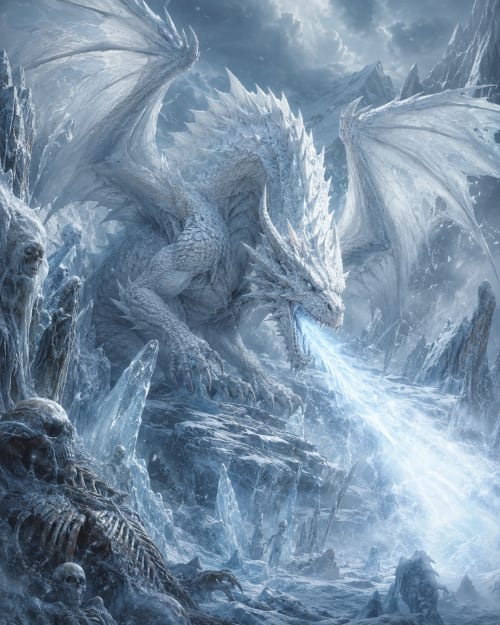
White Dragon
Hunter of the Frozen Wastes
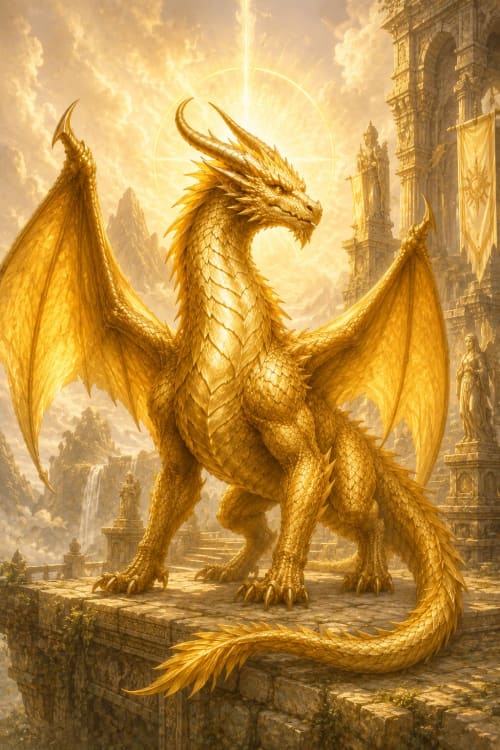
Gold Dragon
The Golden Guardian of Justice
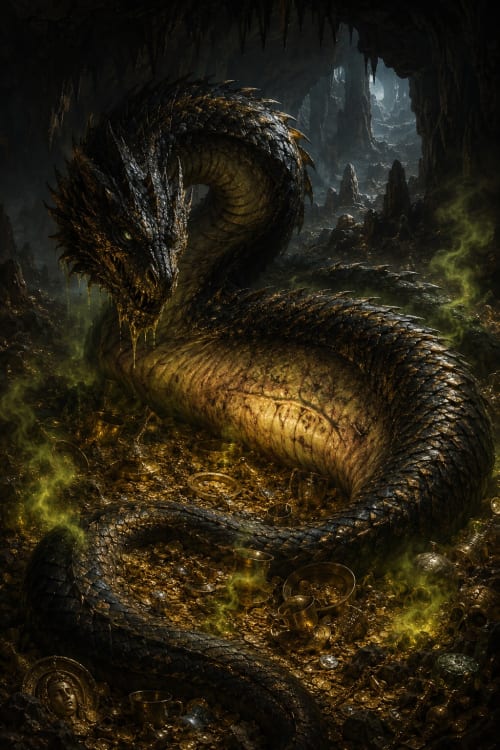
Fafnir
Cursed Treasure Dragon of Norse Myth
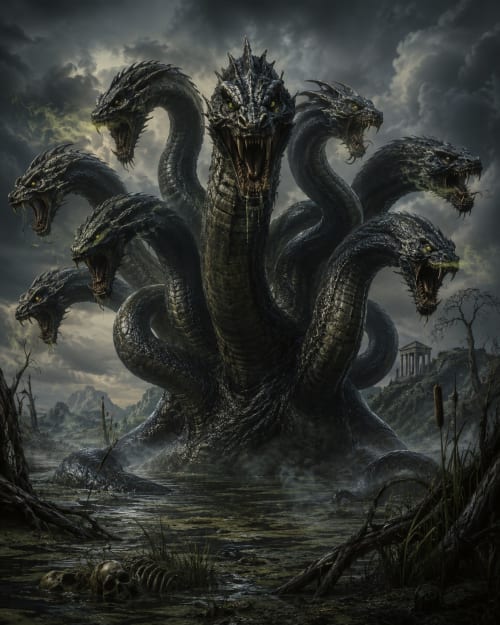
Lernaean Hydra
Nine-Headed Marsh Monster