LoreArc

Lightning

5 items tagged with "Lightning"

thor

Thor

Thor · Norse God of Thunder — Protector of Mankind

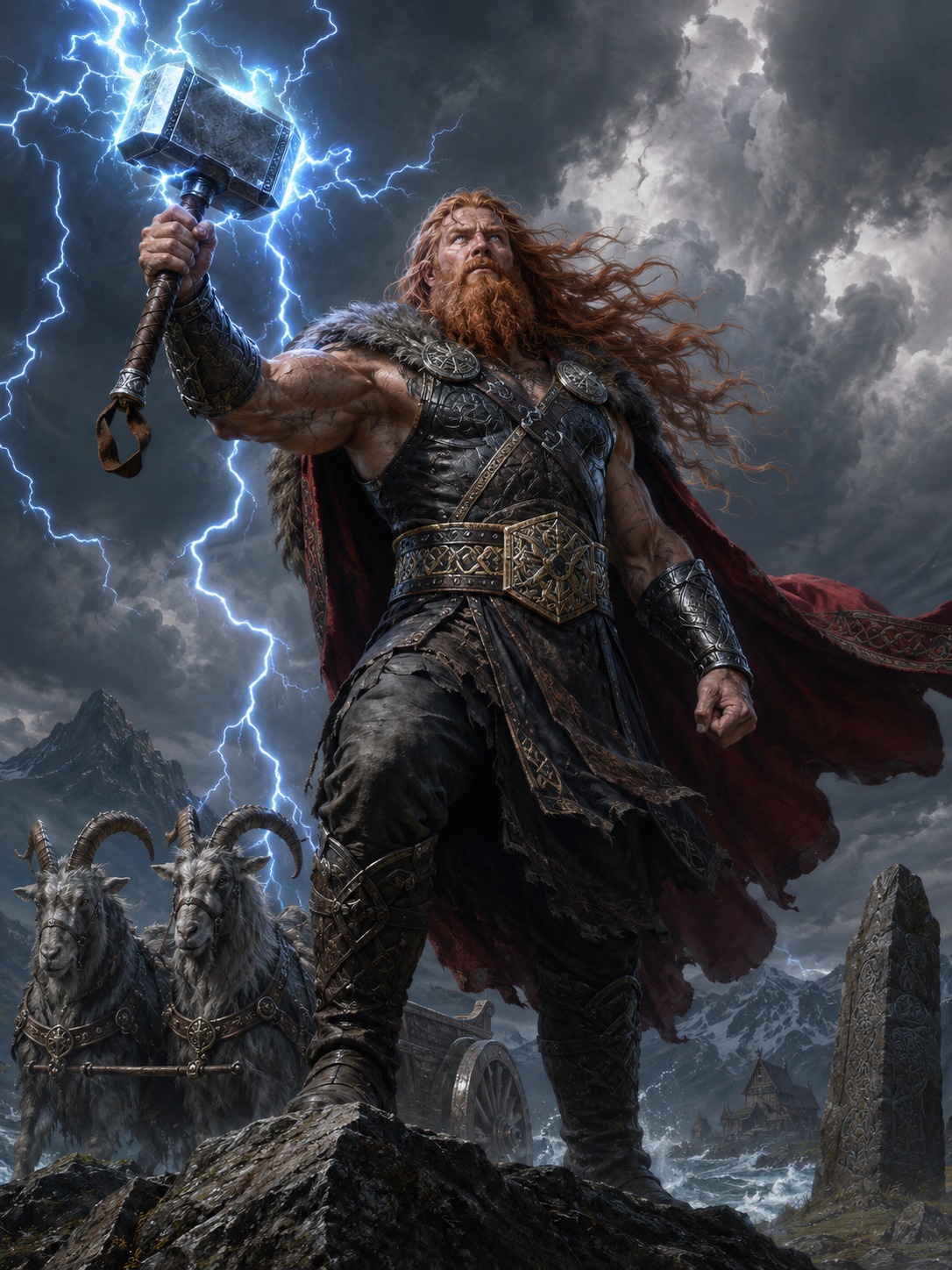
Thor (Old Norse Thorr, Proto-Germanic Thunraz 'thunder') is the god of thunder, lightning, storms, strength, and fertility of Norse mythology — the decisive canon, the son of Odin (Odin) and the earth goddess Jord (Jord), married to Sif (Sif) — the decisive canonical iconographic figure. The etymology is the decisive canonical vocabulary derived from the Old Norse Thorr or Proto-Germanic Thunraz ('thunder'), cognate with the English Thursday (Old English Thunresdaeg, 'Thunor's day'), the German Donnerstag, and the Latin Tonans (epithet of Jupiter, 'thundering'). The decisive textual canon is chapter 9 of the Germania (Germania) of the c. 1st-century Roman historian Tacitus (Cornelius Tacitus, c. 56-120) — the decisive Roman-era canon of Donar (Donar, later Thor) identified by the Germanic tribes with Hercules (Hercules) — and the Prose Edda (Prose Edda) of c. 1220 of the early 13th-century Icelandic poet-historian Snorri Sturluson (Snorri Sturluson, 1179-1241) — chapters 21 (introduction), 25, 28 (Mjollnir), 42-48 (Utgarda-Loki, Skrymir episode), and 50 (Jormungandr fishing) of Gylfaginning (Gylfaginning) — the decisive canon — and the Voluspa (Voluspa), Thrymskvida (Thrymskvida), Hymiskvida (Hymiskvida), Harbardsljod (Harbardsljod), and Alvissmal (Alvissmal) of the Poetic Edda (Poetic Edda) of the c. 1270 Codex Regius (Codex Regius) manuscript are the decisive poetic canon. The decisive canonical iconography of the hammer Mjollnir (Mjollnir) — a weapon that returns when thrown — and the chariot drawn by two goats Tanngnjostr (Tanngnjostr) and Tanngrisnir (Tanngrisnir).
🐉Spirits(1)
thunderbird-spirit
📸 2

Thunderbird

Intermediate

Thunder Bird of Native American Mythology

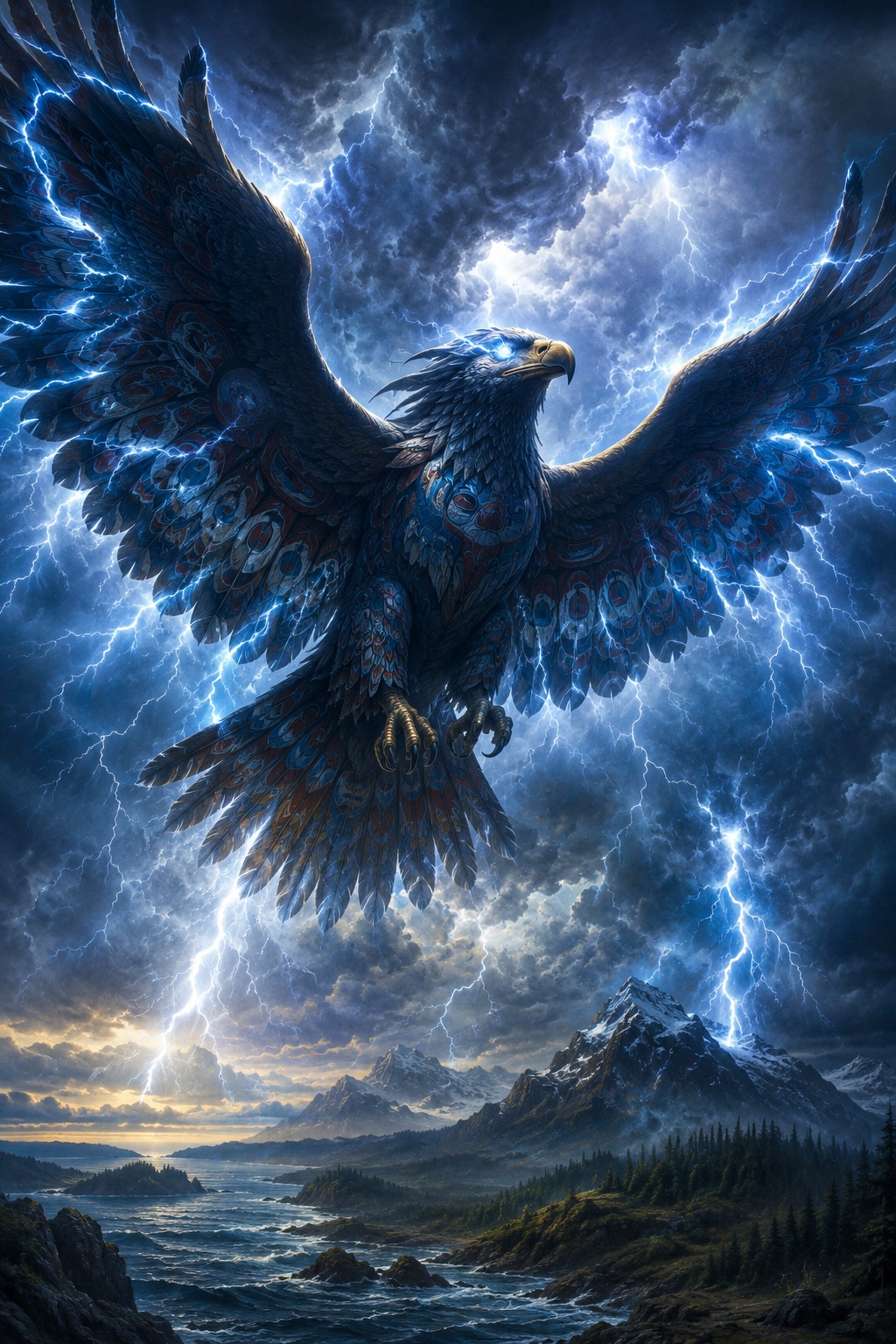
The Thunderbird (English Thunderbird, Algonquian/Ojibwe Animikii, Lakota Wakinyan) is the canonical iconographic figure of the giant bird-form spiritual being — resembling an eagle or condor — that widely appears in Native American mythology, in which the flapping of its wings creates thunder and its eyes shoot lightning — the decisive canon. The etymology is the English Thunderbird ('bird of thunder'), settled as the decisive canonical vocabulary by 1830s American naturalists and folklorists translating the Algonquian/Ojibwe Animikii ('thunderer') and Lakota Wakinyan ('flying sacred') into English. The decisive tribal traditions are (1) the Algonquian/Ojibwe — the decisive Thunderbird canon of the Lake Michigan and Great Lakes region; (2) the Lakota — the decisive Wakinyan canon of the Dakota and Black Hills region; and (3) the Pacific Northwest Coast tribes Haida and Kwakwaka'wakw — the totem-pole-top canon of the coast of British Columbia, Canada. The decisive textual record is the journal of the Lewis and Clark Expedition (Lewis and Clark Expedition) of 1804-1806 — recording the Thunderbird belief of the Indigenous people along the Columbia River — and the decisive English scholarly canonisation of the Ojibwe Animikii canon in the Algic Researches (2 volumes) of the American folklorist Henry Schoolcraft (Henry Rowe Schoolcraft, 1793-1864) of 1849, and the epic The Song of Hiawatha (22 cantos) of the American poet Henry Wadsworth Longfellow (1807-1882) published in the USA on 10 November 1855 is the decisive 19th-century American-literary Thunderbird canon.

🐉Dragons(1)