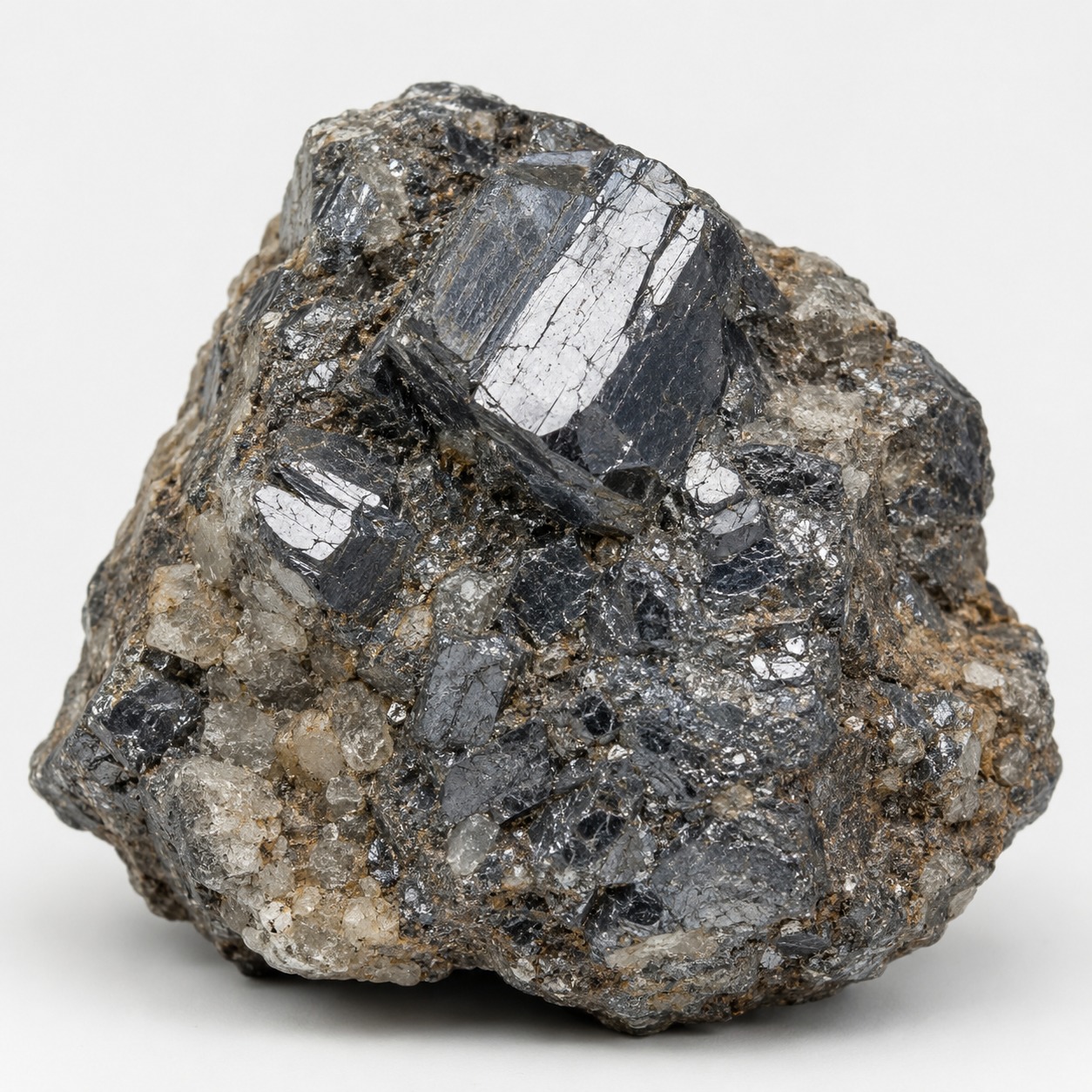
Tin
Tin· Sn Key ingredient of bronze
Names in Other Languages
 주석한국어
주석한국어Tin· 錫 청동의 주성분
 錫日本語
錫日本語Tin· 錫 青銅の主成分
 錫繁體中文
錫繁體中文Tin· 錫 青銅之主成分
 ZinnDeutsch
Tin· Sn Hauptbestandteil der Bronze
 EtainFrançais
Tin· Sn Ingredient cle du bronze
 EstanoEspañol
Tin· Sn Ingrediente clave del bronce
 EstanhoPortuguês
Tin· Sn Ingrediente chave do bronze
 CynaPolski
Tin· Sn Kluczowy skladnik brazu
 ОловоРусский
Tin· Sn Ключевой ингредиент бронзы
Tin (English Tin, Latin stannum, Greek κασσίτερος kassiteros) is the main component of bronze of the decisive canon — derived from Greek 'kassiteros' — the decisive canonical vocabulary — the decisive mineralogical canon of the chemical element Sn (stannum) — and the decisive canon of bronze (copper + tin) of 3500-2000 BCE, and the decisive canon as the metal of Jupiter among the seven metals of alchemy. Aliases — Tin (Tin), stannum (stannum, Latin), kassiteros (kassiteros, Greek), plumbum album ('white lead', Pliny), alchemical symbol of Jupiter — are the decisive canonical vocabulary. The decisive Bronze Age canon is the decisive origin canon of bronze (bronze, 90% copper + 10% tin) of Mesopotamia of c. 3500-2000 BCE, and the decisive natural history canon is the decisive canon of 'plumbum album (white lead)' in Pliny the Elder's (Pliny the Elder, 23-79) Natural History (Naturalis Historia) Book 34 verses 156-163 of the 1st century. The decisive Herodotus canon is the decisive canon of the Cassiterides (Cassiterides, Tin Islands) of Herodotus's (Herodotus, 484-425 BCE) Histories Book 3 verse 115 of the 5th century BCE.
Origin
The etymological origin is the decisive canonical vocabulary of Greek 'kassiteros (κασσίτερος)' — the decisive canon becoming the etymology of Herodotus's 'Cassiterides (Tin Islands)' in Histories Book 3 verse 115, and the decisive canon of Latin 'stannum' becoming the etymology of the chemical symbol Sn. The decisive Bronze Age canon is the decisive origin canon of bronze (bronze, 90% copper + 10% tin) of Mesopotamia and the Near East of c. 3500-2000 BCE — the decisive canon of the Bronze Age in Hesiod's (Hesiod, 8th century BCE) Works and Days (Works and Days). The decisive Herodotus canon is the decisive canon of the Greek Herodotus's (Herodotus, 484-425 BCE) Histories (Histories) Book 3 verse 115 of the 5th century BCE — 'Tin comes from the Cassiterides (Cassiterides, Tin Islands, presumed Cornwall of Britain)' — the decisive canon of the trade route of Bronze Age tin. The decisive natural history canon is the decisive canon of the Roman Pliny the Elder's (Pliny the Elder, 23-79) Natural History (Naturalis Historia) Book 34 verses 156-163 of the 1st century — 'plumbum album (white lead) is produced from the Cassiterides, Gaul, and Lusitania (modern Portugal)'.
Features
- Chemical element Sn (stannum) atomic number 50 Mohs hardness 1.5
- Main axis — main component of bronze (bronze, copper + tin)
- Greek kassiteros — etymology of Herodotus's Cassiterides (Tin Islands)
- Decisive primary canon — Herodotus Histories Book 3 verse 115 / Pliny Natural History Book 34 verses 156-163
- Alchemical symbol metal of Jupiter
- Origin — Cornwall England, Erzgebirge Germany, Bangka Indonesia, Bolivia
Stories
Bronze was made with tin as a main component of c. 3500-2000 BCE in Mesopotamia, and the decisive natural history canon is plumbum album (white lead) in Pliny the Elder's Natural History Book 34 verses 156-163 of the 1st century. The decisive canon used as the main component of bronze (bronze, 90% copper + 10% tin), and the decisive canon classified as the metal of Jupiter among the seven metals of alchemy. The decisive Herodotus canon is the decisive canon of the trade of tin from the Cassiterides (Cassiterides) in Herodotus's Histories Book 3 verse 115 of the 5th century BCE, and the decisive medieval English canon is the decisive canon of the tin mines of Cornwall (Cornwall) in England from the 12th century — the decisive canon as the main source of tin in medieval Europe. The decisive pewter canon is the decisive canon of the pewter (pewter, alloy of 90% tin + antimony and copper) tableware in 18th-century Europe.
Weakness
Tin's weaknesses are: (1) tin pest (tin pest) — the decisive canonical weakness — the decisive canon of tin transforming into grey powder at temperatures below 13.2 degrees Celsius — the decisive canon of the hypothesis of Napoleon's defeat at Moscow in 1812 (tin buttons crumbling); (2) Mohs hardness 1.5 limit — the decisive canonical weakness — much softer than copper (3) and iron (4); (3) binding of alloy — the decisive canon of the binding as alloy of bronze and pewter; (4) binding of price — the decisive canon of the price due to scarcity of Bronze Age tin; (5) binding of origin — the decisive canon of the binding of Cornwall and the Cassiterides; (6) binding of the sacred domain — the decisive canon; (7) binding of Jupiter — the decisive canon of the binding as the metal of Jupiter; (8) binding of time — the decisive canon of the binding of 5500 years of the Bronze Age. The decisive canonical finale is the decisive mythological canon of the invention of the tin can in the 19th century revolutionizing tin processing.
Cultural Significance
Tin is not merely a metal icon but the canonical iconographic figure of the decisive Greco-Roman-European canon, traversing the bronze of Mesopotamia of c. 3500-2000 BCE, the Cassiterides of Herodotus's Histories Book 3 verse 115 of the 5th century BCE, plumbum album of Pliny the Elder's Natural History Book 34 verses 156-163 of the 1st century, Jupiter among the seven metals of medieval alchemy, the tin mines of Cornwall in England from the 12th century, the pewter of 18th-century Europe, and the hypothesis of Napoleon's Moscow defeat of 1812. The etymological origin settled as the decisive canon of Greek 'kassiteros (κασσίτερος)' — the decisive canon becoming the etymology of Herodotus's 'Cassiterides (Tin Islands)' in Histories Book 3 verse 115. The decisive Bronze Age canon is the decisive origin canon of bronze (bronze, 90% copper + 10% tin) of Mesopotamia and the Near East of c. 3500-2000 BCE — the decisive canon of the Bronze Age in Hesiod's (Hesiod, 8th century BCE) Works and Days (Works and Days), and the decisive Herodotus canon is the decisive canon of the Greek Herodotus's (Herodotus, 484-425 BCE) Histories (Histories) Book 3 verse 115 of the 5th century BCE — 'Tin comes from the Cassiterides (Cassiterides, Tin Islands, presumed Cornwall of Britain)'. The decisive natural history canon is the decisive canon of the Roman Pliny the Elder's (Pliny the Elder, 23-79) Natural History (Naturalis Historia) Book 34 verses 156-163 of the 1st century — 'plumbum album (white lead) is produced from the Cassiterides, Gaul, and Lusitania' — the decisive canon of the distinction between Latin 'plumbum album (white lead)' and 'plumbum nigrum (black lead)'. The decisive alchemical canon is the decisive canon of tin as the metal of Jupiter (Jupiter) among the seven metals of medieval alchemy (gold, silver, copper, iron, tin, lead, mercury). The decisive medieval English canon is the decisive canon of the tin mines of Cornwall (Cornwall) in England from the 12th century — the decisive canon as the main source of tin in medieval Europe, and the decisive German canon is the decisive canon of the tin mines of Erzgebirge (Erzgebirge, 'Ore Mountains') in Germany from the 12th century. The decisive pewter canon is the decisive canon of the pewter (pewter, alloy of 90% tin + antimony and copper) tableware in 18th-century Europe, and the decisive modern canon is the decisive canon of the patent of the tin can (tin can) by the English inventor Peter Durand (Peter Durand) in 1810 — the decisive canon of the revolution of long-term food preservation.
In Popular Culture
- Bronze (bronze, 90% copper + 10% tin) of Mesopotamia (c. 3500-2000 BCE) — decisive Bronze Age canon
- Cassiterides (Cassiterides) of Herodotus Histories (Histories) Book 3 verse 115 (5th century BCE) — decisive Herodotus canon
- plumbum album of Pliny the Elder Natural History (Naturalis Historia) Book 34 verses 156-163 (1st century) — decisive natural history canon
- Metal of Jupiter among the seven metals of medieval alchemy — decisive alchemical canon
- Tin mines of Cornwall (Cornwall) in England (from 12th century) — decisive medieval English canon
- Tin mines of Erzgebirge (Erzgebirge) in Germany (from 12th century) — decisive German canon
- Pewter (pewter) tableware in Europe (18th century) — decisive pewter canon
- Hypothesis of Napoleon's Moscow defeat and the tin button (1812) — decisive 19th-century canon
- Patent of the tin can (tin can) by Peter Durand (Peter Durand) (1810) — decisive modern canon
- Tin of Bangka (Bangka) Indonesia and Bolivia — 21st-century decisive global canon
Trivia
The etymology of Tin (English Tin, Latin stannum, Greek κασσίτερος kassiteros) is the decisive canonical vocabulary of Greek 'kassiteros (κασσίτερος)' — the decisive canon becoming the etymology of Herodotus's 'Cassiterides (Tin Islands)' in Histories Book 3 verse 115, and the decisive canon of Latin 'stannum' becoming the etymology of the chemical symbol Sn, and the English 'tin' deriving from the Germanic 'tin (tin)'. Aliases — Tin (Tin), stannum (stannum, Latin), kassiteros (kassiteros, Greek), plumbum album ('white lead', Pliny), alchemical symbol of Jupiter, main component of bronze, metal of the 10th wedding anniversary, one of the seven metals — are the decisive canonical vocabulary. The decisive Bronze Age origin canon is the decisive origin canon of bronze (bronze, alloy of 90% copper + 10% tin, Bronze Age) of Mesopotamia (Sumer) and the Near East (Levant) of c. 3500-2000 BCE, and the decisive Hesiod canon is the decisive canon of the Bronze Age among the five ages (gold, silver, bronze, heroic, iron) in Hesiod's (Hesiod) Works and Days (Works and Days) of the late 8th century BCE. The decisive Herodotus canon is the decisive canon of the Greek Herodotus's (Herodotus, 484-425 BCE) Histories (Histories, 9 books) Book 3 verse 115 of the 5th century BCE — 'Tin comes from the Cassiterides (Cassiterides, Greek 'Tin Islands', presumed Cornwall of Britain)' — the decisive canon of the trade route of Mediterranean tin of the Bronze Age. The decisive natural history canon is the decisive canon of the Roman Pliny the Elder's (Pliny the Elder, born 23 CE, died at Pompeii 79 CE) Natural History (Naturalis Historia) Book 34 verses 156-163 of the 1st century — 'plumbum album (white lead, i.e., tin) is produced from the Cassiterides, Gaul (Gallia), and Lusitania (Lusitania, modern Portugal)' — the decisive canon of the distinction between Latin 'plumbum album (white lead, tin)' and 'plumbum nigrum (black lead, lead)'. The decisive alchemical canon is the decisive canon of tin as the metal of Jupiter (Jupiter ♃) among the seven metals of medieval alchemy (gold-Sun, silver-Moon, copper-Venus, iron-Mars, tin-Jupiter, lead-Saturn, mercury-Mercury). The decisive medieval English canon is the decisive canon of the tin mines of Cornwall (Cornwall) in England from the 12th century — the decisive canon as the main source of tin in medieval Europe, and the decisive German canon is the decisive canon of the tin mines of Erzgebirge (Erzgebirge, 'Ore Mountains') on the German-Czech border from the 12th century. The decisive pewter canon is the decisive canon of the pewter (pewter, alloy of 90% tin + antimony and copper) tableware (plates, cups, mugs, candlesticks) in 18th-century Europe, and the decisive modern canon is the decisive canon of the patent of the tin can (tin can, tin-plated iron can) by the English inventor Peter Durand (Peter Durand) on 25 August 1810 (British Patent No. 3,372) — the decisive canon of the revolution of long-term food preservation. The decisive 19th-century canon is the decisive canon of the hypothesis of Napoleon Bonaparte's (Napoleon Bonaparte, 1769-1821) defeat in the Moscow campaign of 1812 (the hypothesis that the tin buttons on soldiers' coats transformed into tin pest, tin pest, grey powder, at below -13.2 degrees Celsius, causing soldiers to freeze) — the decisive canon of the partial truth in 21st-century scientific verification.