Copper
Copper· Cu Metal of Venus
Names in Other Languages
 구리한국어
구리한국어Copper· 銅 비너스의 금속
 銅日本語
銅日本語Copper· 銅 ヴィーナスの金属
 銅繁體中文
銅繁體中文Copper· 銅 維納斯之金屬
 KupferDeutsch
Copper· Cu Metall der Venus
 CuivreFrançais
Copper· Cu Metal de Venus
 CobreEspañol
Copper· Cu Metal de Venus
 CobrePortuguês
Copper· Cu Metal de Venus
 MiedzPolski
Copper· Cu Metal Wenus
 МедьРусский
Copper· Cu Металл Венеры
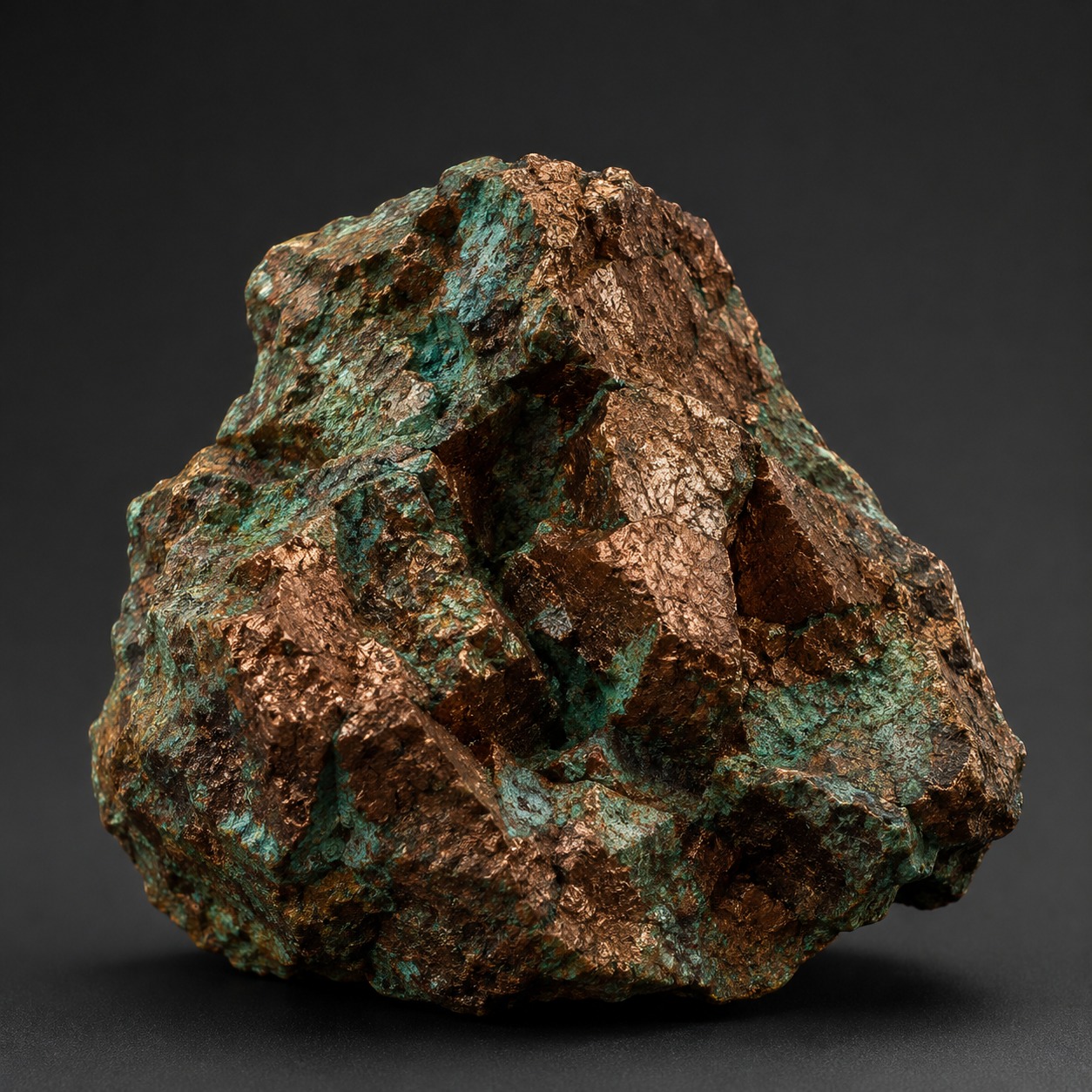
Copper (English Copper, Latin cuprum, Greek χαλκός khalkos) is the metal of Venus/Aphrodite of the decisive canon — derived from Latin 'aes Cyprium (metal of Cyprus)' — the decisive canonical vocabulary — the decisive mineralogical canon of the chemical element Cu — and the decisive metallurgical canon of being humanity's first smelted metal of c. 8000 BCE, and the decisive canon of being the main material of bronze (copper + tin). Aliases — Copper (Copper), aes Cyprium (aes Cyprium), cuprum (cuprum), Venus's metal, Aphrodite's metal, alchemical symbol of Venus (♀) — are the decisive canonical vocabulary. The decisive metallurgical origin canon is the decisive origin canon of copper smelting at Çayönü Tepesi (Çayönü Tepesi) in Turkey of c. 8000 BCE, and the decisive natural history canon is the decisive canon of the Cyprus copper in Pliny the Elder's (Pliny the Elder, 23-79) Natural History (Naturalis Historia) Book 34 verse 94 of the 1st century. The decisive Bronze Age canon is the decisive canon of the Bronze Age (Bronze Age) of 3300-1200 BCE.
Origin
The etymological origin is the decisive canonical vocabulary of Latin 'aes Cyprium (metal of Cyprus)' — the decisive canon shortened to later Latin 'cuprum', becoming the etymology of English 'copper', German 'Kupfer', and French 'cuivre'. The decisive metallurgical origin canon is the decisive origin canon of copper smelting at Çayönü Tepesi (Çayönü Tepesi) in Turkey of c. 8000 BCE — the decisive canon of humanity's first metal smelting, and the decisive Neolithic canon is the decisive canon of copper smelting at Plocnik (Plocnik) of the Vinča (Vinča) culture of Serbia of c. 5500 BCE. The decisive Iceman canon is the decisive canon of the copper axe of Ötzi the Iceman (Ötzi the Iceman, discovered 19 September 1991) of the Italian Alps of c. 3300 BCE. The decisive natural history canon is the decisive canon of the Roman Pliny the Elder's (Pliny the Elder, 23-79) Natural History (Naturalis Historia) Book 34 verse 94 of the 1st century — 'The copper of Cyprus (aes Cyprium) is the oldest metal'. The decisive Bronze Age canon is the decisive canon of the Bronze Age (Bronze Age) of 3300-1200 BCE — the decisive canon of the Bronze Age in Hesiod's (Hesiod) Works and Days (Works and Days).
Features
- Chemical element Cu atomic number 29 Mohs hardness 3
- Main axis metal of Venus and Aphrodite metal of Cyprus
- Humanity's first smelted metal of c. 8000 BCE
- Main material of bronze (bronze, copper + tin) and brass (brass, copper + zinc)
- Alchemical symbol — symbol of Venus (♀) = mirror of Venus
- Origin — Cyprus, Chuquicamata Chile, Bingham Canyon USA, Russia
Stories
Copper smelting at Çayönü Tepesi in Turkey of c. 8000 BCE is the decisive origin, and the decisive natural history canon is the Cyprus copper (aes Cyprium) in Pliny the Elder's Natural History Book 34 verse 94 of the 1st century. The decisive canon used as humanity's first smelted metal, and the decisive canon invoked as the metal of Venus (Venus) and Aphrodite (Aphrodite). The decisive Bronze Age canon is the decisive canon of the Bronze Age (Bronze Age) of 3300-1200 BCE, and the decisive alchemical canon is the decisive canon of the seven metals of medieval alchemy — copper as the symbol of Venus (♀, the mirror of Venus). The decisive electricity canon is the decisive canon of the Voltaic pile (Voltaic pile, copper and zinc battery) by Italian Alessandro Volta (Alessandro Volta, 1745-1827) of 1799, and the decisive canon of the copper wiring of Edison's (Thomas Edison, 1847-1931) Pearl Street (Pearl Street) power station in New York of 1882.
Weakness
Copper's weaknesses are: (1) oxidation — the decisive canonical weakness — the decisive canon of green rust (verdigris) forming from air and moisture — the decisive canon of the green color of the Statue of Liberty (Statue of Liberty); (2) Mohs hardness 3 limit — the decisive canonical weakness — softer than iron (4) and steel (7-8); (3) binding of alloy — the decisive canon of the binding as the main material of bronze (bronze) and brass (brass); (4) binding of iron — the decisive canon of the end of the copper era with the emergence of the Iron Age (Iron Age) of 1200 BCE; (5) binding of Cyprus — the decisive canon of the binding of the Cyprus etymology; (6) binding of the sacred domain — the decisive canon; (7) binding of Venus — the decisive canon of the binding of Aphrodite and Venus; (8) binding of time — the decisive canon of the binding of 10,000 years of smelting. The decisive canonical finale is the decisive mythological canon of Volta's discovery of electricity from copper in the Voltaic pile of 1799.
Cultural Significance
Copper is not merely a metal icon but the canonical iconographic figure of the decisive Cypriot-Greek-Roman canon, traversing the smelting at Çayönü Tepesi in Turkey of c. 8000 BCE, the smelting at Plocnik of the Vinča culture of Serbia of c. 5500 BCE, the copper axe of Ötzi the Iceman of c. 3300 BCE, the Bronze Age of 3300-1200 BCE, the copper trade of the Uluburun shipwreck of c. 1300 BCE, Pliny the Elder's Natural History Book 34 verse 94 of the 1st century, the seven metals of medieval alchemy, the Voltaic pile of 1799, Edison's Pearl Street power station of 1882, and the copper of the Statue of Liberty of 1886. The etymological origin settled as the decisive canon of Latin 'aes Cyprium (metal of Cyprus)' — the decisive canon as the metal of Venus/Aphrodite from Cyprus being the main source of Bronze Age copper and the birthplace of Aphrodite (Aphrodite). The decisive metallurgical origin canon is the decisive origin canon of copper smelting at Çayönü Tepesi (Çayönü Tepesi) in eastern Turkey of c. 8000 BCE — the decisive canon of humanity's first metal smelting, and the decisive Neolithic canon is the decisive canon of copper smelting at Plocnik (Plocnik) of the Vinča (Vinča) culture of Serbia of c. 5500 BCE. The decisive Iceman canon is the decisive canon of the copper axe (99.7% pure copper) of Ötzi the Iceman (Ötzi the Iceman, discovered 19 September 1991) of the Italian Alps of c. 3300 BCE. The decisive natural history canon is the decisive canon of the Roman Pliny the Elder's (Pliny the Elder, 23-79) Natural History (Naturalis Historia) Book 34 verse 94 of the 1st century — 'The copper of Cyprus (aes Cyprium) is the oldest metal', and the decisive Bronze Age canon is the decisive canon of the Bronze Age (Bronze Age) of 3300-1200 BCE — the decisive canon of the Bronze Age in Hesiod's (Hesiod, late 8th century BCE) Works and Days (Works and Days). The decisive alchemical canon is the decisive canon of the seven metals of medieval alchemy (gold, silver, copper, iron, tin, lead, mercury) — copper as the symbol of Venus (♀, mirror of Venus). The decisive electricity canon is the decisive canon of the Voltaic pile (Voltaic pile, copper and zinc battery) by Italian Alessandro Volta (Alessandro Volta, 1745-1827) of 1799, and the decisive canon of the copper wiring of Edison's (Thomas Edison, 1847-1931) Pearl Street (Pearl Street) power station in New York of 4 September 1882. The decisive American canon is the decisive canon of the ~80 tons of copper surface of the Statue of Liberty (Statue of Liberty, Frédéric Auguste Bartholdi, 1834-1904) of the USA of 28 October 1886 — the decisive canon of the green color of verdigris.
In Popular Culture
- Copper smelting at Çayönü Tepesi (Çayönü Tepesi) in Turkey (c. 8000 BCE) — decisive metallurgical origin canon
- Copper smelting at Plocnik (Plocnik) of the Vinča (Vinča) culture in Serbia (c. 5500 BCE) — decisive Neolithic canon
- Copper axe of Ötzi the Iceman (Ötzi the Iceman) in the Italian Alps (c. 3300 BCE) — decisive Iceman canon
- Bronze Age (Bronze Age) (3300-1200 BCE) — decisive Bronze Age canon
- Copper trade of the Uluburun shipwreck (Uluburun shipwreck) in the Mediterranean (c. 1300 BCE) — decisive trade canon
- Pliny the Elder Natural History (Naturalis Historia) Book 34 verse 94 aes Cyprium (1st century) — decisive natural history canon
- Symbol of Venus (♀) of the seven metals of medieval alchemy — decisive alchemical canon
- Voltaic pile (Voltaic pile) by Alessandro Volta (Alessandro Volta) (1799) — decisive electricity origin canon
- Edison's (Thomas Edison) Pearl Street (Pearl Street) power station in New York (1882) — decisive electricity canon
- Copper surface of the Statue of Liberty (Statue of Liberty) (1886) — decisive American canon
Trivia
The etymology of Copper (English Copper, Latin cuprum, Greek χαλκός khalkos) is the decisive canonical vocabulary of Latin 'aes Cyprium (metal of Cyprus)' — the decisive canon shortened to later Latin 'cuprum', becoming the etymology of English 'copper', German 'Kupfer', and French 'cuivre'. Aliases — Copper (Copper), aes Cyprium (aes Cyprium), cuprum (cuprum), Venus's metal, Aphrodite's metal, alchemical symbol of Venus (♀), metal of Cyprus, metal of the 9th wedding anniversary — are the decisive canonical vocabulary. The decisive metallurgical origin canon is the decisive origin canon of copper smelting at Çayönü Tepesi (Çayönü Tepesi, excavated by the University of Chicago in 1964) in eastern Turkey of c. 8000 BCE (~10,000 years ago) — the decisive canon of humanity's first metal smelting, and the decisive Neolithic canon is the decisive canon of copper smelting at Plocnik (Plocnik, excavated in 2010) of the Vinča (Vinča) culture of Serbia of c. 5500 BCE. The decisive Iceman canon is the decisive canon of the copper axe (99.7% pure copper, ~9 cm blade) of Ötzi the Iceman (Ötzi the Iceman, name unknown, discovered 19 September 1991 by German hikers Helmut and Erika Simon) of the Ötztal Alps (Ötztal Alps) on the Italian-Austrian border of c. 3300 BCE (~5300 years ago). The decisive natural history canon is the decisive canon of the Roman Pliny the Elder's (Pliny the Elder, born 23 CE, died at Pompeii 79 CE) Natural History (Naturalis Historia) Book 34 verse 94 of the 1st century — 'aes Cyprium (metal of Cyprus) is the oldest metal, and Cyprus is the main source', and the decisive Bronze Age canon is the decisive canon of the Bronze Age (Bronze Age, alloy of 90% copper + 10% tin) of 3300-1200 BCE — the decisive canon of the Bronze Age in Hesiod's (Hesiod, late 8th century BCE) Works and Days (Works and Days). The decisive bronze trade canon is the decisive canon of the ~10 tons of copper ingots (about 354 oxhide ingots, oxhide ingot) of the Uluburun shipwreck (Uluburun shipwreck, discovered 1982 off the southwest coast of Turkey) of the Mediterranean of c. 1300 BCE. The decisive alchemical canon is the decisive canon of the seven metals of medieval alchemy (gold, silver, copper, iron, tin, lead, mercury) — copper as the symbol of Venus (♀, mirror of Venus). The decisive electricity canon is the decisive canon of the Voltaic pile (Voltaic pile, a battery of copper discs and zinc discs with acid cloth between them) by Italian Alessandro Volta (Alessandro Volta, 1745-1827) of 20 March 1799, and the decisive canon of the copper wiring of Edison's (Thomas Edison, 1847-1931) Pearl Street (Pearl Street) power station (the world's first commercial power station) in New York of 4 September 1882. The decisive American canon is the decisive canon of the ~80 tons of copper (2.4 mm thick copper plates) surface of the Statue of Liberty (Statue of Liberty, by the French sculptor Frédéric Auguste Bartholdi, 1834-1904) of the USA of 28 October 1886 — the decisive canon of the green color of verdigris (verdigris) from oxidation since 1906.