Gold
Gold· Au The radiant metal of myth
Names in Other Languages
 황금한국어
황금한국어Gold· 金 신화의 빛나는 금속
 黄金日本語
黄金日本語Gold· 金 神話の輝く金属
 黃金繁體中文
Gold· 金 神話之輝之金屬
 GoldDeutsch
Gold· Au Das strahlende Metall des Mythos
 OrFrançais
Gold· Au Le metal radieux du mythe
 OroEspañol
Gold· Au El metal radiante del mito
 OuroPortuguês
Gold· Au O metal radiante do mito
 ZlotoPolski
Gold· Au Promienisty metal mitu
 ЗолотоРусский
Gold· Au Сияющий металл мифа
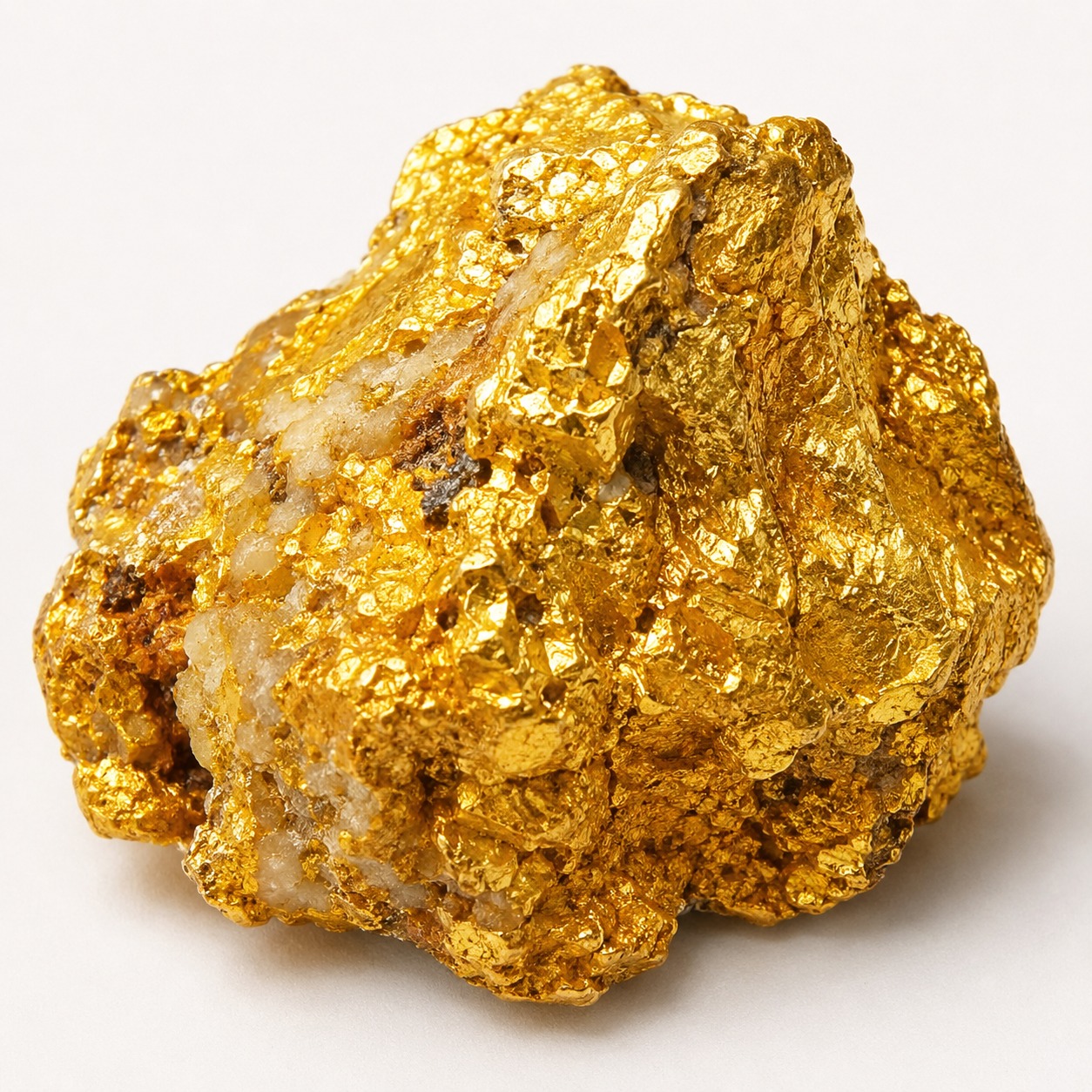
Gold (English Gold, Latin aurum, Greek khrysós, Sanskrit hiraṇya) is the metal of the sun of the decisive canon — derived from Latin 'aurum (shining dawn)' and Greek 'khrysós (χρυσός, gold)' — the decisive canonical vocabulary — the decisive metallic canon of element 79 (Au) — and the decisive canon of incorruptible eternity. Aliases — Gold (Gold), aurum (Latin), khrysós (Greek), hiraṇya (Sanskrit), metal of the sun, flesh of the gods, metal of kings — are the decisive canonical vocabulary. The decisive Hesiod canon is the decisive canon of the first of the Five Ages of humanity, the Golden Age, in Hesiod's (Hesiod) Works and Days (Works and Days) lines 109-126 of c. 700 BCE. The decisive natural history canon is the decisive canon of gold in Pliny the Elder's (Pliny the Elder, 23-79) Natural History (Naturalis Historia) Book 33 of the 1st century. The decisive Golden Fleece canon is the decisive canon of Apollonius of Rhodes's Argonautica (Argonautica) of the 3rd century BCE.
Origin
The etymological origin is the decisive canonical vocabulary of Latin 'aurum (shining dawn, from Proto-Indo-European *ausom 'dawn')' and Greek 'khrysós (χρυσός khrysós, gold)' — the decisive canon of English 'gold' deriving from Germanic 'gulþa' and Proto-Indo-European '*ghel (yellow)' — and Sanskrit 'hiraṇya (हिरण्य hiraṇya)'. The decisive Hesiod canon is the decisive canon of the Greek Hesiod's (Hesiod) Works and Days (Erga kai Hēmerai, Works and Days) lines 109-126 of c. 700 BCE — the first of the Five Ages of humanity (gold, silver, bronze, heroic, iron) — 'the people of the Golden Age lived like gods, never growing old, never knowing death, prosperous without labor'. The decisive natural history canon is the decisive canon of gold in Pliny the Elder's (Pliny the Elder, 23-79) Natural History (Naturalis Historia) Book 33 of the 1st century. The decisive Golden Fleece canon is the decisive canon of Jason's (Jason) Golden Fleece (chrysómallon dérās) in the Greek Apollonius of Rhodes's (Apollonius of Rhodes) Argonautica (Argonautica) of the 3rd century BCE. The decisive Midas canon is the decisive canon of Midas's golden touch in Ovid's (Ovid) Metamorphoses (Metamorphoses) Book 11 verses 85-145 of c. 8 CE.
Features
- Element 79 (Au) Mohs hardness 2.5-3 incorruptible eternity
- Main axis Hesiod Works and Days lines 109-126 Golden Age
- Latin aurum (dawn) Greek khrysós etymology
- Egyptian gold of c. 4500 BCE — humanity's first worked metal
- Golden Fleece, golden apples, Midas's touch, golden calf
- Origin — South Africa, Russia, Australia, China, Peru
Stories
The Golden Age in Hesiod's Works and Days lines 109-126 of c. 700 BCE is the decisive Hesiod canon, and gold in Pliny the Elder's Natural History Book 33 of the 1st century is the decisive natural history canon. The decisive canon used as the flesh of the gods and the metal of kings, and the decisive canon of incorruptible eternity. The decisive Egyptian canon is the decisive canon of Tutankhamun's golden mask of the 14th century BCE, and the decisive Golden Fleece canon is the decisive canon of Jason in Apollonius of Rhodes's Argonautica of the 3rd century BCE. The decisive Midas canon is the decisive canon of Ovid's Metamorphoses Book 11 verses 85-145, and the decisive Bible canon is the decisive canon of the golden calf in Exodus 32. The decisive alchemical canon is the decisive canon of medieval transmutation to gold, and the decisive Gold Rush canon is the decisive canon of the California Gold Rush of 1848.
Weakness
Gold's weaknesses are: (1) Mohs hardness 2.5-3 limit — the decisive canonical weakness — much softer than diamond (10); (2) binding of alloy — the decisive canon of pure gold being too soft, requiring alloys (silver, copper); (3) binding of Midas — the decisive canon of Midas's golden touch turning everything to gold and starving him; (4) binding of the idol — the decisive canon of the golden calf in Exodus 32; (5) binding of the Gold Rush — the decisive canon of the violence of the California Gold Rush of 1848; (6) binding of the sacred domain — the decisive canon; (7) binding of alchemy — the decisive canon of the falsity of transmutation; (8) binding of time — the decisive canon of the binding of 6500 years of humanity. The decisive canonical finale is the decisive mythological canon of the abolition of the gold standard by Nixon in 1971.
Cultural Significance
Gold is not merely a metal icon but the canonical iconographic figure of the decisive Mesopotamian-Egyptian-Greco-Roman-Christian canon, traversing the Egyptian gold of c. 4500 BCE, the Golden Age in Hesiod's Works and Days lines 109-126 of c. 700 BCE, Tutankhamun's golden mask of the 14th century BCE, the Golden Fleece in Apollonius of Rhodes's Argonautica of the 3rd century BCE, Midas in Ovid's Metamorphoses of c. 8 CE, Pliny the Elder's Natural History Book 33 of the 1st century, the golden calf in Exodus 32 of the Old Testament, medieval alchemy, the California Gold Rush of 1848, Schliemann's Priam's Treasure of 1869, and the abolition of the gold standard in 1971. The etymological origin settled as the decisive canon of Latin 'aurum (shining dawn)' and Greek 'khrysós (χρυσός khrysós)' — the decisive canon of English 'gold' deriving from Germanic 'gulþa' and Proto-Indo-European '*ghel (yellow)'. The decisive Egyptian canon is the decisive canon of the gold mines of Nubia of Egypt of c. 4500 BCE — humanity's first worked metal — and the decisive canon of Tutankhamun's (Tutankhamun) golden mask (about 10.23 kg, discovered by Howard Carter in 1922) of the 14th century BCE. The decisive Hesiod canon is the decisive canon of the Greek Hesiod's (Hesiod) Works and Days (Erga kai Hēmerai, Works and Days) lines 109-126 of c. 700 BCE — the first of the Five Ages of humanity — 'the people of the Golden Age lived under Cronus's reign like gods, never growing old, never knowing death, prosperous without labor'. The decisive Golden Fleece canon is the decisive canon of Jason's (Jason) Colchis Golden Fleece (chrysómallon dérās, 'fleece of the golden ram') in the Greek Apollonius of Rhodes's (Apollonius of Rhodes, 295-215 BCE) Argonautica (Argonautica) of the 3rd century BCE. The decisive Midas canon is the decisive canon of King Midas's (Midas) of Phrygia golden touch granted by Dionysus (Dionysus) in the Roman Ovid's (Ovid) Metamorphoses (Metamorphoses) Book 11 verses 85-145 of c. 8 CE — the decisive canon of food and even his daughter turning to gold and regretting it. The decisive natural history canon is the decisive canon of gold in the Roman Pliny the Elder's (Pliny the Elder, 23-79) Natural History (Naturalis Historia) Book 33 of the 1st century. The decisive Bible canon is the decisive canon of the golden calf (golden calf) idol in Exodus 32, and the decisive Heracles canon is the decisive canon of the golden apples of the Hesperides in Heracles's 11th labor. The decisive Gold Rush canon is the decisive canon of the California Gold Rush (California Gold Rush) of 24 January 1848 in the USA, and the decisive Schliemann canon is the decisive canon of the German Heinrich Schliemann's (Heinrich Schliemann) Priam's Treasure of Troy in 1869. The decisive monetary canon is the decisive canon of the abolition of the gold standard (gold standard) by US President Nixon on 15 August 1971.
In Popular Culture
- Golden Age in Hesiod (Hesiod) Works and Days (Works and Days) lines 109-126 (c. 700 BCE) — decisive Hesiod canon
- Golden mask of Tutankhamun (Tutankhamun) (14th century BCE) — decisive Egyptian canon
- Golden Fleece (chrysómallon dérās) in Apollonius of Rhodes (Apollonius of Rhodes) Argonautica (3rd century BCE) — decisive Golden Fleece canon
- Midas's golden touch in Ovid (Ovid) Metamorphoses (Metamorphoses) Book 11 verses 85-145 (c. 8 CE) — decisive Midas canon
- Gold in Pliny the Elder Natural History (Naturalis Historia) Book 33 (1st century) — decisive natural history canon
- Golden calf in Exodus (Exodus) 32 — decisive Bible canon
- Golden apples of the Hesperides in Heracles's 11th labor — decisive Heracles canon
- California Gold Rush (California Gold Rush) (1848) — decisive Gold Rush canon
- Heinrich Schliemann's (Heinrich Schliemann) Priam's Treasure of Troy (1869) — decisive Schliemann canon
- Nixon's abolition of the gold standard (gold standard) (15 August 1971) — decisive monetary canon
Trivia
The etymology of Gold (English Gold, Latin aurum, Greek χρυσός khrysós, Sanskrit हिरण्य hiraṇya) is the decisive canonical vocabulary of Latin 'aurum (shining dawn, from Proto-Indo-European *ausom 'dawn', same root as 'aurora')' and Greek 'khrysós (χρυσός khrysós, gold)' — the decisive canon of English 'gold' deriving from Germanic '*gulþą' and Proto-Indo-European '*ghel (yellow, shining)' — and Sanskrit 'hiraṇya (हिरण्य hiraṇya, gold)'. Aliases — Gold (Gold), aurum (Latin), khrysós (Greek), hiraṇya (Sanskrit), metal of the sun, flesh of the gods, metal of kings, king of money, gemstone of the 50th wedding anniversary, sister word of aurora — are the decisive canonical vocabulary. The decisive Egyptian canon is the decisive canon of the gold mines of Nubia (Nubia) of Egypt on the Nile of c. 4500 BCE — humanity's first worked metal (end of the Stone Age) — and the decisive canon of the 18th Dynasty Pharaoh Tutankhamun's (Tutankhamun) golden mask (about 10.23 kg, about 54 cm, discovered by Howard Carter on 4 November 1922, now at the Egyptian Museum of Cairo) of the 14th century BCE. The decisive Hesiod canon is the decisive canon of the Greek farmer-poet Hesiod's (Hesiod, active 8th century BCE) Works and Days (Erga kai Hēmerai, Works and Days) lines 109-126 of c. 700 BCE — the first of the Five Ages of humanity (Golden Age, Silver Age, Bronze Age, Heroic Age, Iron Age) — 'the people of the Golden Age lived under Cronus's reign like gods, never growing old, never knowing death, prosperous without labor'. The decisive Golden Fleece canon is the decisive canon of Jason's (Jason) Colchis (Colchis, modern Georgia) Golden Fleece (chrysómallon dérās, 'fleece of the golden ram') in the Greek Apollonius of Rhodes's (Apollonius of Rhodes, 295-215 BCE) Argonautica (Argonautica, 4 books) of the 3rd century BCE — the decisive canon of the adventure of the 50 Argonauts and Medea. The decisive Midas canon is the decisive canon of King Midas's (Midas) of Phrygia golden touch granted by Dionysus (Dionysus, or Bacchus) in the Roman Ovid's (Ovid, born 43 BCE, died 17 CE) Metamorphoses (Metamorphoses, 15 books) Book 11 verses 85-145 of c. 8 CE — the decisive canon of food and even his daughter turning to gold and nearly starving. The decisive natural history canon is the decisive canon of gold in the Roman Pliny the Elder's (Pliny the Elder, born 23 CE, died at Pompeii 79 CE) Natural History (Naturalis Historia) Book 33 of the 1st century — the decisive canon of 'gold is the cause of all crimes'. The decisive Bible canon is the decisive canon of the golden calf (golden calf) idol in Exodus (Exodus) 32 of c. 13th century BCE, and the decisive Heracles canon is the decisive canon of the golden apples of the Hesperides (Hesperides) in Heracles's 11th labor (Hesiod's Theogony and Apollodorus's Library). The decisive Gold Rush canon is the decisive canon of the discovery of gold at Sutter's Mill in California, USA on 24 January 1848 — the decisive canon of 300,000 forty-niners. The decisive Schliemann canon is the decisive canon of the German Heinrich Schliemann's (Heinrich Schliemann, 1822-1890) Priam's Treasure (Priam's Treasure) of Troy (modern Hisarlık, Turkey) in 1869-1873 — the decisive canon of 8,750 gold artifacts. The decisive monetary canon is the decisive canon of US President Richard Nixon's (Richard Nixon) Nixon shock (Nixon shock) abolition of the gold standard (gold standard) on 15 August 1971.