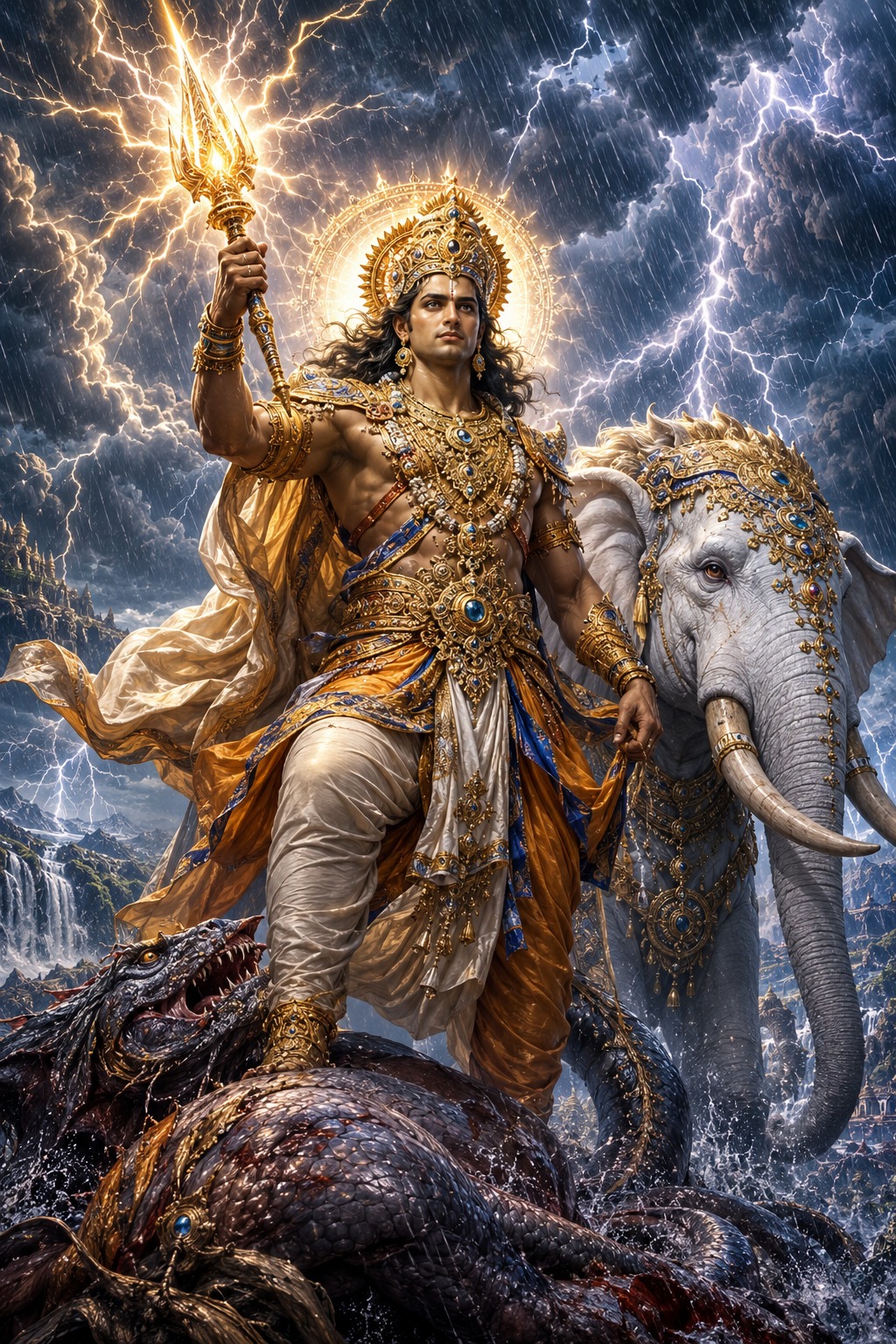
Indra
Indra · God of Thunder — Supreme Deity of Hindu Mythology
Names in Other Languages
 인드라한국어
Indra· 천둥의 신 인도 신화의 최고 신
 インドラ日本語
インドラ· 雷の神 ヒンドゥー神話の最高神
 因陀羅繁體中文
因陀羅· 雷神 印度神話中的最高神
 IndraDeutsch
Indra · Gott des Donners — Oberster Gott der hinduistischen Mythologie
 IndraFrançais
Indra · Dieu du tonnerre — Suprême divinité de la mythologie hindoue
 IndraEspañol
Indra · Dios del trueno — Deidad suprema de la mitología hindú
 IndraPortuguês
Indra · Deus do Trovão — Divindade suprema da mitologia hindu
 IndraPolski
Indra · Bóg piorunów — Najwyższe bóstwo hinduistyczne
 ИндраРусский
Индра · Бог грома — Верховное божество индуистской мифологии
Indra (Sanskrit Indra) is the supreme deity of Indian Vedic mythology — the decisive canon — and god of thunder, lightning, war, and rain — derived from the Sanskrit 'indra' meaning 'strong, ruler' — the decisive canonical iconographic figure of the most praised deity of the Vedic era (c. 1500-500 BCE). Aliases — Shakra ('mighty one'), Vajrapani ('bearer of vajra'), Purandara ('destroyer of fortresses'), Meghavahana ('rider of clouds'), Devaraja ('king of the gods'), Sakra Devanam Indra (Buddhist Indra) — are the decisive canonical vocabulary. The decisive textual canon is the decisive origin canon of the Rigveda (Rigveda) of c. 1500-1200 BCE in which about 250 of the 1028 hymns are dedicated to him — the most of any deity. The decisive mythological canon is the decisive origin canon of Rigveda 1.32 in which Indra slew the drought demon Vritra (Vritra) with the vajra (vajra, thunder weapon) and released the blocked waters, bringing rain to humanity.
Origin
The etymological origin is the decisive canonical vocabulary of the Sanskrit 'indra' meaning 'strong, ruler' — the decisive canon of the Indo-European cognate, and the decisive textual canon is the decisive origin canon of the Rigveda (Rigveda) of c. 1500-1200 BCE in which about 250 of the 1028 hymns are dedicated to Indra — the decisive canon that he was the most important god of the Vedic era. The decisive mythological canon is the decisive origin canon of Rigveda 1.32 (Indra and Vritra) in which Indra slew the drought demon Vritra (Vritra, 'the enveloper') who had blocked the waters of the seven celestial rivers, with the vajra (vajra, thunder weapon) made by the divine craftsman Tvashtr (Tvashtr), broke the 99 or 91 fortresses of Vritra, split his back, and released the blocked waters, bringing rain to humanity — the decisive epithet canon of 'Vritrahan (Vritrahan, slayer of Vritra)'. Indra is the decisive canon as king of the gods (Devaraja) who governs thunder, lightning, rain, and war, and rides the white elephant Airavata (Airavata) or a golden chariot, and the decisive canon of drinking the ritual drink soma (soma) to gain his power. The decisive canon of the Atharvaveda (Atharvaveda) and the Shatapatha Brahmana (Shatapatha Brahmana), and the decisive canon of the Mahabharata (Mahabharata) and Ramayana (Ramayana) of c. 4th century BCE.
Features
- Rides a golden chariot or the white elephant Airavata (Airavata)
- Wields the vajra (vajra, thunder weapon) — made by divine craftsman Tvashtr
- God of thunder and lightning — king of the gods (Devaraja)
- God of war, rain, and fertility — most important god of the Vedic era
- Main axis supreme deity of Vedic mythology epithet 'Vritrahan (slayer of Vritra)'
- Buddhist Sakra Devanam Indra — guardian deity of East Asian temples
Stories
About 250 of the 1028 hymns of the Rigveda of c. 1500-1200 BCE are the decisive origin, and the decisive textual canon is Rigveda 1.32 in which Indra slew the drought demon Vritra with the vajra. The decisive canon as the role of mainly defeating the forces of evil and chaos and protecting gods and humans, worshipped in ancient India as the god of war, fertility, and rain. The decisive canon in later Hinduism — yielding his place to Vishnu and Shiva and losing prominence — but the decisive canon of being accepted into Buddhism as Sakra Devanam Indra (Sakra Devanam Indra), becoming the guardian deity of the Buddhist cosmos, enshrined as the guardian deity in Korean and Japanese temples. The decisive mythological canon is the canon of Vritra's slaying in Rigveda 1.32, the decisive canon of being the father of Arjuna (Arjuna) in the Mahabharata (Mahabharata), and the decisive canon of being defeated once by Indrajit (Indrajit, 'conqueror of Indra'), the son of Ravana, in the Ramayana (Ramayana). The decisive East Asian canon is Buddhist Sakra Devanam Indra — the decisive canon of the interpretation of 'Hwanin' of the Korean Dangun myth as Sakra, the decisive canon of Sakra above the Four Heavenly Kings of Todai-ji temple in Japan, and the decisive 21st-century global game canon of Indra in the Indian video game Raji (Raji) of 2020.
Weakness
Indra's weaknesses are: (1) drinking and arrogance — the decisive canonical weakness — in myths, he commits mistakes due to drink and arrogance and is punished or challenged by other gods; (2) loss of prominence in later Hinduism — the decisive canonical weakness — yielding his place to Vishnu and Shiva; (3) Indrajit's conquest — the decisive canonical weakness — the decisive canon of being defeated once by Indrajit (Indrajit), the son of Ravana, in the Ramayana; (4) adultery with Ahalya (Ahalya) — the decisive canonical weakness — the decisive canon of seducing Ahalya, the wife of the rishi Gautama (Gautama), by disguising himself as Gautama, after which Gautama's curse marked his body with a thousand vulva-marks; (5) binding of soma — the decisive canon of the ritual drink soma; (6) binding of the vajra — the decisive canon of the vajra made by the divine craftsman Tvashtr; (7) binding of the sacred domain — heaven; (8) fear after Vritra's slaying — the decisive canon of hiding in a lotus in a lake out of guilt after slaying Vritra. The decisive canonical finale is the decisive mythological canon of being accepted into Buddhism as Sakra Devanam Indra despite his loss of prominence in later Hinduism, eternally enshrined as the guardian deity of the Buddhist cosmos in East Asian temples.
Cultural Significance
Indra is not merely a thunder-god icon but the canonical iconographic figure of the decisive Indian-East Asian canon, traversing about 250 of the 1028 hymns of the Rigveda of c. 1500-1200 BCE, Rigveda 1.32 Vritra's slaying, the Atharvaveda, the Shatapatha Brahmana, the c. 4th century BCE Mahabharata, the Ramayana's Indrajit, Buddhist Sakra Devanam Indra, and Sakra above the Four Heavenly Kings of Todai-ji temple in Japan. The etymological origin settled as the decisive canon of the Sanskrit 'indra' meaning 'strong, ruler' — the Indo-European cognate. The decisive mythological canon is the decisive canon of Rigveda (Rigveda) 1.32 (Indra and Vritra) of c. 1500-1200 BCE in which Indra slew the drought demon Vritra (Vritra, 'the enveloper') who had blocked the waters of the seven celestial rivers, with the vajra (vajra, thunder weapon) made by the divine craftsman Tvashtr (Tvashtr), broke the 99 or 91 fortresses of Vritra, split his back, and released the blocked waters, bringing rain to humanity — the decisive epithet canon of 'Vritrahan (Vritrahan, slayer of Vritra)'. Indra is the decisive canon as king of the gods (Devaraja) who governs thunder, lightning, rain, and war, and rides the white elephant Airavata (Airavata) or a golden chariot, and the decisive canon of drinking the ritual drink soma (soma) to gain his power. The decisive canon of Indra as the father of Arjuna (Arjuna) in the Mahabharata (Mahabharata) of c. 4th century BCE, and the decisive canon of being defeated once by Indrajit (Indrajit, 'conqueror of Indra'), the son of Ravana (Ravana), in the Ramayana (Ramayana). In later Hindu Purana literature, the decisive canon of yielding his place to the Trimurti (Trimurti) of Vishnu and Shiva and losing prominence, but the decisive canon of being accepted into Buddhism as Sakra Devanam Indra (Sakra Devanam Indra), becoming the ruler of the Buddhist cosmic Trayastrimsa (Trayastrimsa, the heaven of the 33 gods), and the decisive canon of the interpretation of 'Hwanin' of the Korean Dangun myth as Sakra, and the decisive canon of Sakra above the Four Heavenly Kings of Todai-ji temple (founded in 749 during the Tenpyo era) in Japan. The decisive 21st-century canon is the decisive global game canon of Indra in the video game Smite (Smite) by USA Hi-Rez Studios of 2014, and the decisive 21st-century global game canon of Indra in the Indian video game Raji (Raji: An Ancient Epic) (Nodding Heads Games) of 2020.
In Popular Culture
- About 250 of the 1028 hymns of the Rigveda dedicated to Indra (c. 1500-1200 BCE) — decisive origin canon
- Rigveda 1.32 Indra's slaying of Vritra (c. 1500-1200 BCE) — decisive origin mythological canon
- Atharvaveda and Shatapatha Brahmana (c. 1000-600 BCE) — decisive Vedic canon
- Mahabharata Indra as father of Arjuna (c. 4th century BCE) — decisive epic canon
- Ramayana Indrajit son of Ravana (c. 4th century BCE) — decisive epic canon
- Buddhist Sakra Devanam Indra ruler of Trayastrimsa — decisive Buddhist canon
- Sakra above the Four Heavenly Kings of Todai-ji temple (749 CE Tenpyo era) — decisive Japanese Buddhist canon
- Video game Smite (Smite) Indra (2014) — 21st-century decisive global game canon
Trivia
The etymology of Indra (Sanskrit Indra) is the decisive canonical vocabulary of the Sanskrit 'indra' meaning 'strong, ruler (strong, ruler)' — the decisive canon of the Indo-European cognate, and aliases Shakra (Shakra, 'mighty one'), Vajrapani (Vajrapani, 'bearer of vajra'), Purandara (Purandara, 'destroyer of fortresses'), Meghavahana (Meghavahana, 'rider of clouds'), Devaraja (Devaraja, 'king of the gods'), Vritrahan (Vritrahan, 'slayer of Vritra'), and Sakra Devanam Indra (Buddhist Indra) are the decisive canonical vocabulary. The decisive textual canon is the decisive origin canon of the Rigveda (Rigveda) of c. 1500-1200 BCE in which about 250 of the 1028 hymns are dedicated to Indra — the decisive canon that he was the most important god of the Vedic era — and the decisive mythological canon is the decisive canon of Rigveda 1.32 (Indra and Vritra) in which Indra slew the drought demon Vritra (Vritra) who had blocked the waters of the seven celestial rivers, with the vajra (vajra, thunder weapon) made by the divine craftsman Tvashtr (Tvashtr), broke the 99 or 91 fortresses of Vritra, split his back, and released the blocked waters, bringing rain to humanity. Indra is the decisive canon as king of the gods (Devaraja) who governs thunder, lightning, rain, and war, and rides the white elephant Airavata (Airavata) or a golden chariot, and the decisive canon of drinking the ritual drink soma (soma) to gain his power. The decisive canon of the Mahabharata (Mahabharata) of c. 4th century BCE by Vyasa (Vyasa) — Indra as the father of Arjuna (Arjuna) — and the decisive canon of being defeated once by Indrajit (Indrajit, 'conqueror of Indra'), the son of Ravana (Ravana), in the Ramayana (Ramayana) by Valmiki (Valmiki). In later Hindu Purana literature, the decisive canon of yielding his place to the Trimurti (Trimurti) of Vishnu and Shiva and losing prominence, but the decisive canon of being accepted into Buddhism as Sakra Devanam Indra (Sakra Devanam Indra), becoming the ruler of the Buddhist cosmic Trayastrimsa (Trayastrimsa, the heaven of the 33 gods, ruler of the 33 heavens), and the decisive canon of the interpretation of 'Hwanin' of the Korean Dangun myth as Sakra, and the decisive canon of Sakra above the Four Heavenly Kings of Todai-ji temple (founded in 749 during the Tenpyo era) in Japan. Indra's net (Indrajala) is the decisive Buddhist Huayan canon in which there is a mirror at every knot, mirroring each other's mirrors. The decisive 21st-century canon is the decisive global game canon of Indra in the video game Smite (Smite) released by USA Hi-Rez Studios in 2014, and the decisive 21st-century global game canon of Indra in the Indian video game Raji (Raji: An Ancient Epic) (Nodding Heads Games, Nodcode Studio) of 2020.
Related
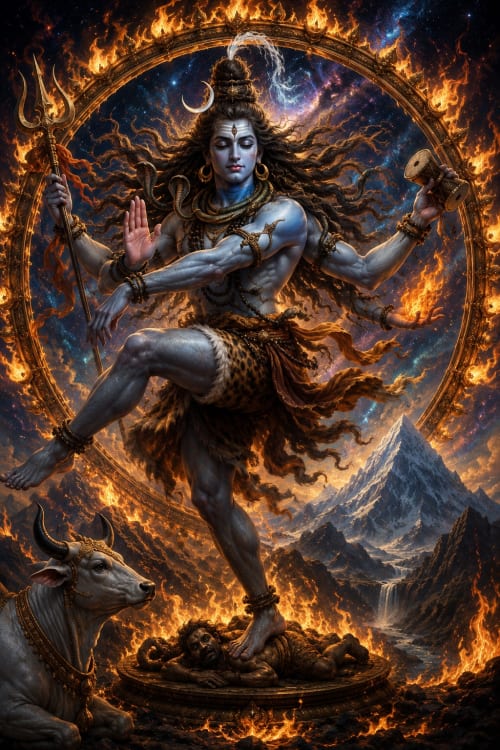
Shiva
Shiva · Hindu God of Destruction and Renewal — Cosmic Dancer
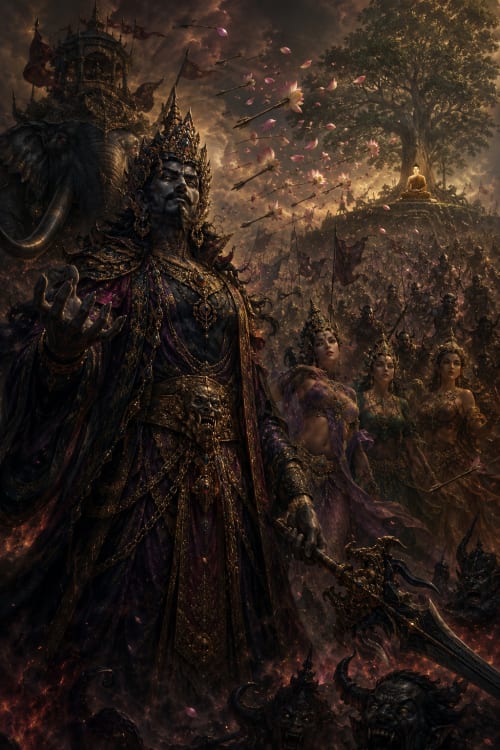
Mara
Mara · Buddhist Demon-King of Desire — Hinderer of Enlightenment
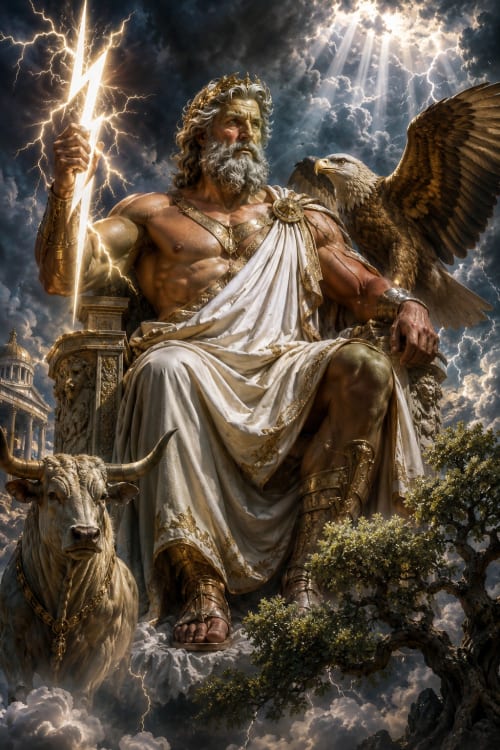
Zeus
Zeus· King of Olympus God of Sky and Thunder
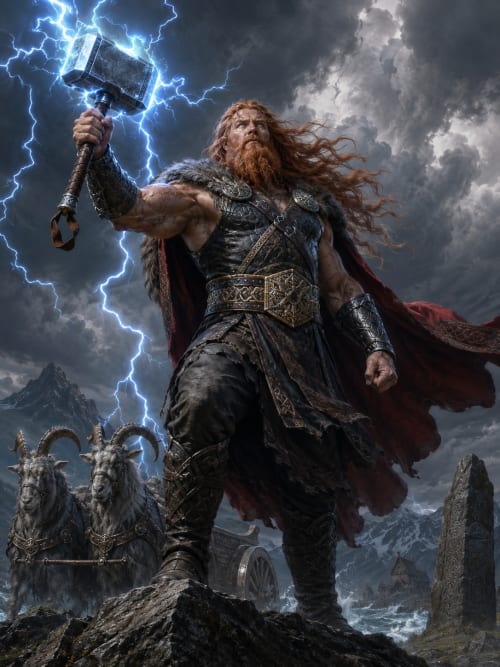
Thor
Thor · Norse God of Thunder — Protector of Mankind
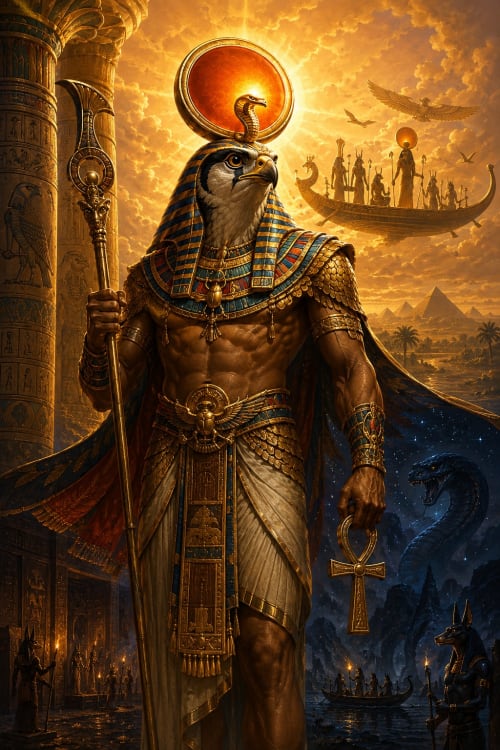
Ra
Ra · Egyptian Sun God — Creator and King of the Gods
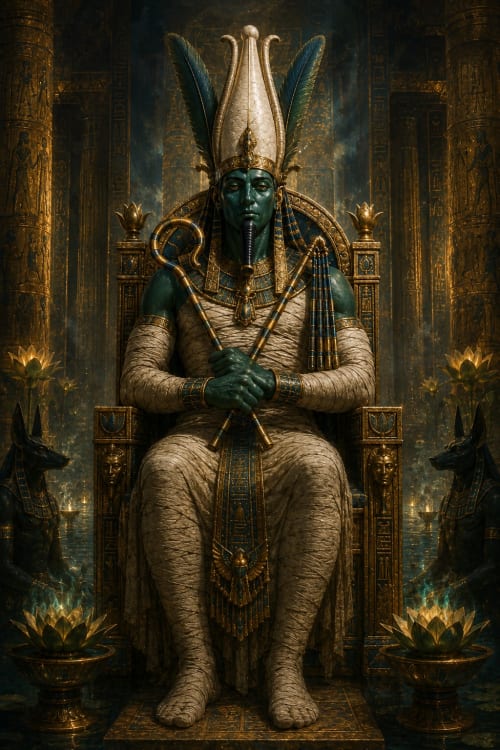
Osiris
Osiris · Egyptian King of the Afterlife — God of Resurrection and Abundance
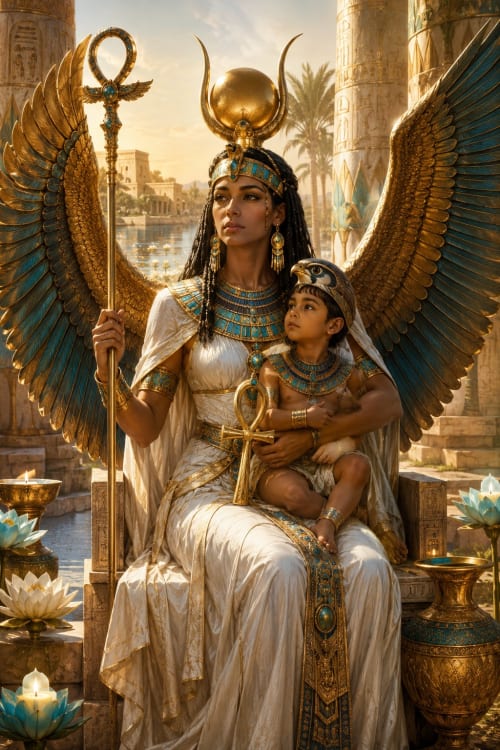
Isis
Isis · Egyptian Goddess of Magic and Motherhood — Goddess of Ten Thousand Names
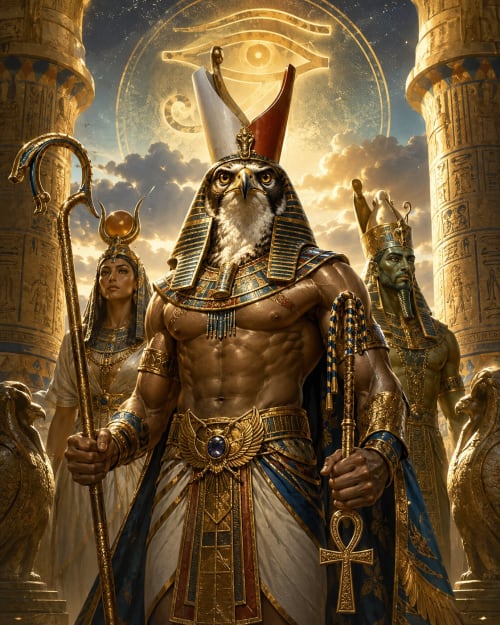
Horus
Horus · Egyptian God of Sky and Kingship — Falcon-Eyed Restorer of Justice

Anubis
Anubis · Egyptian God — Guardian of Death and Mummification
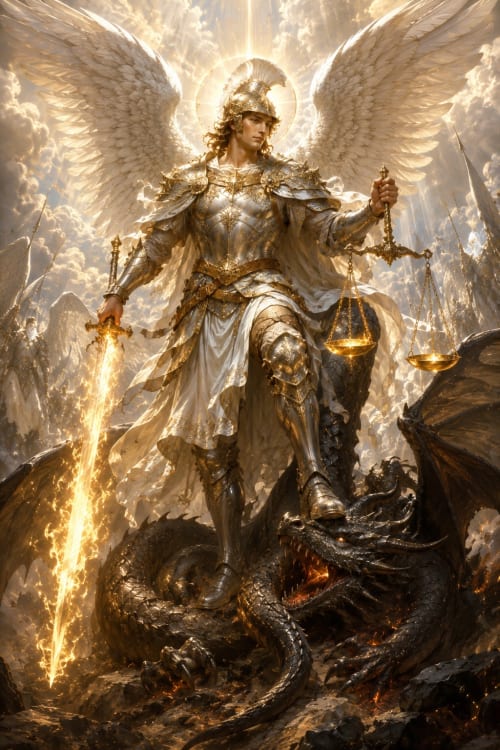
Michael
Michael · Archangel — Captain of the Heavenly Host, Vanquisher of Satan
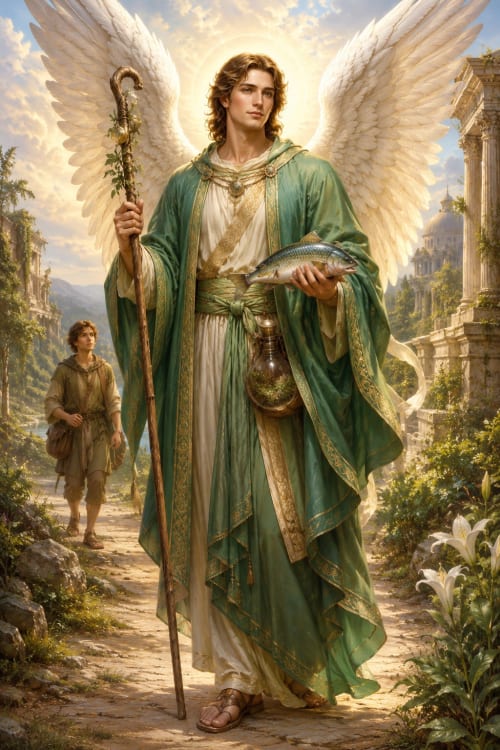
Raphael
Raphael · Archangel — Angel of Healing and Guide of Travelers
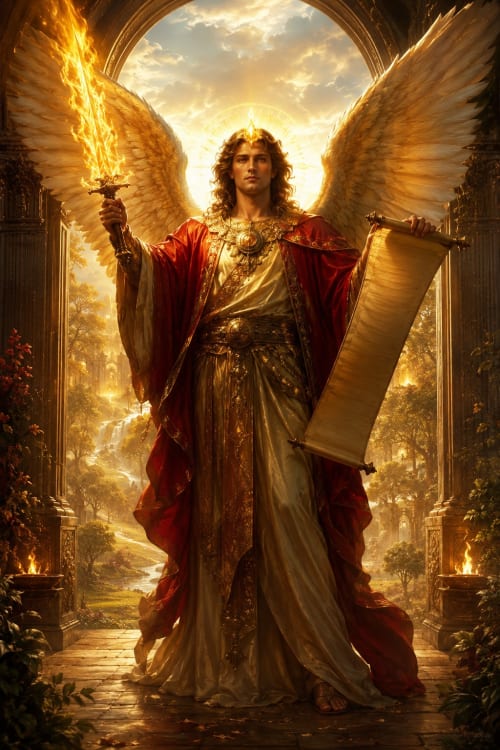
Uriel
Uriel · Archangel — Light of God, Angel of Wisdom and Repentance