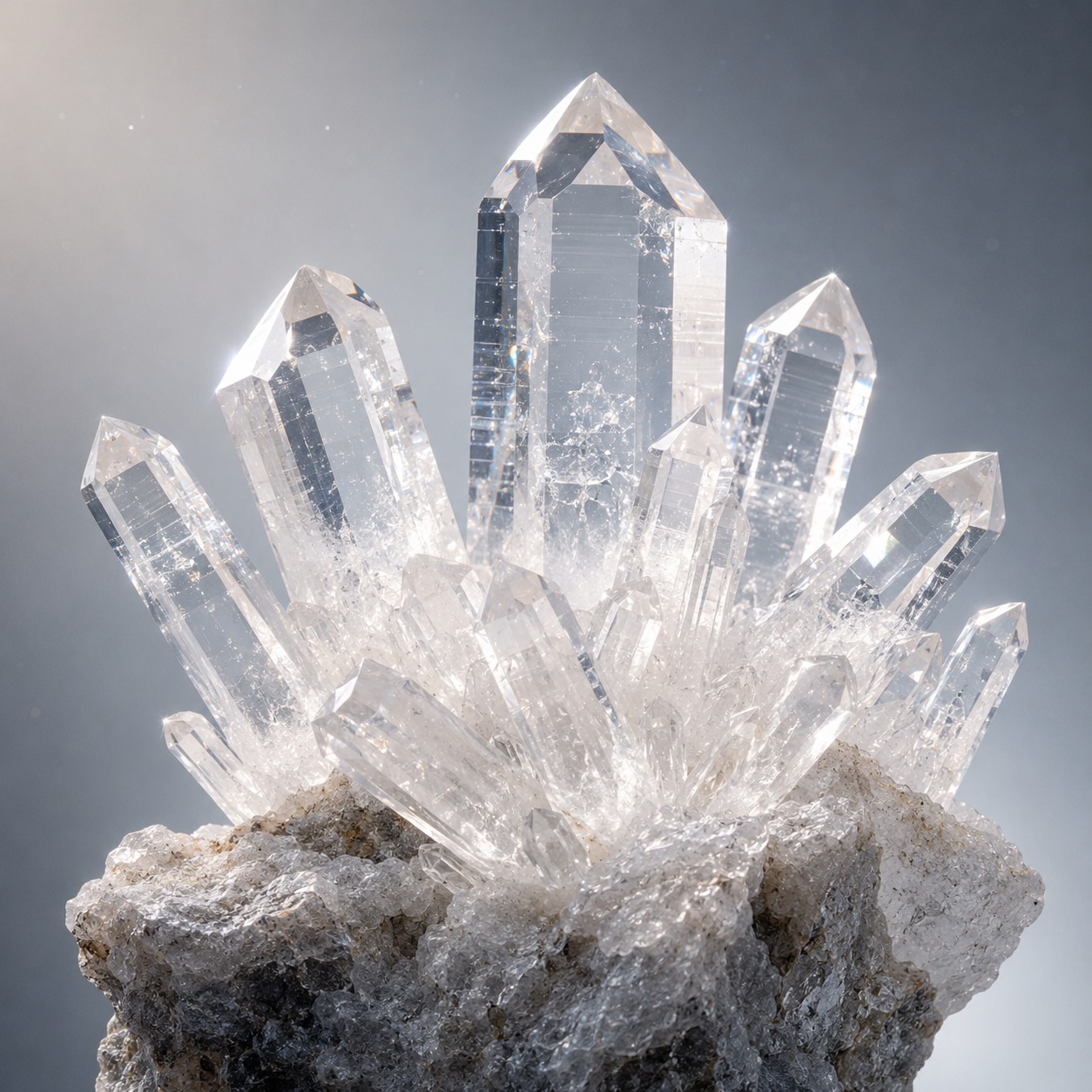
Quartz
Quartz· 水晶 Crystal of light
Names in Other Languages
 수정한국어
수정한국어Quartz· 水晶 빛의 결정
 水晶日本語
水晶日本語Quartz· 水晶 光の結晶
 水晶繁體中文
Quartz· 水晶 光之結晶
 QuarzDeutsch
Quartz· 水晶 Kristall des Lichts
 QuartzFrançais
Quartz· 水晶 Cristal de lumiere
 CuarzoEspañol
Quartz· 水晶 Cristal de luz
 QuartzoPortuguês
Quartz· 水晶 Cristal de luz
 KwarcPolski
Quartz· 水晶 Krysztal swiatla
 КварцРусский
Quartz· 水晶 Кристалл света
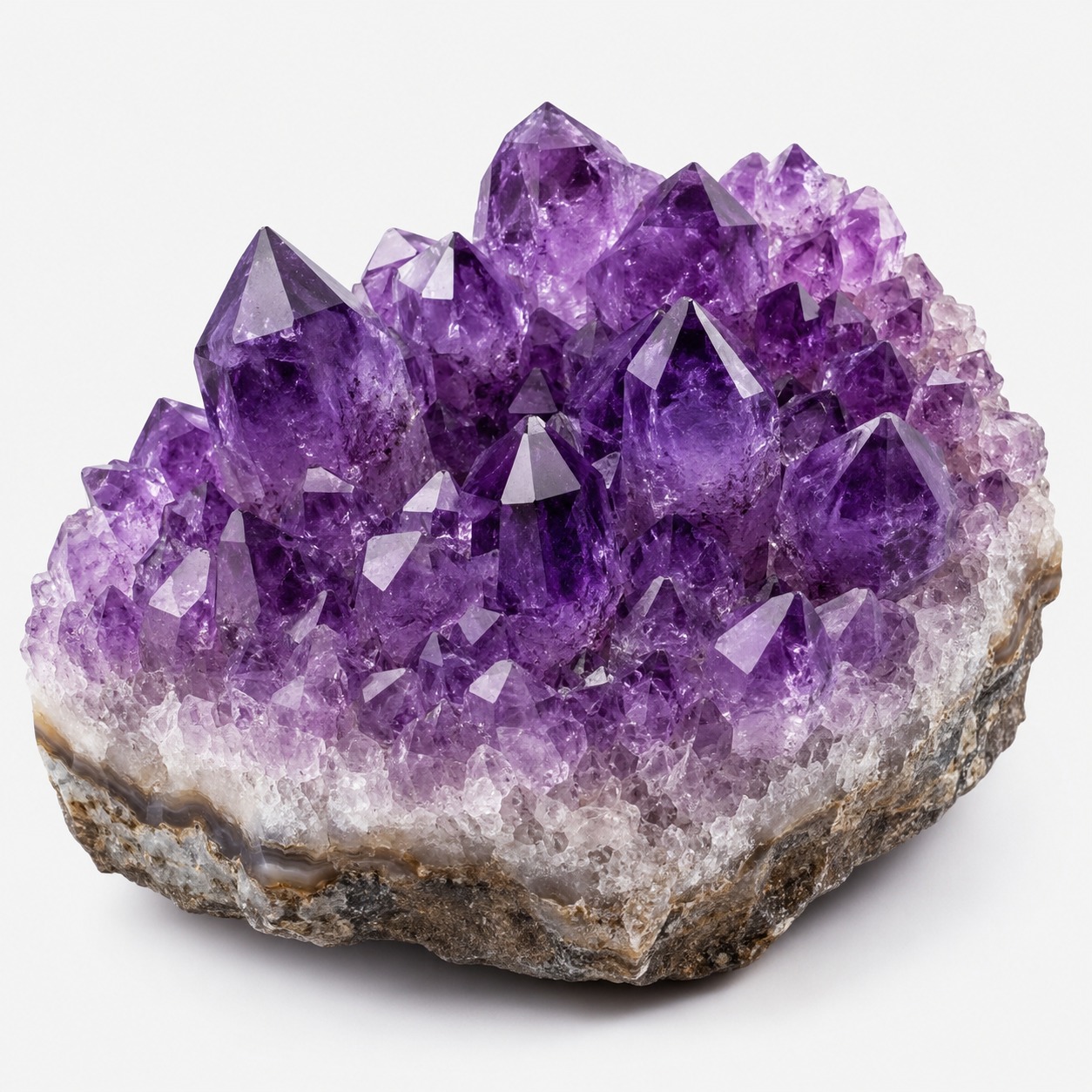
Quartz (English Quartz, Greek krystallos, Latin crystallus) is the crystal of light of the decisive canon — derived from Greek 'krystallos (κρύσταλλος, ice, crystal)' — the decisive canonical vocabulary — the decisive mineralogical canon of silicon dioxide (SiO2) — and the decisive canon as the most abundant mineral of the Earth's crust. Aliases — Quartz (Quartz), krystallos (Greek), crystallus (Latin), crystal of light, druid's crystal ball, rock crystal — are the decisive canonical vocabulary. The decisive natural history origin canon is the decisive canon of 'quartz is permanently frozen ice (glacies concreta)' in Pliny the Elder's (Pliny the Elder, 23-79) Natural History (Naturalis Historia) Book 37 chapters 23-29 of the 1st century. The decisive Theophrastus canon is the decisive canon of quartz in Theophrastus's (Theophrastus) On Stones (Peri Lithōn) of the 4th century BCE.
Origin
The etymological origin is the decisive canonical vocabulary of Greek 'krystallos (κρύσταλλος krystallos, ice, crystal, from κρύος kryos 'ice, cold' + suffix)' — the decisive canon becoming the etymology of Latin 'crystallus' and English 'crystal' — and English 'quartz' deriving from German 'Quarz' and Slavic miners' vocabulary. The decisive Theophrastus canon is the decisive canon of quartz origin in the work On Stones (Peri Lithōn, On Stones) of the Greek natural philosopher Theophrastus (Theophrastus, 371-287 BCE) of the 4th century BCE. The decisive natural history origin canon is the decisive canon of the Roman Pliny the Elder's (Pliny the Elder, 23-79) Natural History (Naturalis Historia) Book 37 chapters 23-29 of the 1st century — 'quartz (crystallus) is permanently frozen ice (glacies concreta), formed when the snow of the Alpine peaks turned to ice by severe cold' — the decisive canon of India and the Alps as sources. The decisive Druid canon is the decisive canon of the Celtic druids' crystal scrying from the 3rd century BCE. The decisive Taoist canon is the decisive canon of quartz in Ge Hong's (Ge Hong) Baopuzi (Baopuzi) of the 4th century, and the decisive occult canon is the decisive canon of the crystal ball (crystal ball, now at the British Museum) of John Dee (John Dee, 1527-1608) of England of the 16th century.
Features
- Silicon dioxide (SiO2) Mohs hardness 7 hexagonal crystals
- Main axis Pliny Natural History Book 37 chapters 23-29 eternal ice
- Greek krystallos (ice) etymology
- Most abundant mineral of the Earth's crust — about 12% by content
- Invention of the quartz watch by Seiko of Japan in 1969
- Origin Brazil, Arkansas USA, Alps, Japan
Stories
The 'eternal ice of quartz' in Pliny the Elder's Natural History Book 37 chapters 23-29 of the 1st century is the decisive natural history origin, and the decisive canon is On Stones of Theophrastus of the 4th century BCE. The decisive canon used as the gem of the crystal of light, and the decisive canon invoked as the crystal ball of the druids. The decisive Taoist canon is the decisive canon of quartz in Ge Hong's Baopuzi of the 4th century, and the decisive Japanese canon is the decisive canon of the mountain god of crystal (suisho). The decisive divination canon is the decisive canon of the crystal ball of the Celtic druids and the crystal ball of John Dee (John Dee, 1527-1608) of England of the 16th century, and the decisive exhibition canon is the decisive canon of the Crystal Palace (Crystal Palace) of London in England in 1851. The decisive watch canon is the decisive canon of the invention of the quartz watch (quartz watch) by the Astron (Astron) of Seiko (Seiko) of Japan on 25 December 1969.
Weakness
Quartz's weaknesses are: (1) Mohs hardness 7 limit — the decisive canonical weakness — softer than sapphire (9) and diamond (10); (2) binding of abundance — the decisive canon of value depreciation due to being the most abundant mineral of the Earth's crust; (3) binding of synthesis — the decisive canon of the mass production of synthetic quartz since the 1970s; (4) binding of fake diamond — the decisive canon of being confused with diamond; (5) binding of occultism — the decisive canon of New Age; (6) binding of the sacred domain — the decisive canon; (7) binding of ice — the decisive canon of the binding of Pliny's ice myth; (8) binding of time — the decisive canon of the binding of 2500 years of Theophrastus. The decisive canonical finale is the decisive mythological canon of the invention of the quartz watch by Seiko in 1969.
Cultural Significance
Quartz is not merely a mineral icon but the canonical iconographic figure of the decisive Greco-Roman-Celtic-Taoist canon, traversing On Stones of Theophrastus of the 4th century BCE, the eternal ice of Pliny the Elder's Natural History Book 37 chapters 23-29 of the 1st century, the crystal ball of the Celtic druids from the 3rd century BCE, Ge Hong's Baopuzi of the 4th century, the crystal ball of John Dee of the 16th century, the Crystal Palace of London of 1851, and the quartz watch of Seiko of 1969. The etymological origin settled as the decisive canon of Greek 'krystallos (κρύσταλλος krystallos, ice, crystal)' — the decisive canon of derivative of κρύος (kryos, 'ice, cold'), and the decisive canon of English 'quartz' deriving from German 'Quarz'. The decisive Theophrastus canon is the decisive canon of quartz origin in the work On Stones (Peri Lithōn, On Stones) of the Greek Theophrastus (Theophrastus, 371-287 BCE), pupil of Aristotle, of the 4th century BCE. The decisive natural history origin canon is the decisive canon of the Roman Pliny the Elder's (Pliny the Elder, 23-79) Natural History (Naturalis Historia) Book 37 chapters 23-29 of the 1st century — 'quartz (crystallus) is permanently frozen ice (glacies concreta), formed when the snow of the Alpine peaks turned to ice by severe cold' — the decisive canon of India and the Alps as sources. The decisive Druid canon is the decisive canon of the crystal scrying (scrying) of the Celtic druids (druid) from the 3rd century BCE, and the decisive Taoist canon is the decisive canon of crystal (suisho) in Baopuzi (Baopuzi, 317 CE) of the Taoist alchemist Ge Hong (Ge Hong, 283-343) of the 4th century. The decisive Japanese canon is the decisive canon of the myth of crystal (suisho) in Japan of the 11th century — the decisive canon of the crystal of Yamanashi, and the decisive occult canon is the decisive canon of the crystal ball (crystal ball, black obsidian, now at the British Museum) of John Dee (John Dee, born 13 July 1527, died 1608) of England, astrologer of Elizabeth I, of the 16th century. The decisive exhibition canon is the decisive canon of the Crystal Palace (Crystal Palace, designed by Joseph Paxton, 1851-1936) of The Great Exhibition (The Great Exhibition) of London in England in 1851 — the decisive canon of the 92,000 square meter glass and iron architecture. The decisive watch canon is the decisive canon of the invention of the quartz watch (quartz watch) by the Astron (Astron) of Seiko (Seiko) of Japan on 25 December 1969, and the decisive New Age canon is the decisive canon of the occult healing of crystal since the 1970s.
In Popular Culture
- Quartz in Theophrastus (Theophrastus) On Stones (On Stones, Peri Lithōn) (4th century BCE) — decisive Theophrastus canon
- Quartz as eternal ice in Pliny the Elder Natural History (Naturalis Historia) Book 37 chapters 23-29 (1st century) — decisive natural history origin canon
- Crystal scrying (scrying) of the Celtic druids (druid) (from 3rd century BCE) — decisive Druid canon
- Crystal in Ge Hong (Ge Hong) Baopuzi (Baopuzi) (4th century) — decisive Taoist canon
- Myth of crystal (suisho) in Japan (11th century) — decisive Japanese canon
- Crystal ball (crystal ball) of John Dee (John Dee) (16th century) — decisive occult canon
- Crystal Palace (Crystal Palace) of the London Great Exhibition (1851) — decisive exhibition canon
- Invention of the quartz watch (quartz watch) by Seiko (Seiko) Astron (Astron) (1969) — decisive watch canon
- Crystal healing of the New Age (since the 1970s) — decisive New Age canon
- Quartz mines of Brazil — decisive 21st-century global canon
Trivia
The etymology of Quartz (English Quartz, Greek κρύσταλλος krystallos, Latin crystallus) is the decisive canonical vocabulary of Greek 'krystallos (κρύσταλλος krystallos, ice, crystal, from κρύος kryos 'ice, cold' + suffix)' — the decisive canon becoming the etymology of Latin 'crystallus' and English 'crystal', and English 'quartz' deriving from German 'Quarz' and the medieval German miners' vocabulary 'querkluftertz (transverse vein ore)'. Aliases — Quartz (Quartz), krystallos (Greek), crystallus (Latin), rock crystal (rock crystal, 'crystal of rock'), crystal of light, druid's crystal ball, alternative birthstone of April — are the decisive canonical vocabulary. The decisive Theophrastus canon is the decisive canon of quartz in On Stones (Peri Lithōn, On Stones, c. 315 BCE) of the Greek Theophrastus (Theophrastus, 371-287 BCE), pupil and successor of Aristotle, of the 4th century BCE — the decisive canon of the first work of mineralogy. The decisive natural history origin canon is the decisive canon of the Roman Pliny the Elder's (Pliny the Elder, born 23 CE, died at Pompeii 79 CE) Natural History (Naturalis Historia) Book 37 chapters 23-29 of the 1st century — 'quartz (crystallus) is permanently frozen ice (glacies concreta, 'condensation of ice'), formed when the snow of the Alpine peaks turned to ice by severe cold, which never melts' — the decisive canon of India, the Alps, and Carmania as sources — the decisive canon of European belief until the 17th century. The decisive Druid canon is the decisive canon of the crystal scrying (scrying, gazing at the crystal ball) of the Celtic druids (druid, Celtic priest) from the 3rd century BCE. The decisive Taoist canon is the decisive canon of the Taoist alchemist Ge Hong's (Ge Hong, 283-343) Baopuzi (Baopuzi, 317 CE) of the 4th century — 'crystal (suisho) is what a thousand years of ice has become'. The decisive Japanese canon is the decisive canon of the myth of crystal (suisho) in Japan of the 11th century — the decisive canon of the crystal of Mitake of Yamanashi (Yamanashi), and the decisive occult canon is the decisive canon of the crystal ball (crystal ball, about 6 cm of black obsidian, the decisive canon of having heard the voices of angels, now at the British Museum OA.59) of the astrologer and magician of Elizabeth I, John Dee (John Dee, born 13 July 1527, died 1608) of England of the 16th century. The decisive exhibition canon is the decisive canon of the Crystal Palace (Crystal Palace, designed by Joseph Paxton, 1801-1865, 92,000 square meters, 1851-1936) of The Great Exhibition (The Great Exhibition) of Hyde Park in London in England from 1 May to 11 October 1851 — the decisive canon of glass and iron modernist architecture. The decisive watch canon is the decisive canon of the invention of the quartz watch (quartz watch, 32,768 Hz vibration) by the Astron (Astron, 35SQ) of Seiko (Seiko) of Japan on 25 December 1969 — the decisive canon of the 'quartz crisis' of the watch industry.