Obsidian
Obsidian· 黑曜石 Black glass of the volcano
Names in Other Languages
 흑요석한국어
Obsidian· 黑曜石 화산의 검은 유리
 黒曜石日本語
Obsidian· 黑曜石 火山の黒き硝子
 黑曜石繁體中文
Obsidian· 黑曜石 火山之黑玻
 ObsidianDeutsch
Obsidian· 黑曜石 Schwarzes Glas des Vulkans
 ObsidienneFrançais
Obsidian· 黑曜石 Verre noir du volcan
 ObsidianaEspañol
Obsidian· 黑曜石 Vidrio negro del volcan
 ObsidianaPortuguês
Obsidian· 黑曜石 Vidro negro do vulcao
 ObsydianPolski
Obsidian· 黑曜石 Czarne szklo wulkanu
 ОбсидианРусский
Obsidian· 黑曜石 Чёрное стекло вулкана
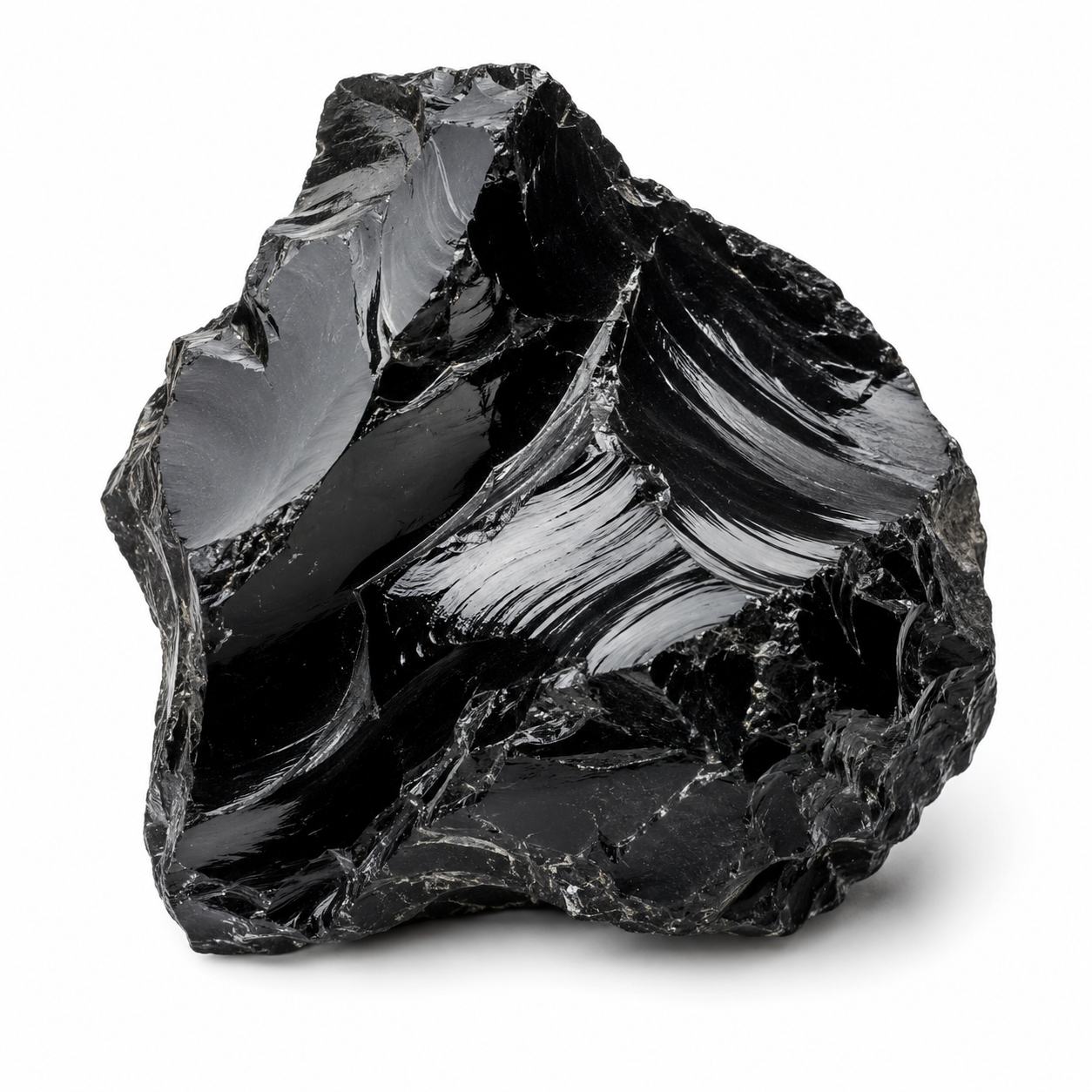
Obsidian (English Obsidian, Latin obsidianus lapis) is the volcanic black glass of the decisive canon — derived from Latin 'Obsius/Obsidius' — the decisive canonical vocabulary — the decisive mineralogical canon of natural glass formed by rapid cooling of volcanic lava — and the decisive canon of the discovery by Obsius in Ethiopia in Pliny the Elder's Natural History Book 36 verses 196-197 of the 1st century. Aliases — Obsidian (Obsidian), obsidianus lapis (obsidianus lapis), volcanic glass, mirror of Tezcatlipoca, dragonglass (fantasy) — are the decisive canonical vocabulary. The decisive natural history origin canon is the decisive origin canon of the Roman Pliny the Elder's (Pliny the Elder, 23-79) Natural History (Naturalis Historia) Book 36 verses 196-197 of the 1st century — 'obsidianus is a black stone discovered by Obsius in Ethiopia, used as a mirror'. The decisive Aztec canon is the decisive canon of the ceremonial sword macuahuitl (macuahuitl) of the Aztec of 1325-1521 in Mexico. The decisive Tezcatlipoca canon is the decisive canon of the Aztec god Tezcatlipoca (Tezcatlipoca, 'smoking mirror', the obsidian mirror).
Origin
The etymological origin is the decisive canonical vocabulary of Latin 'obsidianus lapis' — the decisive canon derived from Obsius (or Obsidius), the discoverer of Ethiopian obsidian according to Pliny the Elder's Natural History Book 36 verses 196-197 of the 1st century — and the decisive canon of the later manuscript scribal error of inserting 'r' that fixed 'obsianus' as 'obsidianus'. The decisive Neolithic origin canon is the decisive origin canon of obsidian tools at Çatalhöyük (Çatalhöyük) in Turkey of c. 7000 BCE — the decisive canon of Neolithic weapons and mirrors. The decisive natural history canon is the decisive canon of the Roman Pliny the Elder's (Pliny the Elder, 23-79) Natural History (Naturalis Historia) Book 36 verses 196-197 of the 1st century — 'obsidianus is a black stone discovered by Obsius in Ethiopia, used as a mirror'. The decisive Aztec canon is the decisive canon of the ceremonial sword macuahuitl (macuahuitl, a wooden club with obsidian blades inset on both sides) of the Aztec of 1325-1521 in Mexico, and the decisive Tezcatlipoca canon is the decisive canon of the Aztec god Tezcatlipoca (Tezcatlipoca, 'smoking mirror', the obsidian mirror).
Features
- Natural glass from rapid cooling of volcanic lava amorphous Mohs hardness 5-5.5
- Main axis Pliny's Natural History Book 36 verses 196-197 discovery by Obsius
- Macuahuitl (macuahuitl) of the Aztec — sword with obsidian blades
- Tezcatlipoca (Tezcatlipoca) — Aztec god of the smoking mirror
- Divination mirrors of the Maya and Aztec
- Origin — Çatalhöyük Turkey, Lipari Italy, Mexico, Yellowstone Wyoming, Easter Island
Stories
The obsidian tools at Çatalhöyük in Turkey of c. 7000 BCE are the decisive origin, and the decisive natural history canon is obsidianus in Pliny the Elder's Natural History Book 36 verses 196-197 of the 1st century. The decisive canon used as Neolithic weapons and mirrors, and the decisive canon invoked as the blade of the Aztec ceremonial sword and the divination mirror. The decisive Maya canon is the decisive canon of the Maya obsidian ceremonial blades of 250-900 CE, and the decisive Renaissance canon is the decisive canon of the Aztec obsidian scrying mirror used by the English scholar John Dee (John Dee, 1527-1609) in 1583 — the decisive canon now at the British Museum. The decisive Easter Island canon is the decisive canon of the mata'a (mata'a, obsidian spearheads) of Easter Island of the 13th-17th centuries.
Weakness
Obsidian's weaknesses are: (1) brittleness — the decisive canonical weakness — the decisive canon of being very prone to breaking as amorphous glass; (2) Mohs hardness 5-5.5 limit — the decisive canonical weakness — much softer than sapphire (9) and diamond (10); (3) binding of shattering — the decisive canon of shattering under impact despite its sharpness; (4) binding of color — the decisive canon of black being predominant, with brown and green also occurring; (5) binding of origin — the decisive canon of only being found near volcanoes; (6) binding of the sacred domain — the decisive canon; (7) binding of Tezcatlipoca — the decisive canon of the binding of the Aztec god; (8) binding of time — the decisive canon of the binding of 9000 years of Neolithic use. The decisive canonical finale is the decisive mythological canon of the end of obsidian rituals after the fall of the Aztec in 1521.
Cultural Significance
Obsidian is not merely a mineral icon but the canonical iconographic figure of the decisive Greco-Roman-Mesoamerican canon, traversing the Neolithic tools of Çatalhöyük in Turkey of c. 7000 BCE, the discovery by Obsius in Pliny the Elder's Natural History Book 36 verses 196-197 of the 1st century, the Maya ceremonial blades of 250-900 CE, the macuahuitl sword of the Aztec of 1325-1521, the Aztec god Tezcatlipoca (smoking mirror), the scrying mirror of John Dee in England of 1583, and the mata'a of Easter Island. The etymological origin settled as the decisive canon of Latin 'obsidianus lapis' — the decisive canon derived from Obsius (Obsius/Obsidius), the discoverer of Ethiopian obsidian according to Pliny the Elder's Natural History Book 36 verses 196-197 of the 1st century. The decisive Neolithic canon is the decisive origin canon of obsidian tools at Çatalhöyük (Çatalhöyük, a Neolithic city) in Turkey of c. 7000 BCE — the decisive canon of Neolithic weapons and mirrors, and the decisive natural history canon is the decisive canon of the Roman Pliny the Elder's (Pliny the Elder, 23-79) Natural History (Naturalis Historia) Book 36 verses 196-197 of the 1st century — 'obsidianus is a black stone discovered by Obsius in Ethiopia, used as a mirror'. The decisive Maya canon is the decisive canon of the Maya obsidian ceremonial blades of 250-900 CE, and the decisive Aztec canon is the decisive canon of the ceremonial sword macuahuitl (macuahuitl, a wooden club with obsidian blades inset on both sides) of the Aztec of 1325-1521 in Mexico. The decisive Tezcatlipoca canon is the decisive canon of the Aztec god Tezcatlipoca (Tezcatlipoca, 'smoking mirror' in Nahuatl, god of the obsidian mirror) — the decisive canon of the god of night, divination, and fate. The decisive Renaissance canon is the decisive canon of the Aztec obsidian scrying mirror (an ~18.5 cm circular obsidian mirror, originally from Cortés's spoils of 1583) used by the English diviner and mathematician John Dee (John Dee, 1527-1609, diviner of Elizabeth I) from 1583 — the decisive canon of the acquisition by the British Museum (British Museum, 1966,1001.1) in 1966. The decisive Easter Island canon is the decisive canon of the mata'a (mata'a, obsidian spearheads, ~5000 found) of Easter Island (Easter Island, Rapa Nui) of the 13th-17th centuries — the decisive canon of the obsidian of Rano Kau (Rano Kau, volcano).
In Popular Culture
- Obsidian tools of Çatalhöyük (Çatalhöyük) in Turkey (c. 7000 BCE) — decisive Neolithic origin canon
- Discovery by Obsius (Obsius) in Pliny the Elder Natural History (Naturalis Historia) Book 36 verses 196-197 (1st century) — decisive natural history canon
- Maya (Maya) obsidian ceremonial blades (250-900 CE) — decisive Maya canon
- Macuahuitl (macuahuitl) ceremonial sword of the Aztec (Aztec) (1325-1521) — decisive Aztec canon
- Aztec god Tezcatlipoca (Tezcatlipoca) smoking mirror — decisive Tezcatlipoca canon
- Obsidian trade from Lipari (Lipari) island in Italy from the Neolithic — decisive Mediterranean canon
- Aztec obsidian scrying mirror of Dr. John Dee (John Dee) (1583) — decisive Renaissance canon
- Mata'a (mata'a) obsidian spearheads of Easter Island (Easter Island) (13th-17th centuries) — decisive Easter Island canon
- Obsidian tools of Olduvai Gorge (Olduvai Gorge) — decisive anthropological canon
- Obsidian Cliff of Yellowstone (Yellowstone) in Wyoming USA — 21st-century decisive global canon
Trivia
The etymology of Obsidian (English Obsidian, Latin obsidianus lapis, Greek ὀψιανός) is the decisive canonical vocabulary of Latin 'obsidianus lapis' — the decisive canon derived from Obsius (Obsius) or Obsidius, the discoverer of Ethiopian obsidian according to Pliny the Elder's Natural History Book 36 verses 196-197 of the 1st century — and the decisive canon of the later manuscript scribal error of inserting 'r' that fixed 'obsianus' as 'obsidianus'. Aliases — Obsidian (Obsidian), obsidianus lapis (obsidianus lapis), volcanic glass, mirror of Tezcatlipoca, Apache tears (Native American), dragonglass (dragonglass, fantasy) — are the decisive canonical vocabulary. The decisive Neolithic canon is the decisive origin canon of obsidian tools at Çatalhöyük (Çatalhöyük, a Neolithic city in central Turkey, excavated by the English archaeologist James Mellaart in 1958) of c. 7000 BCE — the decisive canon of Neolithic weapons and mirrors. The decisive natural history canon is the decisive canon of the Roman Pliny the Elder's (Pliny the Elder, born 23 CE, died at Pompeii 79 CE) Natural History (Naturalis Historia) Book 36 verses 196-197 of the 1st century — 'obsidianus is a black stone discovered by Obsius in Ethiopia, used as a mirror, also produced in India and Lipari island of Italy'. The decisive Maya canon is the decisive canon of the Maya (Maya) obsidian ceremonial blades of 250-900 CE — the decisive canon of obsidian blades being 100 times sharper than a surgeon's scalpel, and the decisive Aztec canon is the decisive canon of the ceremonial sword macuahuitl (macuahuitl, 90-110 cm wooden club with obsidian blades inset on both sides) of the Aztec (Aztec, founded Tenochtitlan in 1325) of 1325-1521 in Mexico — the decisive canon of being the primary weapon of the Aztec during Cortés's (Hernán Cortés, 1485-1547) conquest of 1519. The decisive Tezcatlipoca canon is the decisive canon of Tezcatlipoca (Tezcatlipoca, Nahuatl 'smoking mirror', god of the obsidian mirror), one of the four primary Aztec gods — the decisive canon of the god of night, divination, and fate. The decisive Renaissance canon is the decisive canon of the Aztec obsidian scrying mirror (an ~18.5 cm circular obsidian mirror, originally from Cortés's spoils) used by the English diviner and mathematician John Dee (John Dee, born 13 July 1527, died 1609, diviner of Elizabeth I) from 1583 — the decisive canon of the acquisition by the British Museum (British Museum, 1966,1001.1) in 1966. The decisive Easter Island canon is the decisive canon of the mata'a (mata'a, obsidian spearheads, ~5000 found) of Easter Island (Easter Island, Rapa Nui) of the 13th-17th centuries — the decisive canon of the obsidian of Rano Kau (Rano Kau, volcano), and the decisive anthropological canon is the decisive canon of the obsidian tools of Olduvai Gorge (Olduvai Gorge) in Tanzania of ~2.5 million years ago — the decisive canon of use by Homo habilis.