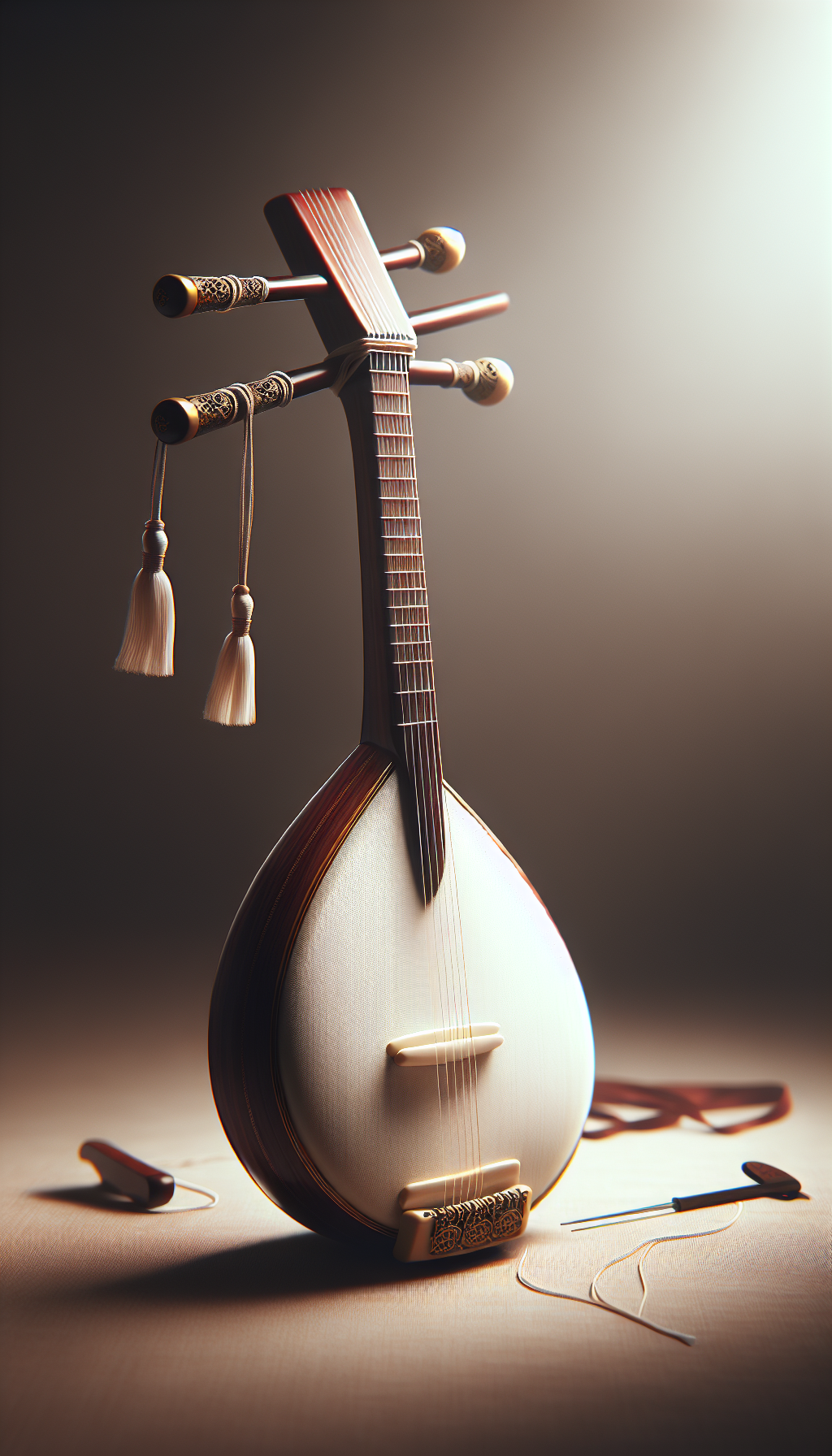
Shamisen
Shamisen · Three-stringed Lute — Traditional Japanese String Instrument
The shamisen is a traditional Japanese three-stringed instrument. It features a wooden body covered with skin, a long slender neck, and three thick strings. Played with a plectrum called bachi, it plays a key role in various Japanese musical styles.
Origin
The shamisen evolved in 16th-century Japan from the Chinese sanxian and the Ryukyu sanshin, eventually developing its own distinctive form. Since the Edo period, it has been widely used in folk music, kabuki theater, and bunraku puppet performances.
Features
- Three strings
- Skin-covered resonator
- Long neck
- Played with bachi (plectrum)
- Integral to traditional music and theater
Usage
The shamisen provides rhythm and melody in genres like folk music, kabuki, bunraku, and enka.
Weakness
The skin resonator is sensitive to humidity and temperature, making maintenance challenging; its soft timbre can be weak in large venues.