
Uma-yoroi
Japanese horse armor of the samurai era
Names in Other Languages
 우마요로이한국어
Uma-yoroi · 일본의 군마 갑옷
 馬鎧日本語
馬鎧日本語日本の武士の軍馬甲冑
 馬鎧繁體中文
日本武士的戰馬鎧甲
 Uma-yoroiDeutsch
Japanische Pferderüstung der Samurai-Ära
 Uma-yoroiFrançais
Armure de cheval japonaise de l'ère des samouraïs
 Uma-yoroiEspañol
Armadura de caballo japonesa de la era samurái
 Uma-yoroiPortuguês
Armadura de cavalo japonesa da era samurai
 Uma-yoroiPolski
Japońska zbroja konna epoki samurajów
 Ума-ёройРусский
Японский конский доспех эпохи самураев
The uma-yoroi (umayoroi, horse armor) is the armor made to guard the warhorse of the Japanese samurai, a distinctive defense applying Japan's own armor-making technique to the horse. Three parts form its core: the bamen covering the head, the kubi-yoroi wrapping the neck, and the muna-ate covering the chest, and it is light and simple compared to the Western barding that encased the whole horse. The way of making it by lacing small scales (kozane) with cords is the same as the samurai's o-yoroi, so it kept the flexibility and ease of repair distinctive of Japanese armor while still giving ample defense. The bamen was often decorated splendidly and menacingly, modeled on the face of a dragon or beast beyond a mere cover, showing that the aesthetic of armor craft reached even to the horse. As mounted combat grew in importance in the Sengoku period, the use of uma-yoroi expanded, but it never spread as widely as Western barding.
Origin
The uma-yoroi is seen as having developed in medieval Japan on the basis of samurai armor technique. Applying the lamellar method of lacing small scales with cords directly to the horse, it was made with the same craft as the armor of a man. Its use expanded as mounted combat grew in importance in the Sengoku period, but it did not develop into a heavy barding wrapping the whole horse as in the West. This was because mounted combat was relatively less central on the Japanese battlefield than in Europe, because Japan's rugged terrain, mountainous and spread with rice paddies, did not suit a heavy cavalry charge, and because the horses themselves were relatively small. So the uma-yoroi stayed at covering the vital points such as the head, neck, and chest.
Features
- Composed of the bamen (head), kubi-yoroi (neck), and muna-ate (chest)
- Light and simple compared to Western barding
- The same making method as the o-yoroi, lacing small scales with cords
- A distinctly Japanese design with flexibility and ease of repair
- Splendid decoration of the bamen in the form of a dragon or beast
- Use expanded with the growth of mounted combat in the Sengoku period
Stories
The uma-yoroi was used as mounted-combat gear to guard the samurai's warhorse in battle. With the bamen over the horse's face, the kubi-yoroi over the neck, and the muna-ate over the chest, it covered the horse's vital points from arrows and spear points in a head-on charge. Being a laced structure like a man's armor, it did not greatly hinder the large movements of the horse running and turning, and a damaged part was easily repaired by replacing a few scales. Above all, the splendid bamen modeled on a dragon overawed the enemy's horses and soldiers, so it was also gear that sought defense and display together.
Weakness
The weaknesses of the uma-yoroi are its narrow coverage and its limit against penetration. Covering only the front vital points such as the head, neck, and chest, it left the flanks, belly, and legs mostly bare, so it could not fully guard the horse against an attack coming from the side or rear. And being a structure of small scales laced with cords, it was relatively weak against a strong thrust or penetrating attack compared to the Western barding that wrapped the whole horse in smooth plate. The weight of the armor also ate into the horse's stamina, so in the end the uma-yoroi was a product of compromise, choosing lightness and practicality and yielding on coverage.
Cultural Significance
The uma-yoroi is a rare piece that shows how Japanese mounted culture and armor craft reached even to the horse. In that it was made with the same technique as a man's o-yoroi, one sees that the design philosophy of Japanese armor, weaving cloth, cord, and small plates to keep flexibility alive, carried on even to the warhorse. The splendid bamen modeled on the face of a dragon or demon in particular, like the maedate of the kabuto that displayed a commander's prestige on the field, holds the aesthetic of the Japanese warrior house that sought to make even the horse a work of art. But because it was not used as widely as in the West, surviving examples are very rare, and a few museum pieces transmit its craft.
In Popular Culture
The uma-yoroi appears now and then as the warhorse gear of a commander in period dramas, films, and games about the Sengoku period and samurai battles. A horse wearing a bamen modeled on a dragon in particular is drawn as a striking visual device that displays a commander's prestige. It draws less notice than a man's armor or helmet, however, so in fiction the warhorse is often drawn bare or mixed with Western-style barding. In games it is sometimes treated as a rare, high-grade piece that raises the standing of a mounted commander.
Trivia
- The uma-yoroi was made by lacing small scales (kozane) with cords just like a man's o-yoroi, gear applying the technique of Japanese armor directly to the horse.
- Because mounted combat was less central on the Japanese battlefield and the rugged terrain of mountains and paddies did not suit a heavy cavalry charge, the uma-yoroi did not spread as widely as Western barding.
- The bamen covering the horse's face was often decorated splendidly in the form of a dragon or demon, seeking defense and the display of prestige together.
Related
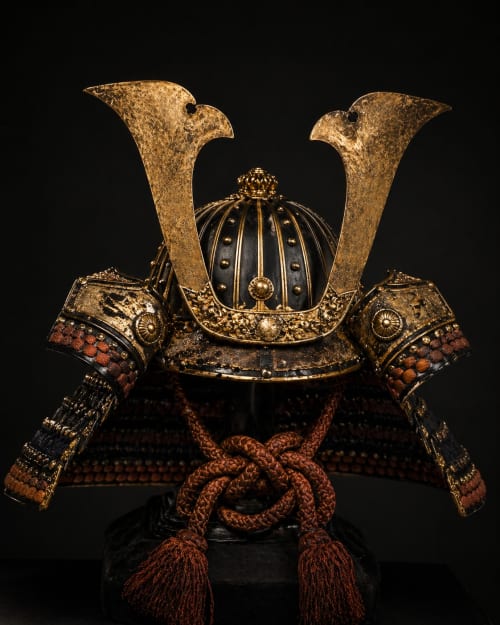
Kabuto
Traditional helmet of the Japanese samurai
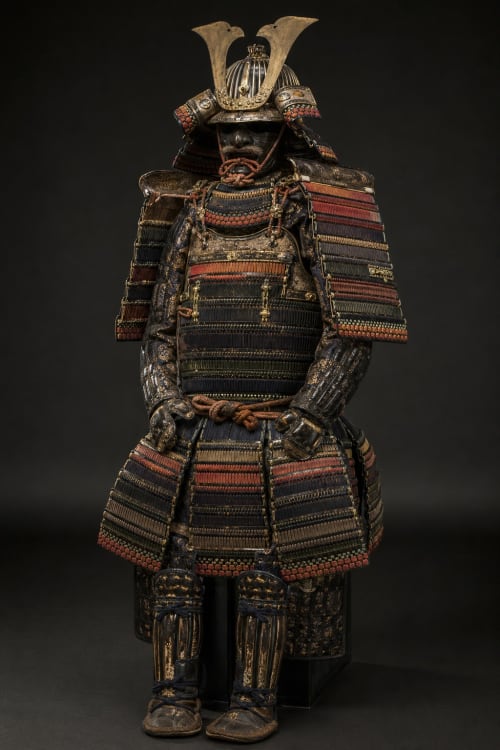
Ō-yoroi
Grand armor of the Japanese samurai
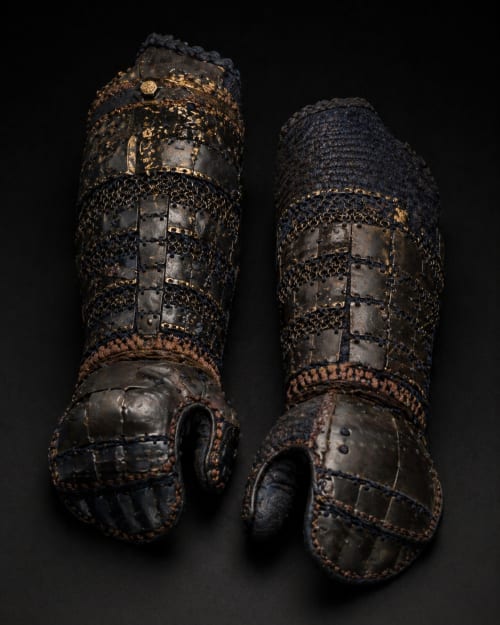
Kote
Japanese armored gauntlet and forearm guard
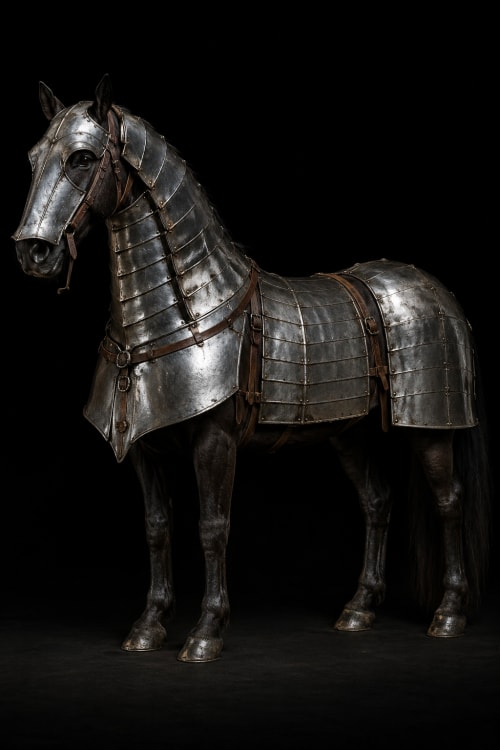
Horse Barding
Full-body armor for the war horse
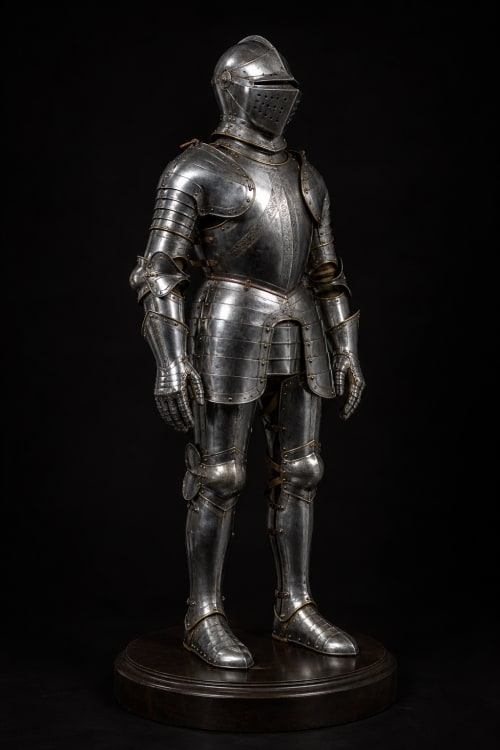
Plate Armor
Full-body steel armor of the medieval knight
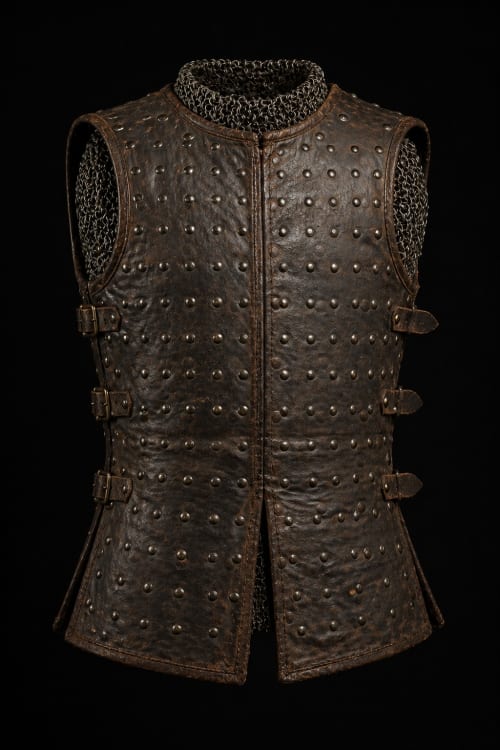
Coat of Plates
Transitional armor with iron plates riveted inside fabric
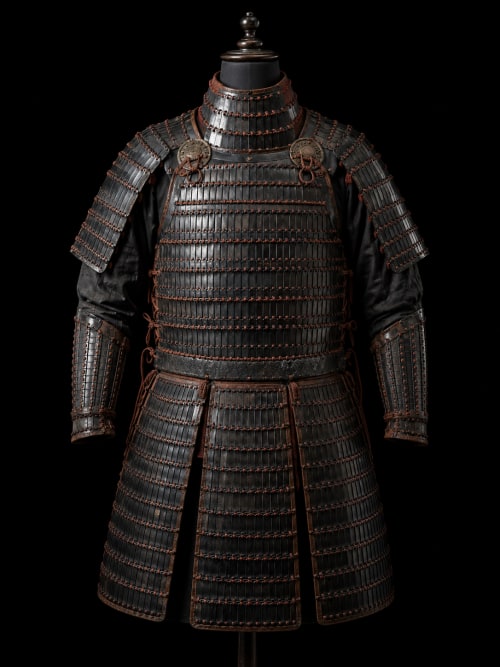
Lamellar Armor
Armor of small plates laced together with cord
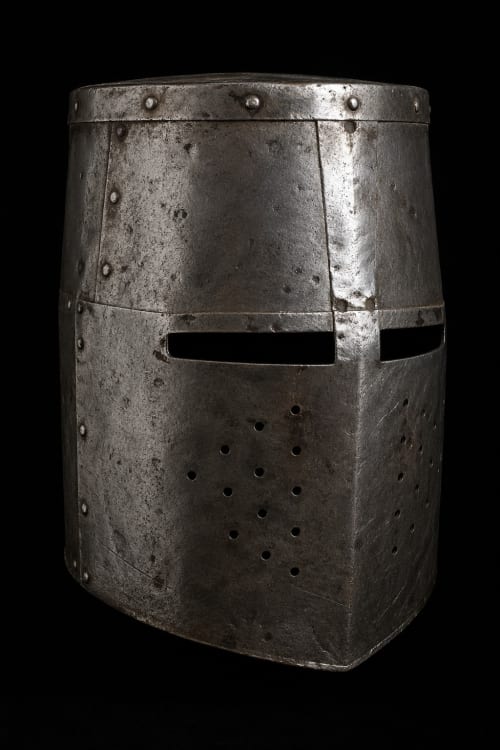
Great Helm
Barrel-shaped helmet enclosing the entire head
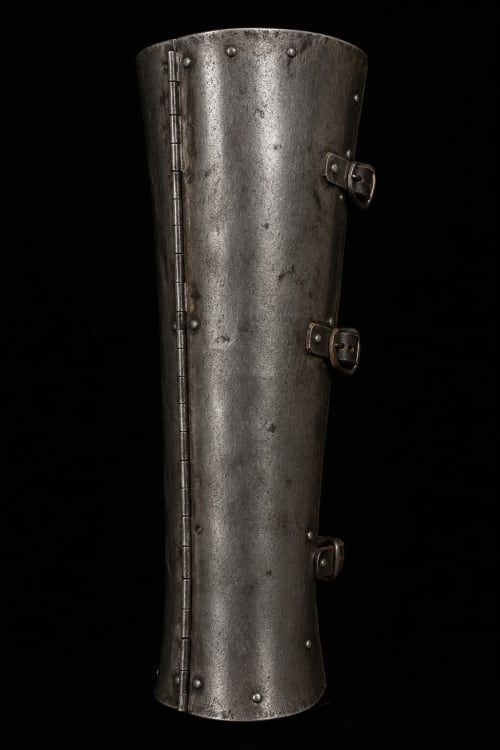
Vambrace
Tubular forearm armor of the medieval knight
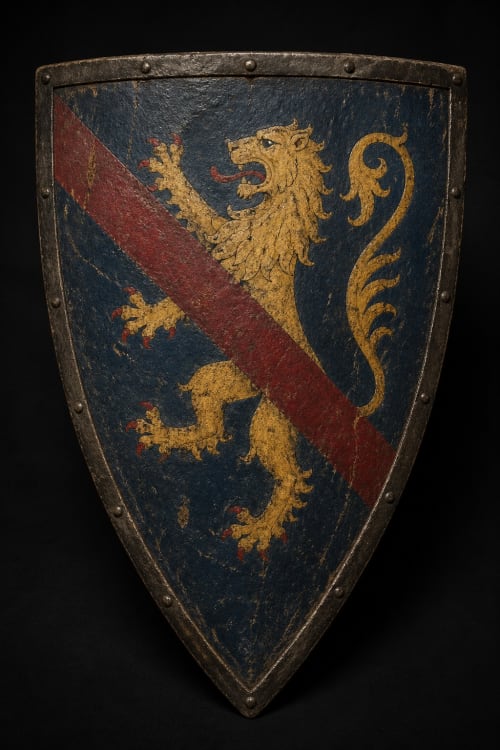
Heater Shield
Classic triangular shield of the medieval knight
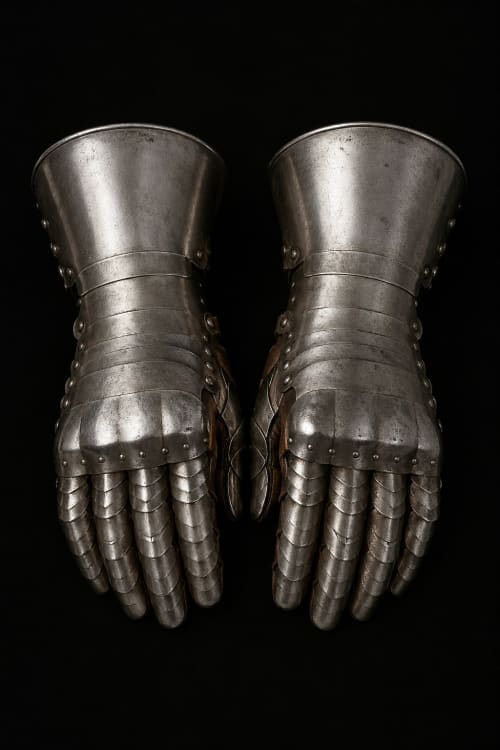
Gauntlet
Articulated metal glove of the medieval knight
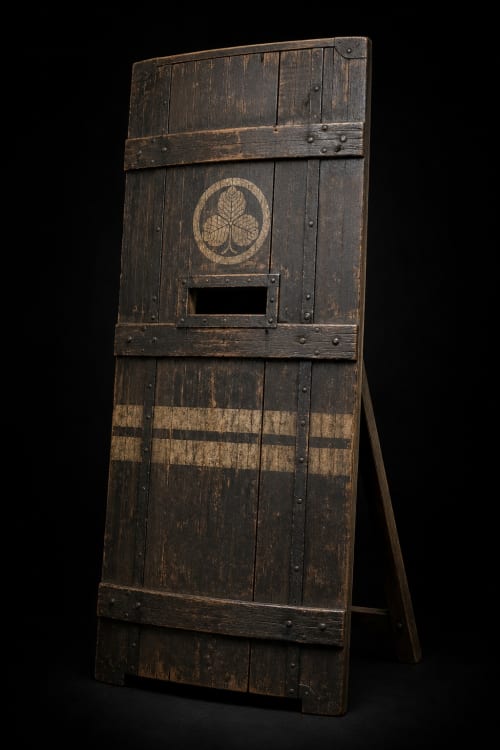
Tate
Large standing shield of feudal Japan