
Scutum
Curved rectangular shield of the Roman legions
Names in Other Languages
 스쿠툼한국어
Scutum · 로마 군단의 대형 만곡 방패
 スクトゥム日本語
ローマ軍団の大型曲面盾
 大盾繁體中文
羅馬軍團的大型曲面盾牌
 ScutumDeutsch
Großer gewölbter Rechteckschild der römischen Legionen
 ScutumFrançais
Grand bouclier incurvé des légions romaines
 Escudo romanoEspañol
Gran escudo curvo de las legiones romanas
 Escudo romanoPortuguês
Grande escudo curvo das legiões romanas
 ScutumPolski
Duża wypukła tarcza prostokątna legionów rzymskich
 СкутумРусский
Большой изогнутый прямоугольный щит римских легионов
The scutum is the iconic large curved shield of the Roman legionary, its most marked feature a semi-cylindrical curve about 100 to 120 cm tall and 60 cm wide that wraps around the whole body. On a base of plywood, thin wooden boards glued in several cross-grained layers, it was covered with leather and cloth, the edge reinforced, and finished with an iron boss (the umbo) at the center. The umbo protected the hand gripping the horizontal handle behind it and also served as an offensive boss to ram and strike the enemy. The surviving example excavated nearly whole at Dura-Europos in Syria confirms this very plywood-and-leather construction. The true power of the scutum showed in the testudo (tortoise) formation, a mobile shield wall in which soldiers pressed their shields close to the front and overhead to stop arrows and missiles. Its combination with the gladius, the short stabbing sword, blocking with the shield and stabbing through the gaps, was the foundation of the Roman military power that ruled the Mediterranean for centuries.
Origin
The scutum is seen as having developed in Republican Rome from earlier shields of the Italian peninsula. The Republican scutum was a long oval curved shield, and by the early Empire it was refined into the rectangular curved shield we commonly picture, used as the standard gear of the legionary from about the 1st century to the 3rd. Later, around the 3rd century, as army organization and tactics changed, the army returned to lighter and easier oval and round shields. This structure, shaping plywood into a curve to wrap the body, was a result refined to fit exactly the Roman infantry tactics of fighting in close formation.
Features
- A large curved shield about 100 to 120 cm tall and 60 cm wide
- Plywood-and-leather structure with a central iron boss (umbo)
- A semi-cylindrical curve that wraps the whole body
- Forms a mobile shield wall in the testudo (tortoise) formation
- Its combination with the gladius the core of Roman legion tactics
- A sturdy defensive piece weighing about 7 to 10 kg
Stories
The scutum was the standard war gear of the Roman legionary, showing its worth in close-formation combat. The soldier gripped the horizontal handle behind the shield with one hand and, the curve guarding his body, stabbed the enemy through the gaps with the gladius in the other. When several pressed their shields close to the front and overhead, it became the testudo formation that stopped arrows and stones, especially powerful in approaching a wall in siege warfare. With the central umbo he rammed the enemy to break their formation, finishing in that instant with the gladius, so it was used in attack as well.
Weakness
The weaknesses of the scutum come from its weight and size. The weight of about 7 to 10 kg and its bulk were reassuring in close formation, but took a great deal of stamina on a long march. Large and heavy, it was cumbersome and ill-suited to individual mobile combat moving freely alone, or to a pursuit chasing a scattered enemy. If the formation broke and the side or rear was exposed, the advantage of a curve guarding only the front was lost and it became vulnerable. The body of plywood and leather could be damaged by repeated blows or fire, so it was, after all, the strongest shield when fighting together in formation.
Cultural Significance
The scutum is a shield that symbolizes the Roman legion and its disciplined group tactics. The thought of the Roman army, which put the unity of the formation before individual prowess, is held in the very structure of this shield, which wraps the body in a curve and overlaps with the neighboring soldier. The testudo, made by overlapping shields like a tortoise's shell, has become to this day a representative image called to mind by the Roman army, and the scutum paired with the gladius remains a symbol of the Roman way of combat, of 'guarding and stabbing'. On its face was painted the insignia of the legion, often a thunderbolt-and-wing motif, to show its unit.
In Popular Culture
The scutum appears in nearly every film, drama, and game about ancient Rome as the iconic gear of the legionary. The scene of legionaries holding rectangular red shields lined up in a testudo is a representative staging that calls the Roman army to mind at a glance. In games it is commonly used as the gear of heavy infantry raising a shield wall or charging. In fiction, however, the oval Republican scutum and the rectangular Imperial scutum are often mixed without distinguishing period, or the fact that it was heavy and ill-suited to individual melee is ignored.
Trivia
- The scutum excavated nearly whole at Dura-Europos in Syria is a precious surviving example that confirms the real construction of plywood glued in several layers and covered with leather.
- The Republican scutum was oval, and the rectangular curved form we commonly picture is of the early Empire, returning around the 3rd century to oval and round shields.
- The central umbo (boss) protected the hand and also served as an offensive tool to ram the enemy, so the shield was a weapon that struck as well as guarded.
Related
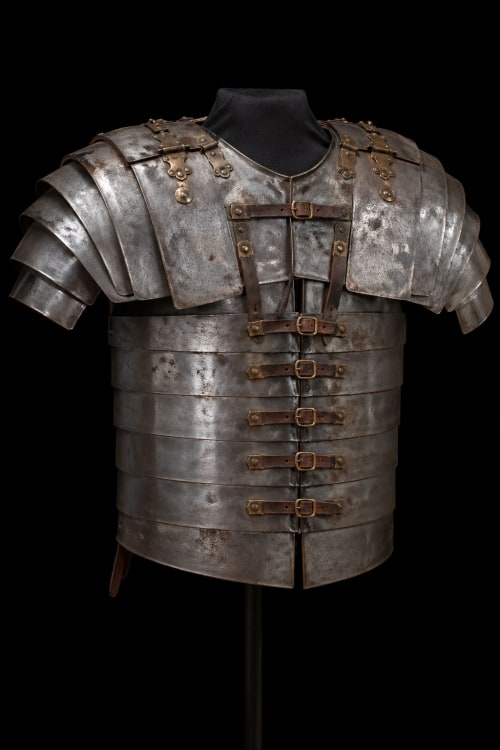
Lorica Segmentata
Segmented plate armor of the Roman legions
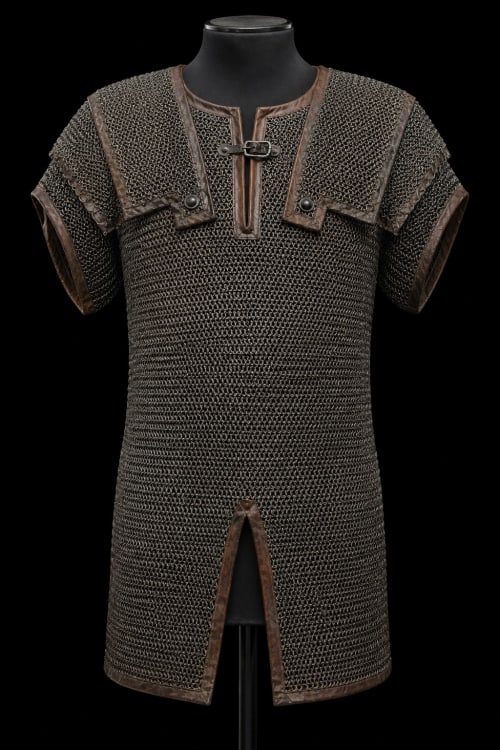
Lorica Hamata
Roman legionary chainmail armor
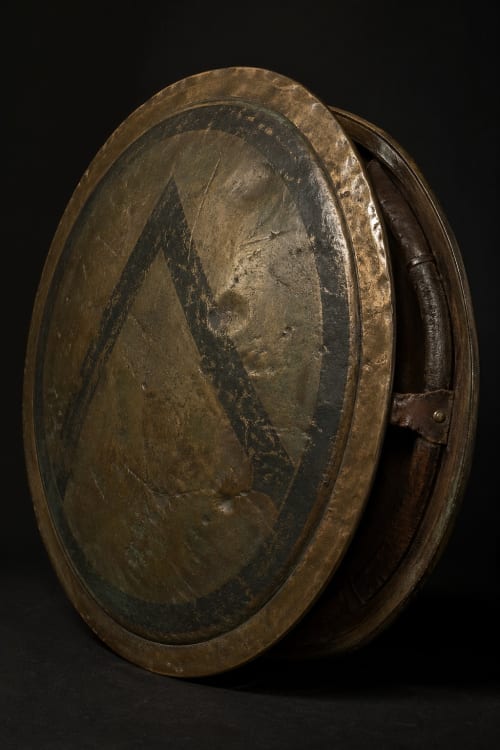
Aspis
Round shield of the ancient Greek hoplite
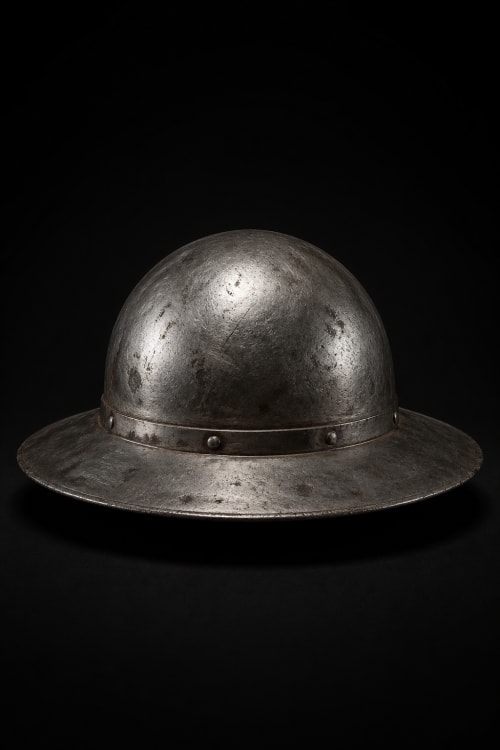
Kettle Hat
Broad-brimmed infantry helmet shaped like an inverted pot
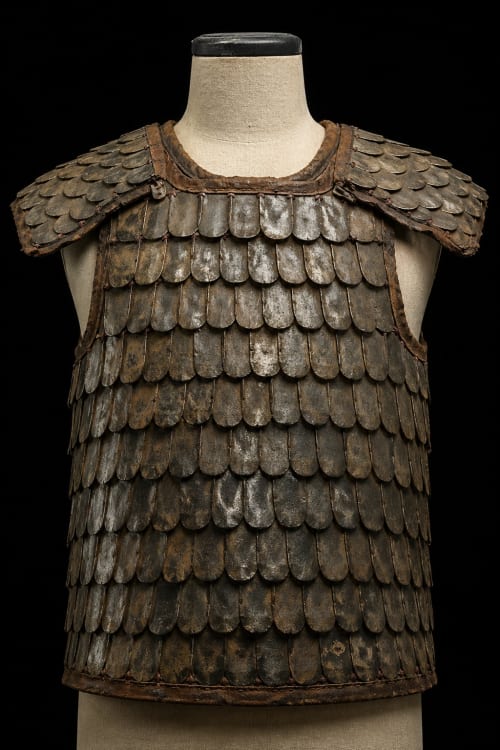
Scale Armor
Armor made of overlapping metal scales

Brigandine
Armor of small iron plates riveted between fabric layers
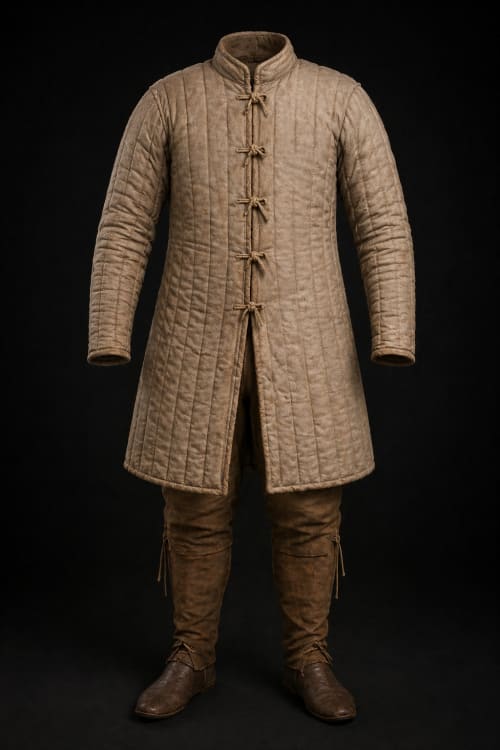
Gambeson
Quilted padded defensive garment
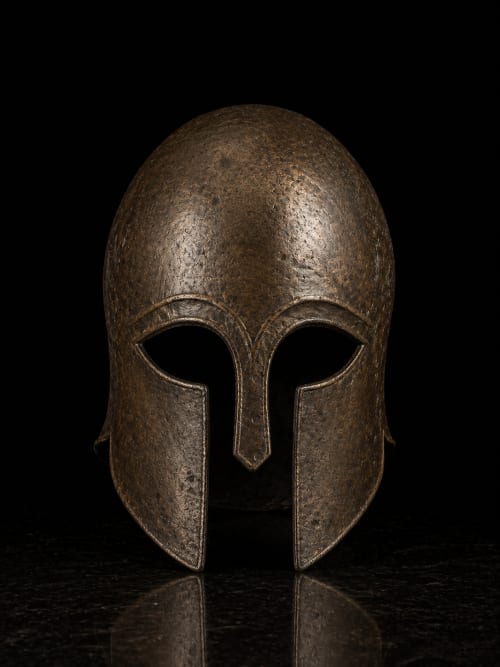
Corinthian Helmet
Iconic full-face helmet of ancient Greece
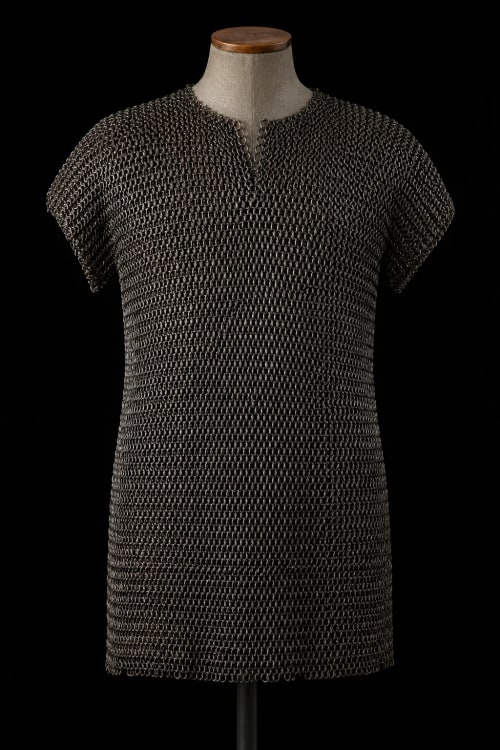
Chainmail
Flexible armor of interlocked metal rings
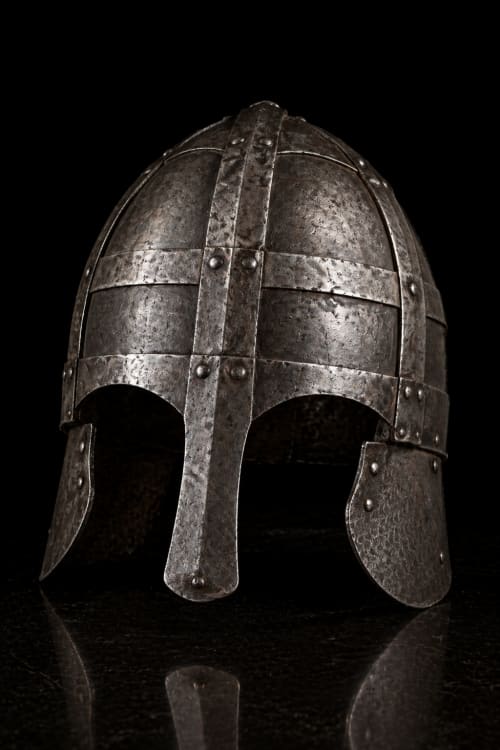
Spangenhelm
Framework helmet of crossed metal bands
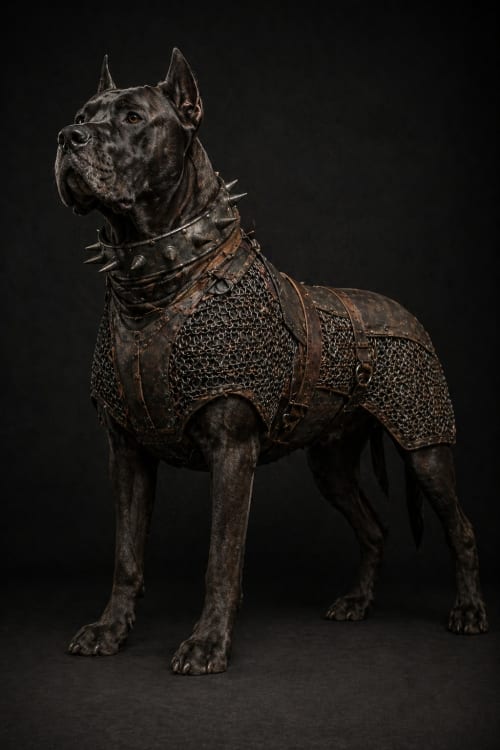
War Dog Armor
Protective armor for military canines
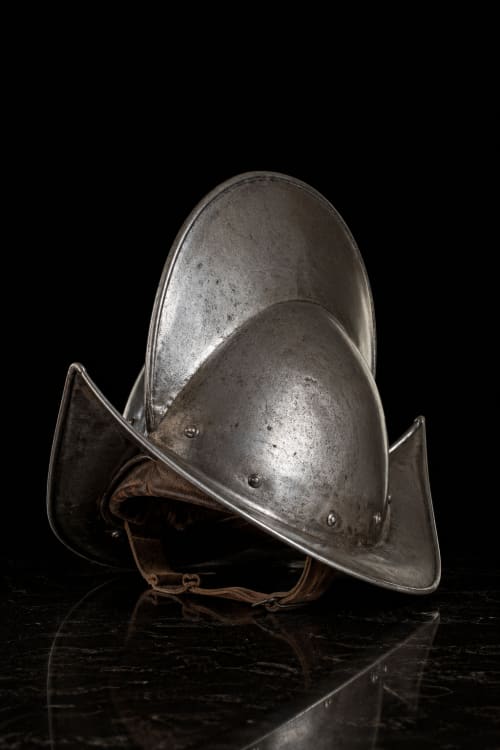
Morion
Crested open helmet of the Spanish conquistadors