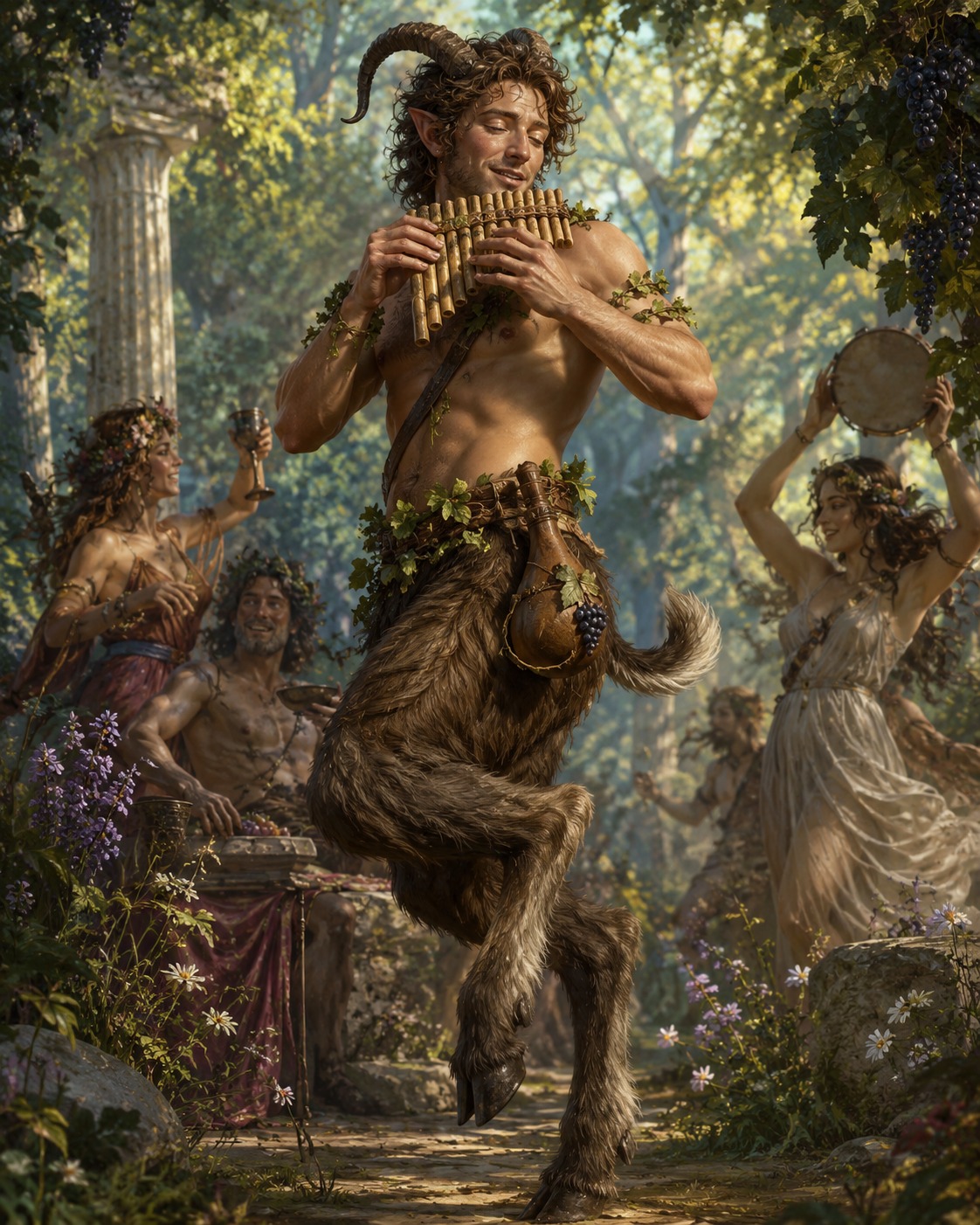
Satyr
Satyr · The Half-Beast — Forest Folk of Wine, Music, and Revelry
Names in Other Languages
 사티로스한국어
Satyr · 반인반수 — 술과 음악, 향락의 숲의 종족
 サテュロス日本語
Satyr · 半人半獣 — 酒と音楽、享楽の森の種族
 薩堤爾繁體中文
Satyr · 半人半獸 — 酒與音樂、享樂的森林種族
 SatyrDeutsch
Satyr · Der Halbtier — Waldvolk des Weins, der Musik und des Gelages
 SatyreFrançais
Satyr · Le mi-bête — Peuple des forêts du vin, de la musique et de la fête
 SátiroEspañol
Satyr · El semibestia — Pueblo del bosque del vino, la música y el jolgorio
 SátiroPortuguês
Satyr · O semibesta — Povo da floresta do vinho, da música e da folia
 SatyrPolski
Satyr · Półzwierzę — leśny lud wina, muzyki i hulanki
 СатирРусский
Satyr · Полузверь — лесной народ вина, музыки и веселья
The satyr (ancient Greek Σάτυρος, Latin satyrus) is a half-human, half-beast nature spirit of Greek mythology, the riotous follower of the god of wine and madness Dionysos. The earliest attestations are in Hesiod's 'Catalogue of Women' fragment 10 (c. 700 BCE, which calls them 'a useless mischievous race') and the Homeric Hymn to Pan (number 19, late seventh century BCE); the visual canon is fixed in Attic black- and red-figure pottery of the sixth and fifth centuries BCE, with the François Vase (Ergotimos and Kleitias, c. 570-560 BCE, National Archaeological Museum of Florence) and the Brygos Cup (c. 480 BCE, British Museum) as the standard sources. The earliest Greek satyr was originally a horse-tailed, horse-eared theriomorph, but in the Hellenistic period (late fourth century BCE) the satyr fused with the Roman Faunus (a forest and pastoral god from the cult of Numa Pompilius) and the goat-legged, horned, goat-tailed iconography came to prevail. In the fifth-edition Dungeons & Dragons 'Mythic Odysseys of Theros' (Wizards of the Coast, 2020), satyrs stand 150 to 180 centimetres tall, with a human upper body, hoofed goat legs, short curled horns, a short goat tail and a wild curly head of hair and beard on the human portion. Racial traits are +2 Charisma, +1 Dexterity, Magic Resistance (advantage on saving throws against magic), Mirthful Leaps (double jump distance) and the signature Reveler trait that lets them play a syrinx or aulos with charm and fascination effects. They live in herds in woodlands and fields, accompanying the maenads in the Dionysian thiasos. The iconography is carried into the Renaissance through Botticelli's 'Venus and Mars' (1483, National Gallery, London) and Michelangelo's 'Bacchus' (1497, Bargello Museum, Florence), through Debussy's 'Prelude to the Afternoon of a Faun' (1894), Disney's 'Fantasia' (1940), and Mr. Tumnus in C.S. Lewis's 'The Lion, the Witch and the Wardrobe' (1950).
Origin
The direct textual source is Hesiod's 'Catalogue of Women' fragment 10 (c. 700 BCE), which describes the satyrs as 'genos outidanon kai amēchanoergon' ('a useless and helpless race'); the Homeric Hymn to Pan (number 19, late seventh century BCE) provides the genealogy in which the goat-legged Pan, son of Hermes, becomes the prototype of the satyric flock. The visual canon is established by sixth- and fifth-century BCE Attic black-figure and red-figure pottery — most famously the François Vase (Ergotimos and Kleitias, c. 570-560 BCE, National Archaeological Museum of Florence) and the Brygos Cup (c. 480 BCE, British Museum) — and the late-fifth-century satyric drama of Euripides's 'Cyclops' (c. 408 BCE), the only complete satyr play to survive, fixes the Dionysian cult-iconography. The Roman tradition — Ovid's 'Metamorphoses' (8 CE) and Virgil's 'Eclogues' (39-37 BCE) — conflates the Greek satyr with the Roman Faunus, the forest and pastoral god introduced by Numa Pompilius, and this fusion completes the shift from horse-tailed to goat-legged in the Hellenistic and Roman periods. The Renaissance revival came through scholars like Poliziano (1454-1494) and through Botticelli and Michelangelo; the cosy modern image was domesticated by Victorian and Edwardian children's literature and crystallised by C.S. Lewis's Mr. Tumnus (1950).
Features
- 150-180 centimetres tall, human upper body, hoofed goat legs, short curled horns, short goat tail
- Wild curly head of hair and beard on the human portion, spotted or brown goat fur
- Master of the syrinx (panpipes) or aulos
- Follower of Dionysos in the thiasos, companion of the maenads
- Fifth-edition +2 Charisma, +1 Dexterity, Magic Resistance, Mirthful Leaps, Reveler
- Lives in herds in woodlands and fields, playful instinct of pursuing nymphs
Stories
Functions as the canonical race for bard, rogue and druid character classes in tabletop role-playing games, with the free-spirited hedonist philosophy making it the focal race for campaigns on restraint versus revelry and civilisation versus wildness. The same iconography appears in the fifth-edition D&D 'Mythic Odysseys of Theros' (2020), in the satyr tribe of the Theros set of 'Magic: The Gathering' (from 2013) and in the kindly Mr. Tumnus of C.S. Lewis's 'The Chronicles of Narnia' (filmed 2005), which all carry the modern domesticated image of the satyr into Anglophone popular culture.
Weakness
Satyrs are easily overwhelmed by pleasure and impulse, lack moderation and are poor at responsibility and long-range planning. The pattern of bringing peril on themselves through music, wine and pursuit of nymphs is canonical in the drunken satyr chorus of Euripides's 'Cyclops' (c. 408 BCE). The fifth-edition rules do not impose a racial penalty, but the Reveler trait has the side-effect that the satyr is also charmed by its own performance.
Cultural Significance
The figure is the canon of the Greek Dionysian banquet — the satyric drama appended to tragic trilogies, the Dionysia festival at Athens from the sixth century BCE — fused with the Roman Faunus and channelled through Renaissance painting, Romantic music (Debussy's 'Prelude to the Afternoon of a Faun', 1894) and twentieth-century children's literature (C.S. Lewis's Mr. Tumnus) into the standard English-language fantasy race.
In Popular Culture
Hesiod's 'Catalogue of Women' fragment 10 (c. 700 BCE), the Homeric Hymn to Pan (number 19, late seventh century BCE), the François Vase (c. 570-560 BCE, National Archaeological Museum of Florence), Euripides's 'Cyclops' (c. 408 BCE), Ovid's 'Metamorphoses' (8 CE), Botticelli's 'Venus and Mars' (1483), Michelangelo's 'Bacchus' (1497, Bargello Museum), Debussy's 'Prelude to the Afternoon of a Faun' (1894), C.S. Lewis's Mr. Tumnus in 'The Lion, the Witch and the Wardrobe' (1950), Disney's 'Fantasia' (1940), the fifth-edition D&D 'Mythic Odysseys of Theros' (2020) and the satyr tribe of 'Magic: The Gathering' Theros (from 2013).
Trivia
The Greek satyr play (satyrikon) was the comic fourth act performed at Athens after a tragic trilogy at the Dionysia festival from the sixth century BCE onward; the only complete survivor is Euripides's 'Cyclops' (c. 408 BCE). The English word 'satire' was long believed to derive from 'satyr', but Isaac Casaubon's 1606 Latin treatise proved that 'satire' comes from the Latin 'satura' ('mixed dish'), an unrelated root.
Related
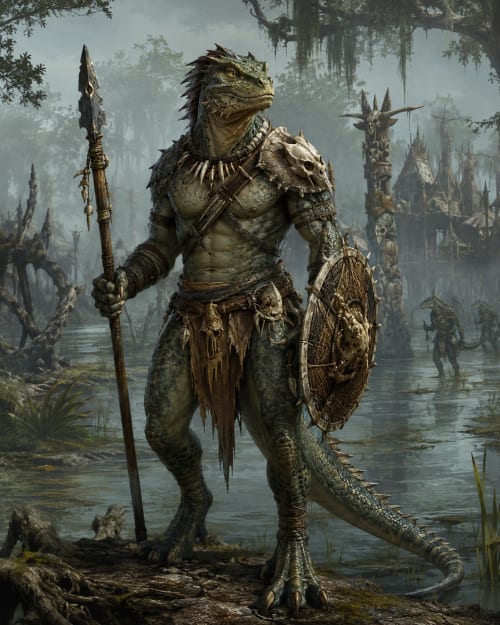
Lizardfolk
Lizardfolk · The Lizard People — Cold-Blooded Tribal Warriors of the Marsh

Elf
Elf · People of the Forest — Longevity, Magic, Guardians of Nature
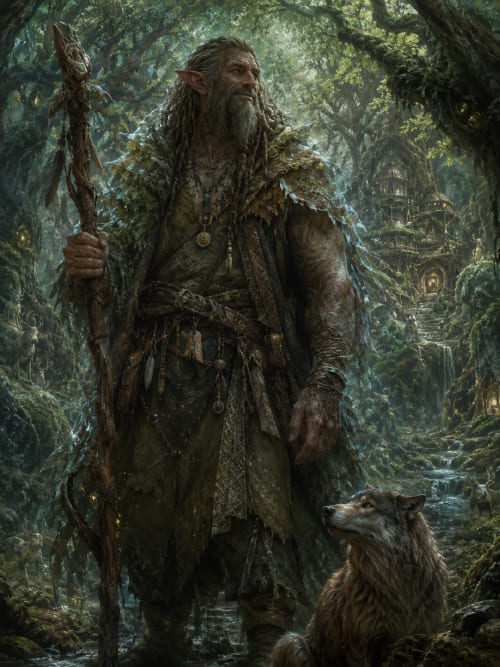
Firbolg
Firbolg · The Gentle Giant — A Reclusive Race of Giant Lineage Hidden in Forests

Wood Elf
Wood Elf · Forest Elves — Wild Archers and Nature Tribes

Beastkin
Beastkin · Beastfolk — Half-Human, Half-Beast Race

Troll
Troll · The Regenerating Giant — A Savage Race of Tenacious Vitality

Giant-kin
Giant-kin · The Giant Race — Primal Titans Like Living Mountains

Orc
Orc · Warrior Tribes — A Fierce Race That Reveres Strength and Honor
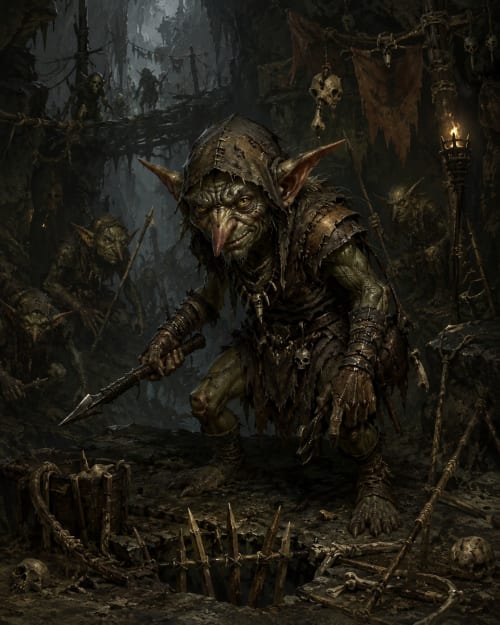
Goblin
Goblin · The Cunning Little Folk — Raiders Who Live by Numbers and Guile

Fishfolk
Fishfolk · The Deep-Sea Fish People — Wild Tribes of the Abyss
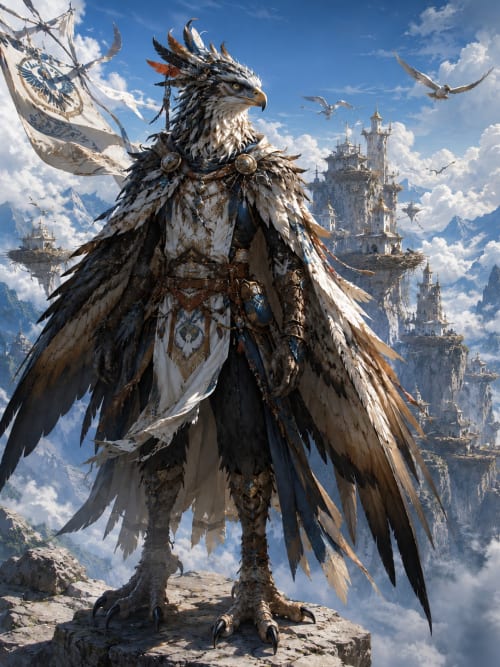
Birdfolk
Birdfolk · The Bird People — A Mountain-Peak Race That Flies the Skies

Ogre
Ogre · The Man-Eating Giant — A Dull, Cruel Tyrant of the Wilds