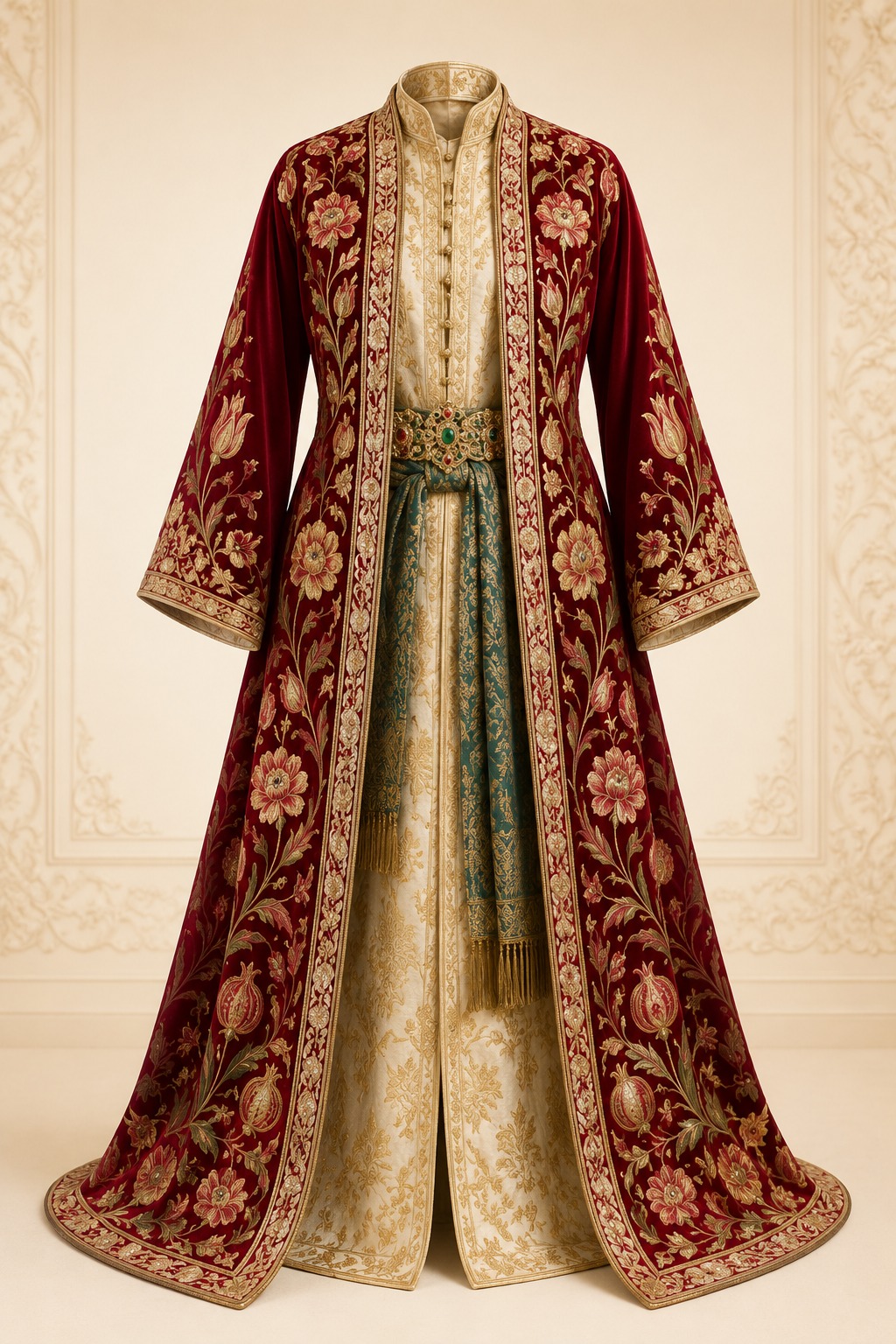
Ottoman Entari
Ottoman court long open-front kaftan
Names in Other Languages
 오스만 엔타리한국어
Ottoman Entari · 오스만 궁정의 긴 카프탄
 オスマン・エンタリ日本語
オスマン宮廷の長いカフタン
 奧斯曼恩塔利繁體中文
奧斯曼宮廷的長卡夫坦
 Osmanischer EntariDeutsch
Langer offener Kaftan des osmanischen Hofs
 Entari ottomanFrançais
Long caftan ouvert de la cour ottomane
 Entari otomanoEspañol
Largo caftán abierto de la corte otomana
 Entari otomanoPortuguês
Longo cafetã aberto da corte otomana
 Osmańska entariPolski
Długi otwarty kaftan dworu osmańskiego
 Османская энтариРусский
Длинный распашной кафтан османского двора
The entari is the ankle-length open-front robe of Ottoman court and aristocratic dress, a principal form within the kaftan family that defined Ottoman noble wear from the 14th to 19th centuries. Crafted from silk, velvet, and brocade embroidered with Ottoman floral motifs — pomegranate, tulip, rose, carnation — in gold and silver thread, the grandest examples were worn by the Sultan and high officials. Entaris were layered: a cotton gömlek shirt and salvar trousers were covered first by an under-entari, then a more elaborate over-entari (üst entari), then sometimes a fur-lined or brocaded outer kaftan. A jeweled ushak belt or cashmere sash girded the waist; a turban crowned the head. The entari collection of Suleiman the Magnificent, preserved at Topkapı Palace, stands as a pinnacle of world textile art.