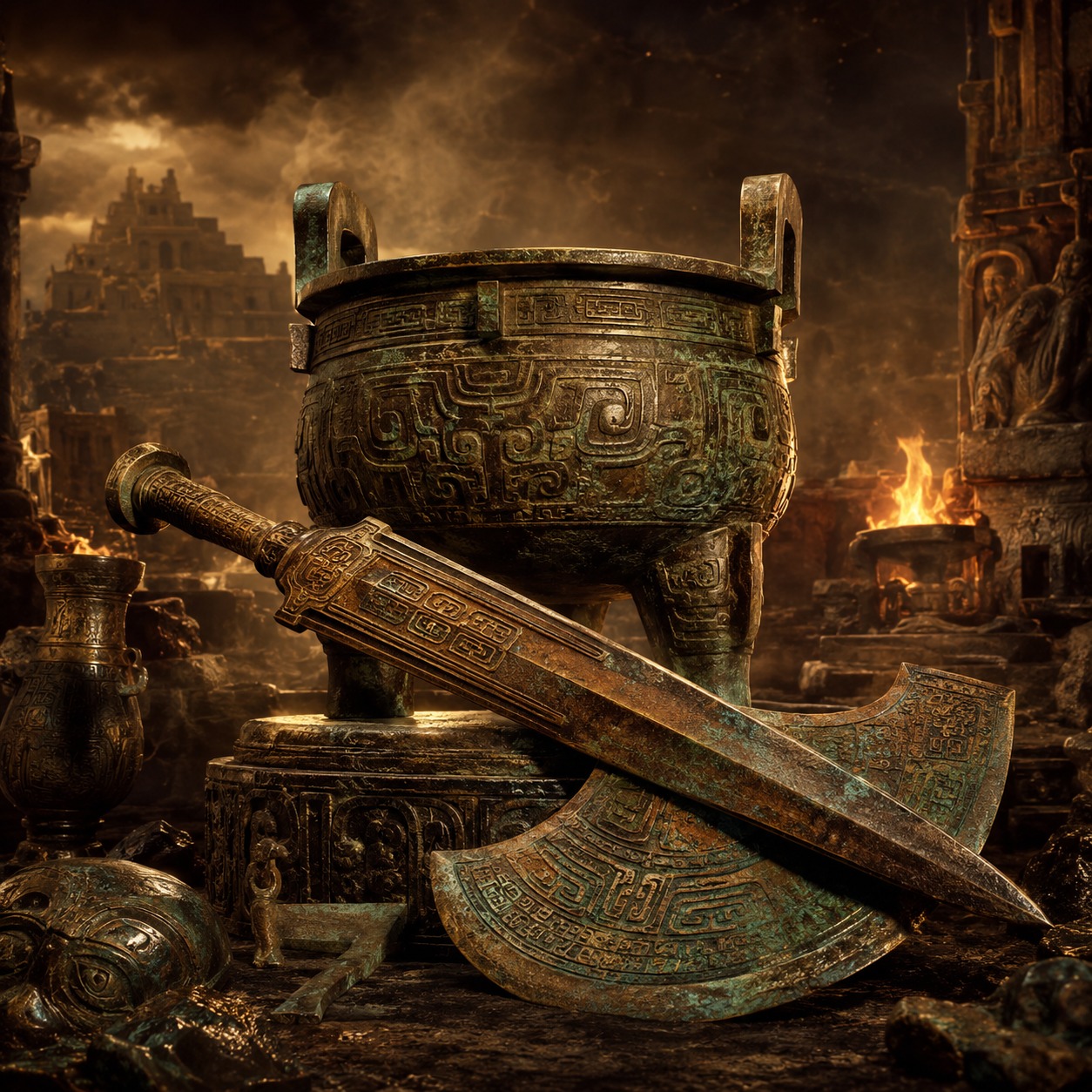
Bronze
Bronze· 靑銅 The first alloy of humanity
Names in Other Languages
 청동한국어
청동한국어Bronze· 靑銅 인류 최초의 합금
 青銅日本語
青銅日本語Bronze· 靑銅 人類最初の合金
 青銅繁體中文
Bronze· 靑銅 人類最初之合金
 BronzeDeutsch
Bronze· 靑銅 Die erste Legierung der Menschheit
 BronzeFrançais
Bronze· 靑銅 Le premier alliage de l humanite
 BronceEspañol
Bronze· 靑銅 La primera aleacion de la humanidad
 BronzePortuguês
Bronze· 靑銅 A primeira liga da humanidade
 BrazPolski
Bronze· 靑銅 Pierwszy stop ludzkosci
 БронзаРусский
Bronze· 靑銅 Первый сплав человечества
Bronze (English Bronze, Latin aes, Greek khalkós) is humanity's first alloy of the decisive canon — the decisive metallurgical canon of the alloy of copper (Cu) and tin (Sn) (typically about 10% tin) — and the decisive canon of the beginning of the Bronze Age around 3300 BCE. Aliases — Bronze (Bronze), aes (aes, Latin), khalkós (khalkós, Greek), Age of War, Hesiod's Bronze Age — are the decisive canonical vocabulary. The decisive origin canon is the decisive canon of the beginning of the Bronze Age in Sumer and Mesopotamia around 3300 BCE. The decisive Hesiod canon is the decisive canon of the Bronze Age of the Five Ages of humanity (gold, silver, bronze, heroic, iron) in Hesiod (Hesiod) Works and Days (Works and Days) lines 143-155 around 700 BCE — 'their weapons were of bronze, their houses of bronze, with bronze they worked, for there was no black iron yet'. The decisive natural history canon is the decisive canon of bronze in Pliny the Elder's Natural History Book 34 of the 1st century — the decisive canon of Corinthian bronze (aes Corinthium).
Origin
The etymological origin is the decisive canonical vocabulary of Latin 'aes (bronze)' and Greek 'khalkós (χαλκός khalkós, bronze)' — the decisive canon of English 'bronze' deriving from Italian 'bronzo' and Persian 'brinj (bronze)'. The decisive origin canon is the decisive canon of the beginning of the Bronze Age in Sumer and Mesopotamia around 3300 BCE — the decisive canon of the alloy of copper (about 90%) and tin (about 10%). The decisive Hesiod canon is the decisive canon of the Bronze Age (third of the Five Ages) of the Greek farmer-poet Hesiod (Hesiod) Works and Days (Erga kai Hēmerai, Works and Days) lines 143-155 around 700 BCE — 'their weapons were of bronze, their houses of bronze, with bronze they worked, for there was no black iron yet' — the decisive canon of the Age of Violence and War. The decisive natural history canon is the decisive canon of bronze (aes) in the Roman Pliny the Elder's (Pliny the Elder, 23-79) Natural History (Naturalis Historia) Book 34 of the 1st century — the decisive canon of the fame of Corinthian bronze.
Features
- Alloy of copper (Cu) 90% + tin (Sn) about 10% — Mohs hardness 3-4
- Main axis — Bronze Age in Hesiod Works and Days lines 143-155
- Latin aes Greek khalkós etymology of bronze
- Beginning of the Bronze Age in 3300 BCE — humanity's first alloy
- Greek bronze giant Talos (Talos) — automatons of Hephaestus
- Origin — Mesopotamia, Chinese Shang dynasty, Corinth, Korean peninsula
Stories
The beginning of the Bronze Age around 3300 BCE is the decisive origin, and the Bronze Age in Hesiod's Works and Days lines 143-155 of c. 700 BCE is the decisive canon. The decisive canon used as humanity's first alloy, and the decisive canon invoked as the metal of the Age of War. The decisive Chinese canon is the decisive canon of the ritual ding (ding, cauldron) of the Shang dynasty around 1500 BCE, and the decisive Greek canon is the decisive canon of the bronze warriors of Riace (Riace) of the 5th century BCE. The decisive Talos canon is the decisive canon of the bronze giant Talos (Talos) as the guardian of Crete in Greek mythology. The decisive Roman canon is the decisive canon of Corinthian bronze (aes Corinthium), and the decisive Renaissance canon is the decisive canon of the bronze David by Donatello (Donatello) of the 1440s.
Weakness
Bronze's weaknesses are: (1) Mohs hardness 3-4 limit — the decisive canonical weakness — softer than iron (4-5) — the decisive canon of the cause of the arrival of the Iron Age; (2) binding of tin — the decisive canon of trade dependence due to tin's scarcity — the cause of the Bronze Age collapse; (3) binding of corrosion — the decisive canon of the formation of patina (green corrosion); (4) binding of acid — the decisive canon of damage from vinegar and acid; (5) binding of iron — the decisive canon of the Bronze Age collapse around 1200 BCE; (6) binding of the sacred domain — the decisive canon; (7) binding of Hesiod — the decisive canon of the binding of the Age of War; (8) binding of time — the decisive canon of the binding of 5300 years of the Bronze Age. The decisive canonical finale is the decisive mythological canon of the Bronze Age collapse around 1200 BCE and the arrival of the Iron Age.
Cultural Significance
Bronze is not merely a metal icon but the canonical iconographic figure of the decisive Sumerian-Greek-Chinese-Roman canon, traversing the beginning of the Bronze Age around 3300 BCE, the bronze ritual ding of the Chinese Shang dynasty around 1500 BCE, the Bronze Age in Hesiod's Works and Days lines 143-155 around 700 BCE, the bronze giant Talos in Greek mythology, the bronze warriors of Riace of the 5th century BCE, Corinthian bronze in Pliny the Elder's Natural History Book 34 of the 1st century, the bronze David by Donatello of the 1440s, and the Great Buddha of Kamakura in Japan of 1198. The etymological origin settled as the decisive canon of Latin 'aes' and Greek 'khalkós (χαλκός khalkós)' — the decisive canon of English 'bronze' deriving from Italian 'bronzo' and Persian 'brinj'. The decisive origin canon is the decisive canon of the beginning of the Bronze Age in Sumer and Mesopotamia around 3300 BCE — the decisive canon of humanity's first alloy. The decisive Chinese canon is the decisive canon of the bronze ritual ding (ding, cauldron) of the Shang dynasty (Shang, 1600-1046 BCE) around 1500 BCE — the decisive canon of the Houmuwu ding (Houmuwu ding, 832.84 kg, now at the National Museum of China). The decisive Hesiod canon is the decisive canon of the Bronze Age (third of the Five Ages) of the Greek Hesiod (Hesiod) Works and Days (Erga kai Hēmerai, Works and Days) lines 143-155 around 700 BCE — 'their weapons were of bronze, their houses of bronze, with bronze they worked, for there was no black iron yet'. The decisive Talos canon is the decisive canon of the bronze giant Talos (Talos) as the guardian of Crete in Apollonius of Rhodes (Apollonius of Rhodes) Argonautica (Argonautica) Book 4 lines 1638-1693 of the 3rd century BCE — the decisive canon of his weakness in the heel where the bronze fluid (ichor) flowed. The decisive Roman canon is the decisive canon of Corinthian bronze (aes Corinthium, the bronze of Corinth) in Pliny the Elder's (Pliny the Elder, 23-79) Natural History Book 34 of the 1st century — the decisive canon of bronze more precious than gold. The decisive Greek bronze statue canon is the decisive canon of the bronze warriors of Riace (Riace) of c. 460 BCE (now at the Museum of Magna Graecia in Reggio Calabria, Italy). The decisive Renaissance canon is the decisive canon of the bronze David (David) by the Italian Donatello (Donatello, 1386-1466) of the 1440s, and the decisive Japanese canon is the decisive canon of the Great Buddha (Daibutsu, ~121 tons of bronze) of Kamakura in Japan of 1198.
In Popular Culture
- Beginning of the Bronze Age in Sumer and Mesopotamia (c. 3300 BCE) — decisive origin canon
- Bronze ritual ding (ding) of the Chinese Shang (Shang) dynasty (c. 1500 BCE) — decisive Chinese canon
- Bronze Age in Hesiod (Hesiod) Works and Days (Works and Days) lines 143-155 (c. 700 BCE) — decisive Hesiod canon
- Bronze giant Talos (Talos) in Apollonius of Rhodes (Apollonius of Rhodes) Argonautica Book 4 lines 1638-1693 (3rd century BCE) — decisive Talos canon
- Automatons of Hephaestus (Hephaestus) in Greek mythology — decisive Hephaestus canon
- Corinthian bronze (aes Corinthium) in Pliny the Elder Natural History (Naturalis Historia) Book 34 (1st century) — decisive Roman canon
- Bronze warriors of Riace (Riace) (c. 460 BCE) — decisive Greek bronze statue canon
- Bronze David (David) by Donatello (Donatello) (1440s) — decisive Renaissance canon
- Great Buddha (Daibutsu) of Kamakura in Japan (1198) — decisive Japanese canon
- Bronze Age collapse and arrival of the Iron Age (c. 1200 BCE) — decisive collapse canon
Trivia
The etymology of Bronze (English Bronze, Latin aes, Greek χαλκός khalkós) is the decisive canonical vocabulary of Latin 'aes (bronze)' and Greek 'khalkós (χαλκός khalkós, bronze, generally copper)' — the decisive canon of English 'bronze' deriving from Italian 'bronzo' and Persian 'brinj (bronze)'. Aliases — Bronze (Bronze), aes (Latin), khalkós (Greek), Age of War, Hesiod's Bronze Age, Corinthian bronze (aes Corinthium) — are the decisive canonical vocabulary. The decisive origin canon is the decisive canon of the beginning of the Bronze Age in Sumer and Mesopotamia around 3300 BCE — the decisive canon of the alloy of copper (Cu, about 90%) and tin (Sn, about 10%) — and the decisive canon of humanity's first alloy. The decisive Hesiod canon is the decisive canon of the Bronze Age (third of the Five Ages: Gold, Silver, Bronze, Heroic, Iron) of the Greek farmer-poet Hesiod (Hesiod, active 8th century BCE) Works and Days (Erga kai Hēmerai, Works and Days) lines 143-155 around 700 BCE — 'the third race of mortal men made by Zeus, the bronze men, whose weapons were of bronze, whose houses of bronze, with bronze they worked, for there was no black iron yet' — the decisive canon of the Age of Violence and War. The decisive Talos canon is the decisive canon of the bronze giant Talos (Talos, made by Hephaestus) as the guardian of Crete in the Greek Apollonius of Rhodes (Apollonius of Rhodes, 295-215 BCE) Argonautica (Argonautica) Book 4 lines 1638-1693 of the 3rd century BCE — the decisive canon of his death when the nail in his heel was pulled out and the bronze fluid (ichor) flowed, and the decisive canon of being defeated by Medea's magic. The decisive Chinese canon is the decisive canon of the bronze ritual ding (ding, 3 or 4 legged cauldron) of the Shang (Shang, 1600-1046 BCE) dynasty around 1500 BCE — the decisive canon of the Houmuwu ding (Houmuwu ding, excavated in 1939, 832.84 kg, 1.33 m, now at the National Museum of China), also called Simuwu ding. The decisive natural history canon is the decisive canon of bronze (aes) in the Roman Pliny the Elder's (Pliny the Elder, 23-79) Natural History (Naturalis Historia) Book 34 of the 1st century — the decisive canon of Corinthian bronze (aes Corinthium, the bronze of Corinth) — the decisive canon of the alloy of gold, silver, and bronze formed by the fire of Corinth in 146 BCE. The decisive Greek bronze statue canon is the decisive canon of the bronze warriors of Riace (Riace) of c. 460 BCE (discovered in 1972 off the Riace coast of Calabria in Italy, now at the Museum of Magna Graecia in Reggio Calabria). The decisive Renaissance canon is the decisive canon of the bronze David (David, ~158 cm, now at the Bargello Museum in Florence) by the Italian Donatello (Donatello, 1386-1466) of the 1440s, and the decisive Japanese canon is the decisive canon of the Great Buddha (Daibutsu, Amitabha, ~121 tons of bronze, ~11.4 m) of Kōtoku-in temple of Kamakura in Japan of 1198.
Related
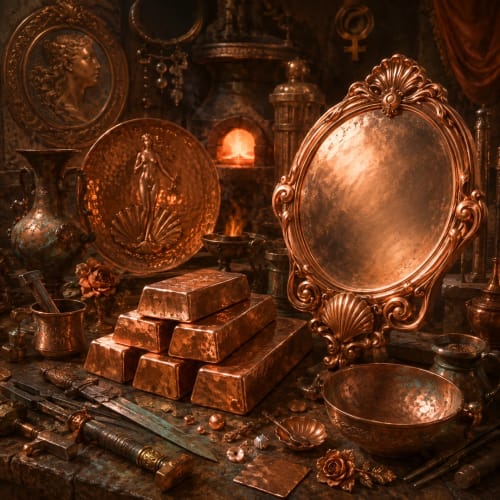
Copper
Copper· Cu Metal of Venus

Gold
Gold· Au The radiant metal of myth

Iron
Iron· Fe Core metal of human civilization
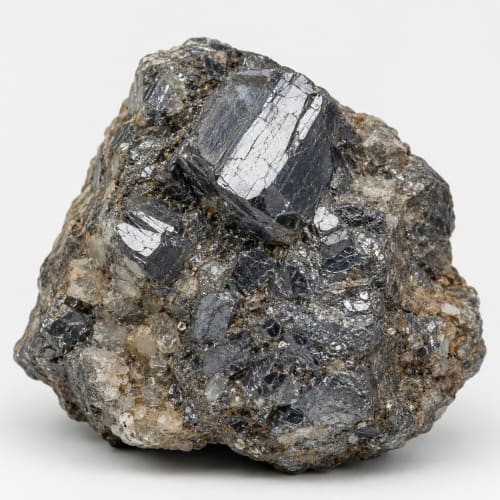
Tin
Tin· Sn Key ingredient of bronze
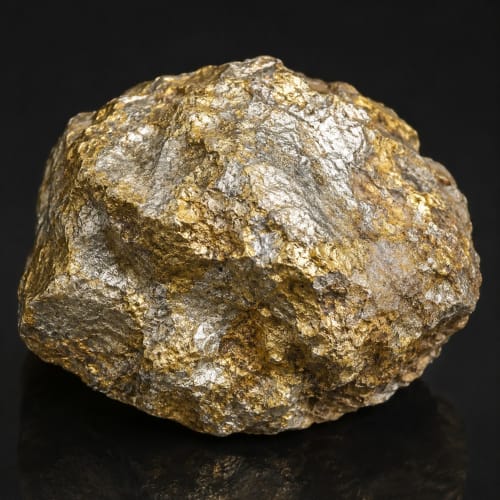
Electrum
Electrum· 琥珀金 Natural gold-silver alloy

Amethyst
Amethyst· 紫水晶 Gem of Dionysus
Cold Iron
Cold Iron· 寒鐵 Bane of the fae

Mithril
Mithril · True Silver — A Legendary Metal Light as a Feather, Harder Than Steel

Mercury
Mercury· Hg Liquid metal, the element of Hermes
Pearl
Pearl· 眞珠 Tears of the sea

Meteoric Iron
Meteoric Iron· 隕鐵 Steel that fell from the sky

Carbuncle
Carbuncle· 紅榴石 Glowing fantasy gem