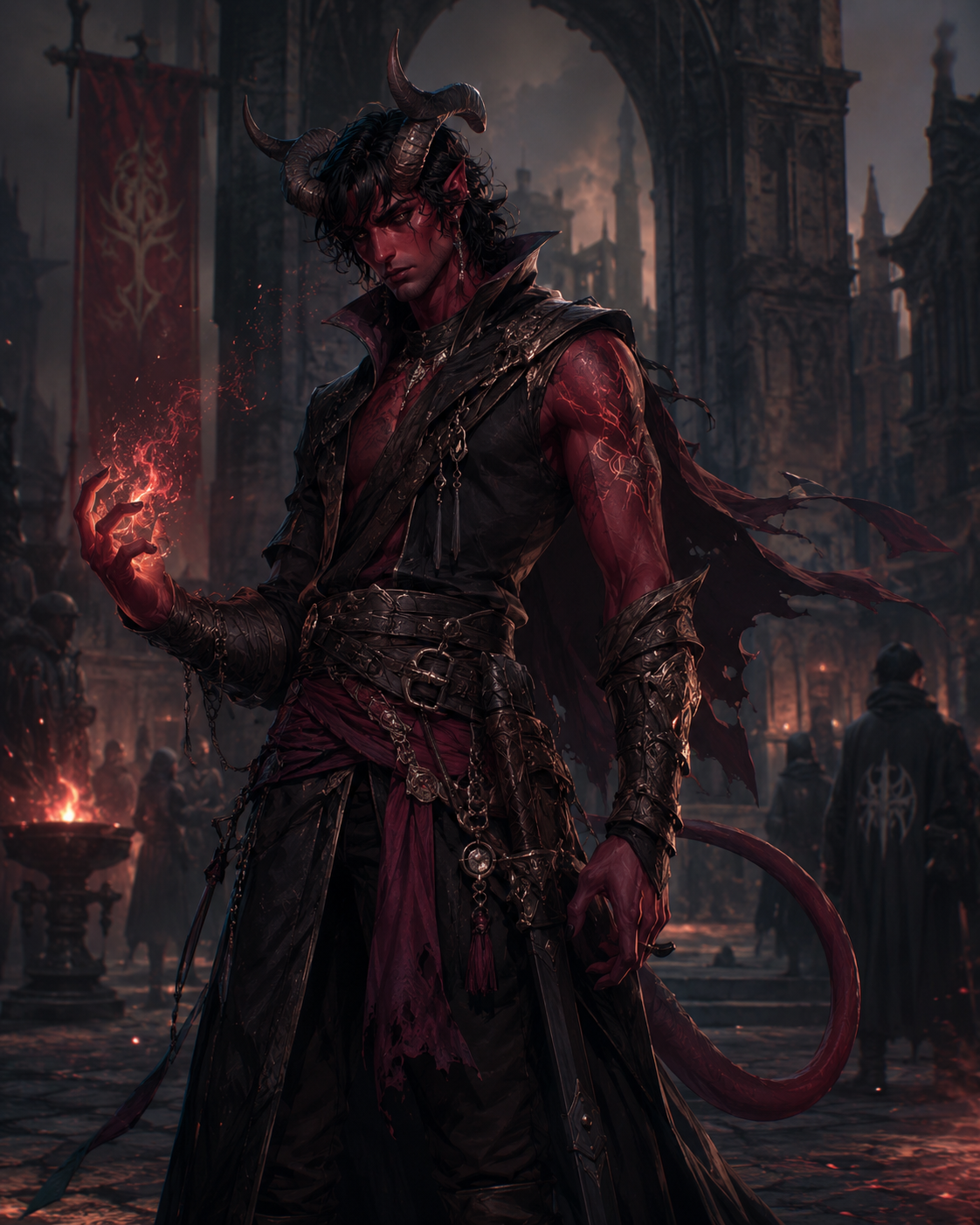
Tiefling
Tiefling · The Infernal-Blooded — Bearers of Hell's Lineage
Names in Other Languages
 티플링한국어
Tiefling · 마혈 인간 — 지옥의 피를 이은 자
 ティーフリング日本語
Tiefling · 魔血の人 — 地獄の血を継ぐ者
 提夫林繁體中文
Tiefling · 魔血之人 — 繼承地獄之血者
 TieflingDeutsch
Tiefling · Höllenblütig — Träger der Abstammung der Hölle
 TieffelinFrançais
Tiefling · Au sang infernal — Porteurs de la lignée des enfers
 TieflingEspañol
Tiefling · De sangre infernal — Portadores del linaje del infierno
 TieflingPortuguês
Tiefling · De sangue infernal — Portadores da linhagem do inferno
 TieflingPolski
Tiefling · Piekielnej krwi — nosiciele rodu piekieł
 ТифлингРусский
Tiefling · Инфернальной крови — носители рода преисподней
A people in whom a distant ancestor mingled blood with a devil or fiendish lord, leaving the human shape marked by horns, a long tail, red or blue skin, and beast-like eyes. Tieflings carry an innate magical affinity along with resistance to fire and shadow, yet meet suspicion or open prejudice almost everywhere they go. Introduced by Dungeons & Dragons in MC8 Monstrous Compendium Outer Planes Appendix (TSR, 1991) and given a fixed home in Planescape (TSR, 1994), the name is a coinage from German 'tief' (deep) plus the suffix '-ling', a being whose blood reaches into the deepest hells.
Origin
The theological forerunner of the tiefling is the medieval cambion, the offspring of an incubus or succubus and a human, discussed in Thomas Aquinas' Summa Theologica I q. 51 a. 3 (c. 1265-74). Caliban in Shakespeare's The Tempest (1611), the fallen-angel genealogies in John Milton's Paradise Lost (1667), and the human-demon pacts in Goethe's Faust (1808-32) form the literary tradition the tiefling refits as a player race. J. M. Weiss introduced the tiefling proper in MC8 Monstrous Compendium Outer Planes Appendix (TSR, 1991); Wolfgang Baur and Rich Baker established them as standard residents of the city of Sigil in the Planescape Campaign Setting (TSR, 1994). The Dungeons & Dragons third-edition Player's Handbook (Wizards of the Coast, 2000) standardised the tiefling as a planetouched subrace. The fourth edition Player's Handbook (2008), designed by Rob Heinsoo, Andy Collins, and James Wyatt, promoted them to a core race and supplied the unifying backstory of Bael Turath, an ancient human empire whose nobility had bound itself to the nine Hells. The fifth edition Player's Handbook (2014) made an Asmodean bloodline the default while keeping the lord-specific variants open, codified for the nine Hells in Mordenkainen's Tome of Foes (2018).
Features
- Two horns, usually curved or upswept, a long thick tail, and pronounced canines
- Red, blue, or dusky skin, solid-colour irises in beast-like eyes, often deep dark hair
- Innate spellcasting — fifth-edition base tieflings cast Thaumaturgy, Hellish Rebuke at level three, and Darkness at level five
- Fire resistance (with variants extending to immunity) and darkvision out to twelve metres
- Routine social suspicion, equal-citizen status only in select planar cities such as Sigil
Stories
After Planescape made them a player race, tieflings became the canonical fantasy figure for stories about prejudice, identity, and self-acceptance. The fourth-edition Bael Turath backstory foregrounded collective guilt versus individual free will, and from the fifth edition onward tieflings have ranked among the most-played non-human races in published Wizards of the Coast usage data (2020 community statistics, sixth place). Mollymauk Tealeaf and Jester Lavorre in the Critical Role campaign The Mighty Nein (2018-2021), and Karlach Cliffgate in Larian Studios' Baldur's Gate 3 (2023), have become the twenty-first-century mainstream icons of the type — protagonists who must prove their identity against prejudice or anti-heroes who fight the curse of their own birth.
Weakness
Social stigma is the defining weakness. The fourth-edition Player's Handbook (page 38) states bluntly that most humans 'reach for a weapon by instinct' when they see a tiefling. Religious communities sometimes bar entry outright; known tieflings face systematic exclusion from guilds, marriage records, and inheritance. Internally they must resist pulls toward fire, shadow, and deceit, encoded mechanically in some fifth-edition options as an infernal compulsion. The fear of one's own bloodline often becomes the deepest barrier to trust with would-be allies.
Cultural Significance
Although the tiefling is a creation of American tabletop role-playing in the 1990s, its identity narrative was deliberately built to echo the experiences of diasporas, immigrants, and minorities marked at birth. Lead fourth-edition designer Mike Mearls wrote in a 2008 Wizards 'Design & Development' column that the race was made for characters 'who are persecuted because of their birth but refuse to accept it as their fault'. Wizards of the Coast detached ability bonuses from race in Tasha's Cauldron of Everything (2020), freeing tieflings from the mechanically default 'charisma race' framing. Karlach in Baldur's Gate 3, whose romance and personal quest centre on removing the infernal engine bolted to her chest, has anchored the 'free will against the curse of blood' reading of the tiefling in mainstream media.
In Popular Culture
- J. M. Weiss, MC8 Monstrous Compendium Outer Planes Appendix (TSR, 1991) — first appearance
- Wolfgang Baur and Rich Baker, Planescape Campaign Setting (TSR, 1994) — Sigil as canonical home
- Jonathan Tweet et al., Dungeons & Dragons third-edition Player's Handbook (Wizards of the Coast, 2000) — planetouched template
- Rob Heinsoo, Andy Collins, and James Wyatt, fourth-edition Player's Handbook (2008) — Bael Turath, core race
- Jeremy Crawford et al., fifth-edition Player's Handbook (2014) and Mordenkainen's Tome of Foes (2018) — nine-Hell variants
- Critical Role, Campaign 2: The Mighty Nein (2018-2021) — Mollymauk Tealeaf, Jester Lavorre
- Wizards of the Coast, Tasha's Cauldron of Everything (2020) — racial ability-bonus reform
- Larian Studios, Baldur's Gate 3 (2023) — Karlach Cliffgate and numerous NPCs
- Keith Baker, Eberron: Rising from the Last War (2019) — Eberron tiefling subraces
Trivia
- 'Tiefling' is a deliberate English coinage built by J. M. Weiss in 1991 from German 'tief' (deep) and the suffix '-ling'; the word does not appear in any pre-1991 dictionary or mythology.
- Mike Mearls revealed in a 2008 Wizards 'Design & Development' column that the Bael Turath backstory of the fourth edition was inspired by the Decian persecution of Christians in the Roman Empire (250 CE).
- At Larian Studios' GDC 2024 presentation it was disclosed that Karlach's motion-capture performer wore lifted footwear to fit the character's six-foot frame, since the performer herself is just under five feet.
- The signature fifth-edition Player's Handbook tiefling illustration was painted by concept artist Magali Villeneuve, with reference photography supplied by a friend of the design team.
Related
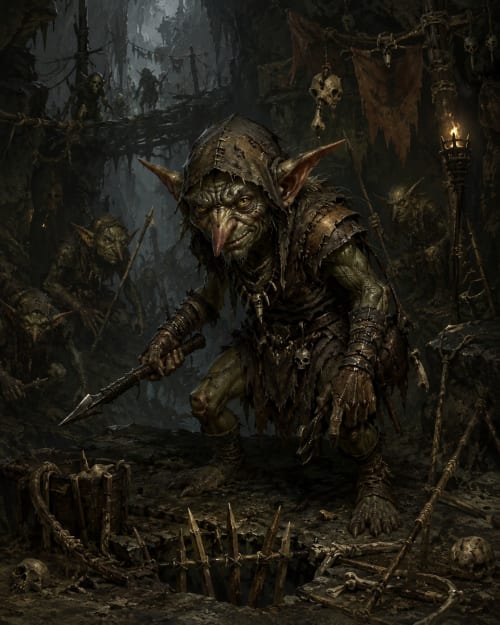
Goblin
Goblin · The Cunning Little Folk — Raiders Who Live by Numbers and Guile
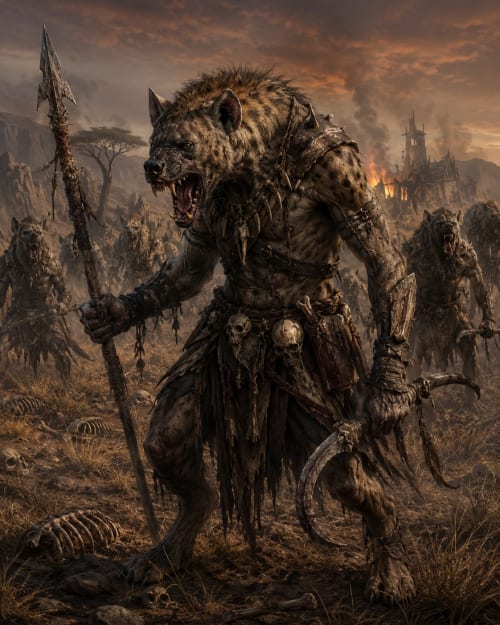
Gnoll
Gnoll · The Hyena People — A Raiding Tribe Maddened by Hunger
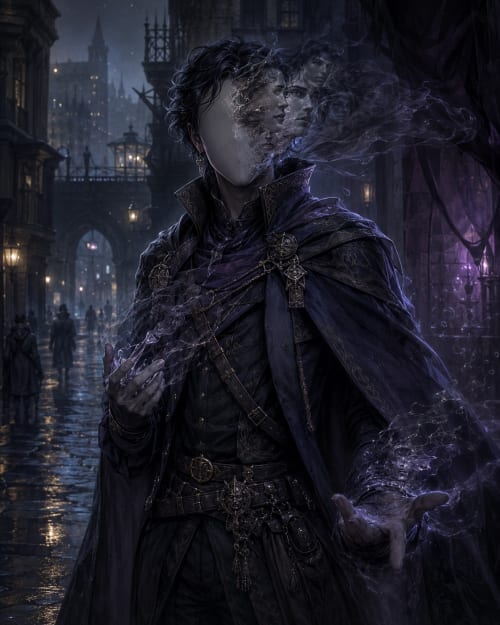
Changeling
Changeling · The Shapeshifting Race — Those Without a Fixed Face
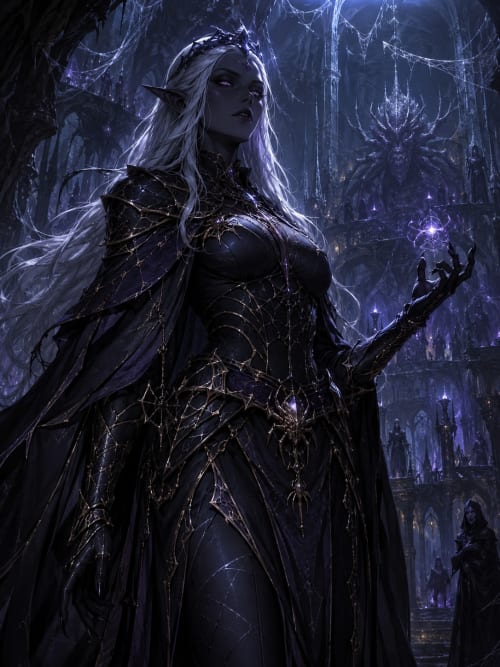
Dark Elf
Dark Elf · Elves of Darkness — Intrigue and Black Magic of the Underworld
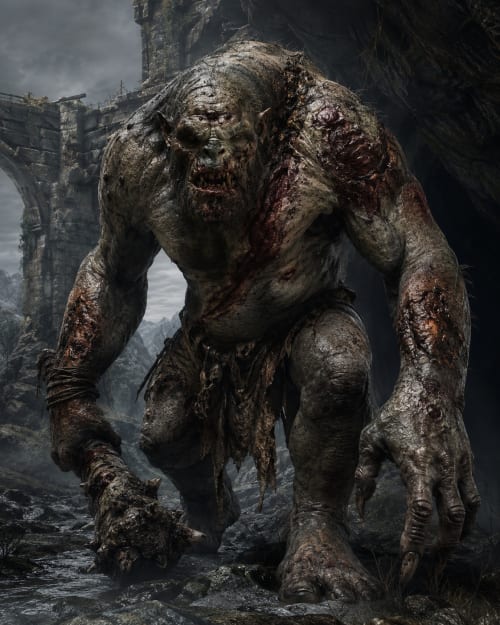
Troll
Troll · The Regenerating Giant — A Savage Race of Tenacious Vitality
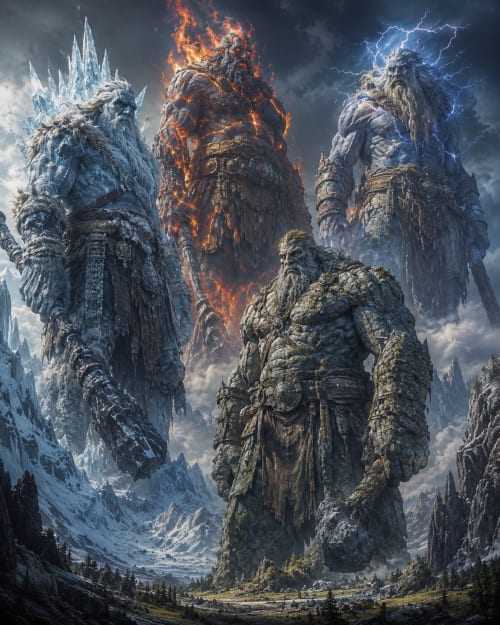
Giant-kin
Giant-kin · The Giant Race — Primal Titans Like Living Mountains
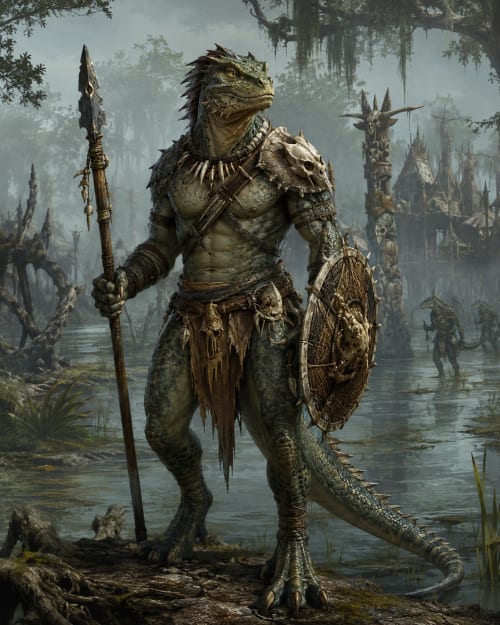
Lizardfolk
Lizardfolk · The Lizard People — Cold-Blooded Tribal Warriors of the Marsh
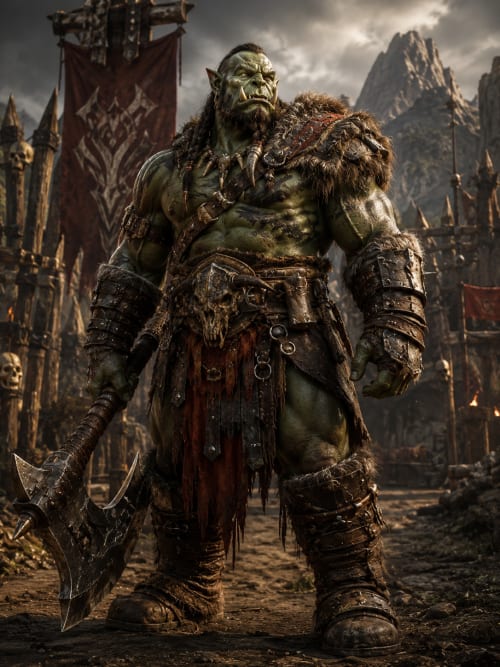
Orc
Orc · Warrior Tribes — A Fierce Race That Reveres Strength and Honor
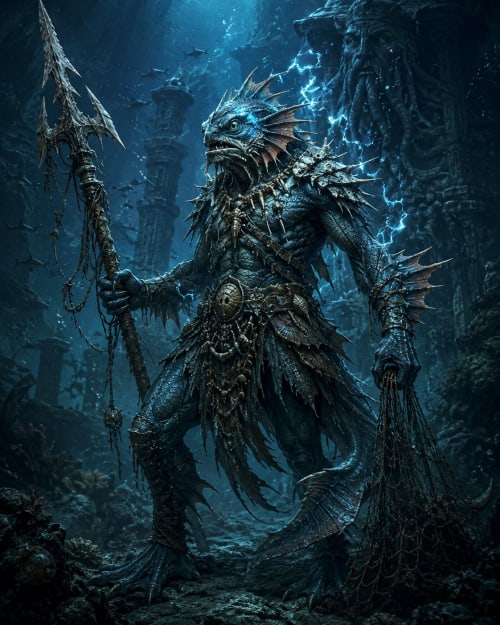
Fishfolk
Fishfolk · The Deep-Sea Fish People — Wild Tribes of the Abyss
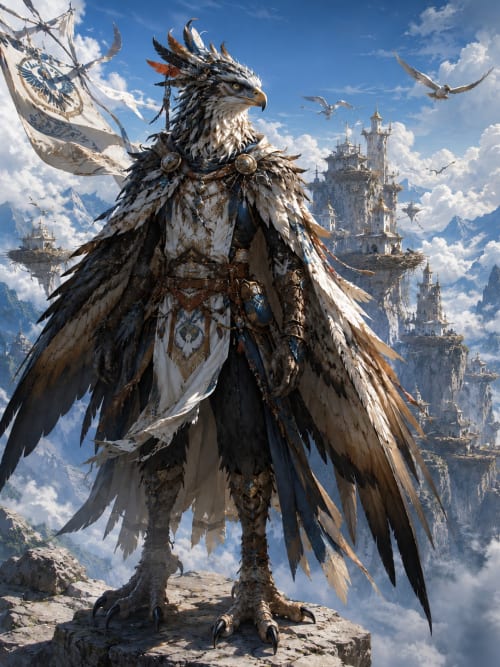
Birdfolk
Birdfolk · The Bird People — A Mountain-Peak Race That Flies the Skies
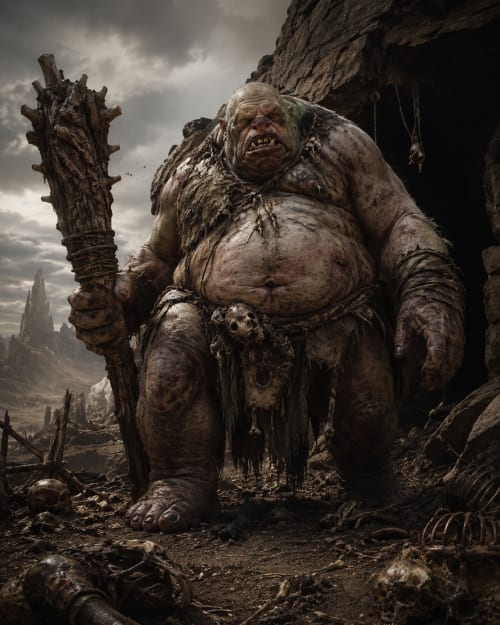
Ogre
Ogre · The Man-Eating Giant — A Dull, Cruel Tyrant of the Wilds
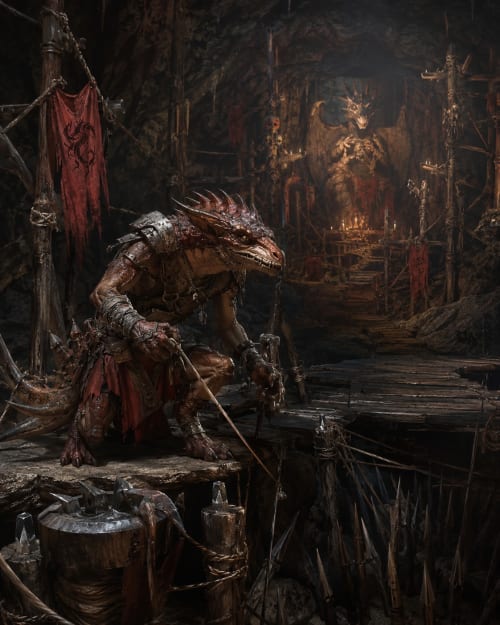
Kobold
Kobold · The Dragon-Serving Little Folk — Masters of Traps