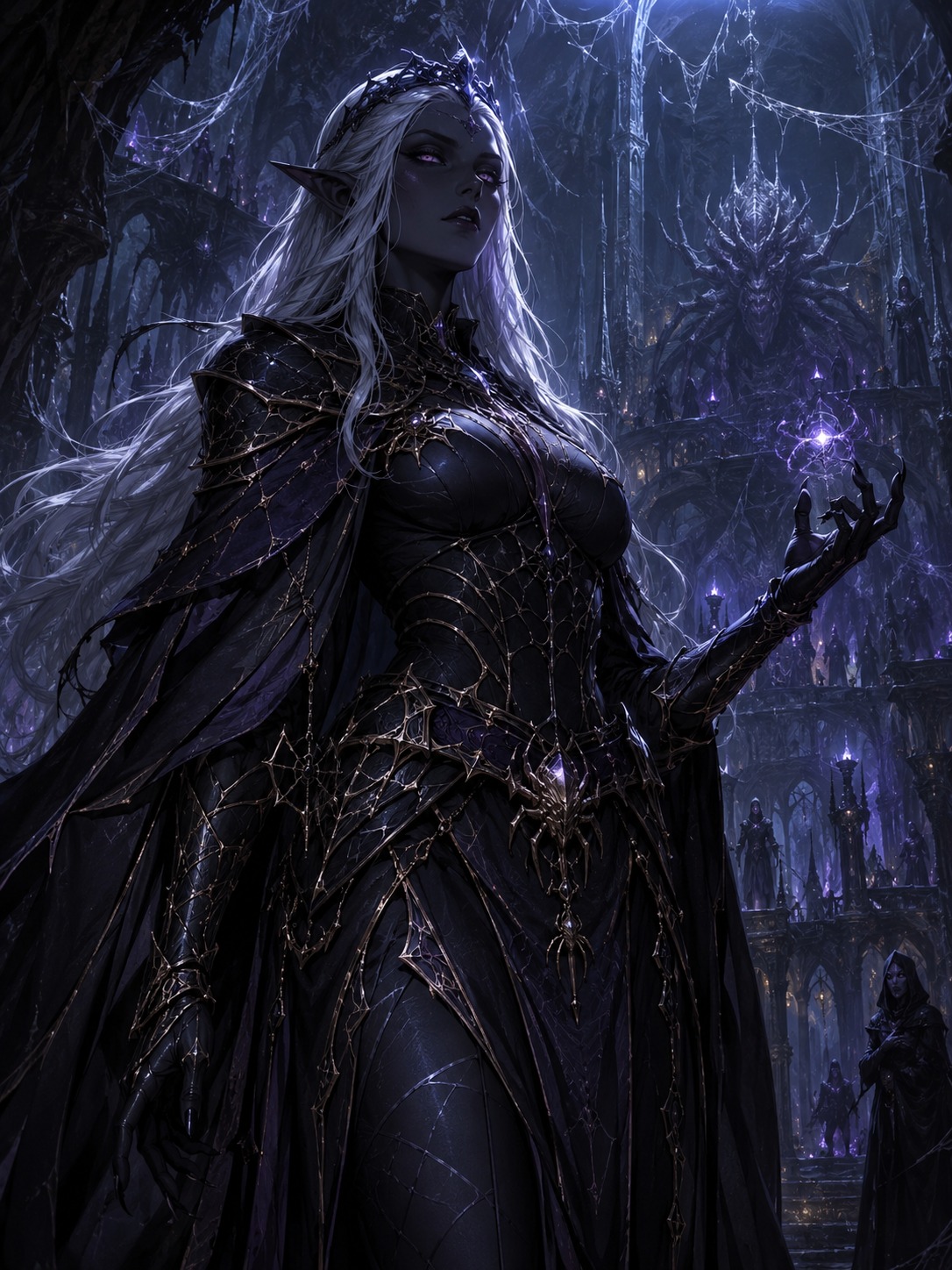
Dark Elf
Dark Elf · Elves of Darkness — Intrigue and Black Magic of the Underworld
Names in Other Languages
 다크엘프한국어
Dark Elf · 어둠의 엘프 — 지하세계의 음모와 흑마법
 ダークエルフ日本語
Dark Elf · 闇のエルフ — 地下世界の陰謀と黒魔術
 黑暗精靈繁體中文
Dark Elf · 闇之精靈 — 地下世界的陰謀與黑魔法
 DunkelelfDeutsch
Dark Elf · Elfen der Dunkelheit — Intrige und Schwarze Magie der Unterwelt
 Elfe noirFrançais
Dark Elf · Elfes des ténèbres — Intrigue et magie noire des profondeurs
 Elfo oscuroEspañol
Dark Elf · Elfos de la oscuridad — Intriga y magia negra del inframundo
 Elfo negroPortuguês
Dark Elf · Elfos das trevas — Intriga e magia negra do submundo
 Mroczny ElfPolski
Dark Elf · Elfy ciemności — intryga i czarna magia podziemi
 Тёмный эльфРусский
Dark Elf · Эльфы тьмы — интриги и чёрная магия подземья
A subterranean branch of elvenkind with dark or grey skin, white or silver hair, and a cruel matriarchal society devoted to spider-goddesses or other gods of darkness. Schemers, assassins, and black magicians, they live deep beneath the world in stone cities. The figure descends from Old Norse svartálfar and dökkálfar in Snorri Sturluson's Prose Edda (c. 1220), but the modern template was fixed by Gary Gygax's Drow in the AD&D Monster Manual (1977) and the module Vault of the Drow (1978), and elaborated by R. A. Salvatore's Drizzt Do'Urden saga (TSR, 1988–), Games Workshop's Druchii (1985), and Bethesda's Dunmer (Morrowind, 2002).
Origin
The earliest direct attestation is Snorri Sturluson's Prose Edda (c. 1220). In Gylfaginning chapter 17 Snorri writes that the Ljosalfar are fairer than the sun, while the Dökkálfar are blacker than pitch and live under the earth, and Skaldskaparmal places the svartálfar in svartálfaheimr, the dark-elf home where the master smiths Brokkr and Eitri also dwell. Whether dökkálfar and svartálfar denote the same beings, or whether either group is identical with the dwarves, has been debated since at least Jacob Grimm's Deutsche Mythologie (1835); Rudolf Simek's Dictionary of Northern Mythology (Brewer, 1993) catalogues the surviving evidence. The decisive canonisation comes with Gary Gygax's Drow in the Advanced Dungeons & Dragons Monster Manual (TSR, 1977) and module D3 Vault of the Drow (TSR, 1978), which fixed the city of Menzoberranzan, the spider-goddess Lolth (originally spelled Lloth), and the matriarchal house system. R. A. Salvatore's Homeland (TSR Forgotten Realms, 1990) gave the world Drizzt Do'Urden, the exile hero whose conscience drives him to the surface. Warhammer Fantasy's Dark Elves (Druchii) entered in Warhammer Armies (Games Workshop, 1985) with their capital at Naggaroth, and The Elder Scrolls' Dunmer were fully developed in The Elder Scrolls III: Morrowind (Bethesda, 2002).
Features
- Dark grey, purplish, or jet-black skin; white, silver, or pale violet hair; red or violet eyes
- Underground stone cities of cruel matriarchal lineage: Menzoberranzan, Naggaroth, Balmora
- Mastery of assassination, intrigue, slavery, and dark or shadow magic
- Worship of dark deities: Lolth (D&D), Khaine and Cytharai (Warhammer), Boethiah, Azura and Mephala (Elder Scrolls)
- Sensitivity to bright sunlight balanced by superior darkvision and dedicated tongues such as Drow Sign Language, Undercommon, and Dunmeris
Stories
Since 1977, dark elves have been the canonical antagonistic race of subterranean intrigue and assassination. The 'good dark elf' exile — Drizzt Do'Urden, Baldur's Gate 3's Minthara, and the Dunmer refugees of Skyrim — has become one of fantasy's most popular character archetypes. Warhammer turned them into ocean-raiding slavers in black arks, Magic: The Gathering's Ravnica gave them the Dimir guild's information brokers, and The Elder Scrolls expanded the Dunmer into a full civilisation on the volcanic island of Vvardenfell, with their own Tribunal religion and politics around slavery and exile.
Weakness
Bright sunlight diminishes their sight and magic alike, codified in fifth-edition D&D as the Drow's Sunlight Sensitivity. Cruel hierarchies and constant inter-house intrigue split their societies from within; ritualised assassination of rival houses is a religious obligation. The spider-goddess Lolth deliberately tests her followers by imposing weaknesses (Salvatore, The Crystal Shard, 1988), and the resulting abuse pipeline drives a steady trickle of exiles. Trust with outside allies remains structurally difficult.
Cultural Significance
Although the modern dark elf is a relatively young invention of American tabletop role-playing between 1977 and 1990, its roots lead clearly to the thirteenth-century Icelandic svartálfar of the Prose Edda. From the 2010s onward, the visual link between dark skin and inherent evil has been criticised as carrying racial freight; Wizards of the Coast responded in Mordenkainen Presents: Monsters of the Multiverse (2022) by removing the Drow's inborn evil alignment. The Elder Scrolls' Dunmer, with their volcanic homeland, Tribunal religion, and abolitionist civil war, remain the canonical example of a dark-elf culture treated in its own right rather than as a foe.
In Popular Culture
- Snorri Sturluson, Prose Edda (c. 1220) — Gylfaginning ch. 17 (Dökkálfar), Skaldskaparmal (svartálfar)
- Jacob Grimm, Deutsche Mythologie (1835) — early scholarship on dökkálfar and dwarves
- Gary Gygax, Advanced Dungeons & Dragons Monster Manual (TSR, 1977) — introduction of the Drow
- Gary Gygax, module D3 Vault of the Drow (TSR, 1978) — Lolth, Menzoberranzan
- R. A. Salvatore, The Crystal Shard (TSR, 1988) and Homeland (1990) — Drizzt Do'Urden
- Games Workshop, Warhammer Armies (1985) and Warhammer Armies: Dark Elves (1995) — Druchii, Malus Darkblade
- Bethesda, The Elder Scrolls III: Morrowind (2002) and The Elder Scrolls V: Skyrim (2011) — Dunmer, Tribunal
- Wizards of the Coast, Mordenkainen Presents: Monsters of the Multiverse (2022) — drow alignment reset
- Larian Studios, Baldur's Gate 3 (2023) — Minthara, cameo of Drizzt
Trivia
- Lolth's original spelling 'Lloth' was published in module D3 in 1978; the form Lolth became standard with the 1980 supplement on deities and demigods.
- Salvatore stated in a 1995 interview that the names of Drizzt's scimitars, Twinkle and Icingdeath, came from family in-jokes from his Minnesota-born father.
- The Elder Scrolls' Dunmer were originally the Chimer; their skin turned ash-grey and their eyes red as a curse from the goddess Azura recounted in the in-game text Nerevar Moon and Star.
- Snorri's Gylfaginning chapter 17 says only that the Dökkálfar live below the earth, without explicitly identifying their realm with svartálfaheimr; the relationship of the two groups remains an open scholarly question.
Related
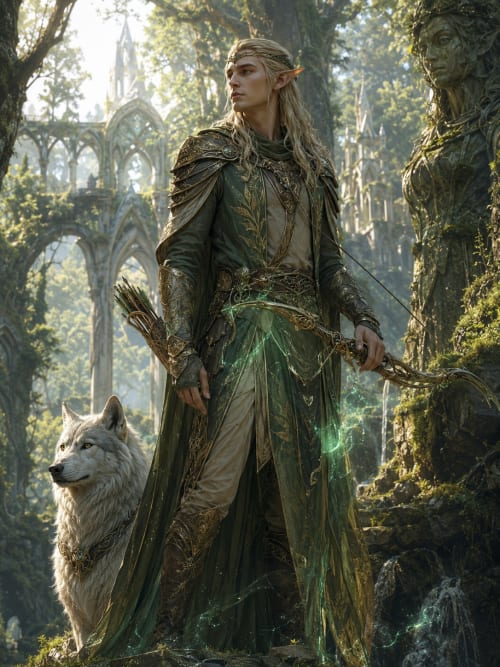
Elf
Elf · People of the Forest — Longevity, Magic, Guardians of Nature
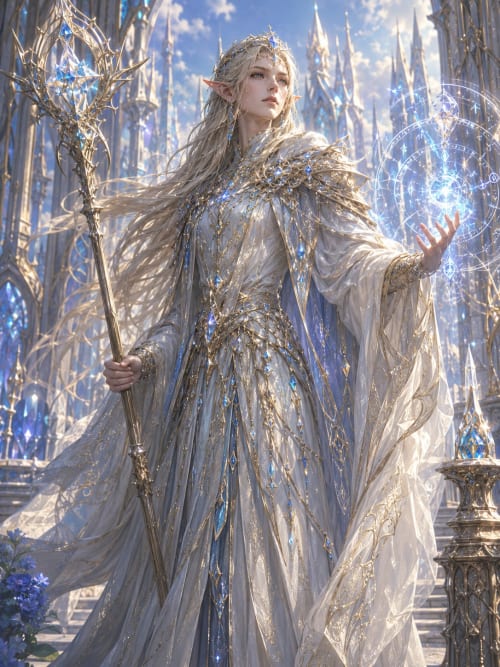
High Elf
High Elf · Noble Elves — Aristocrats of Arcane Magic
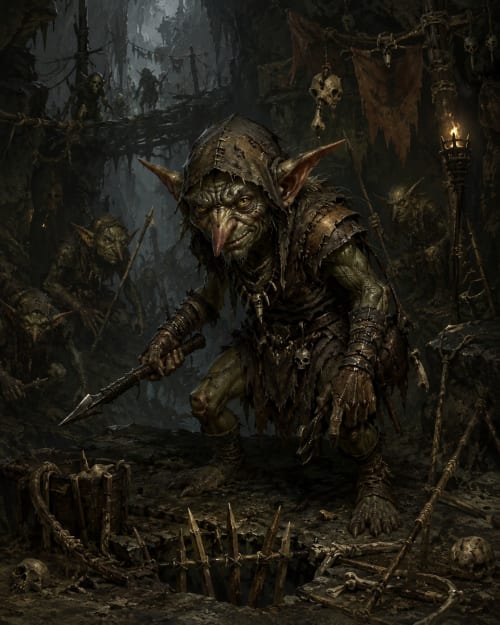
Goblin
Goblin · The Cunning Little Folk — Raiders Who Live by Numbers and Guile
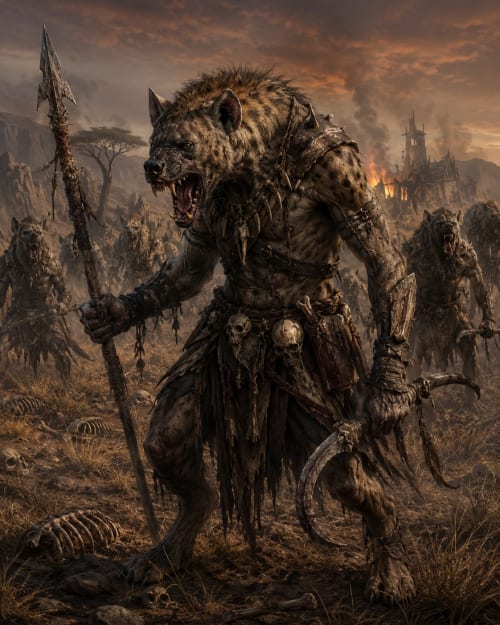
Gnoll
Gnoll · The Hyena People — A Raiding Tribe Maddened by Hunger
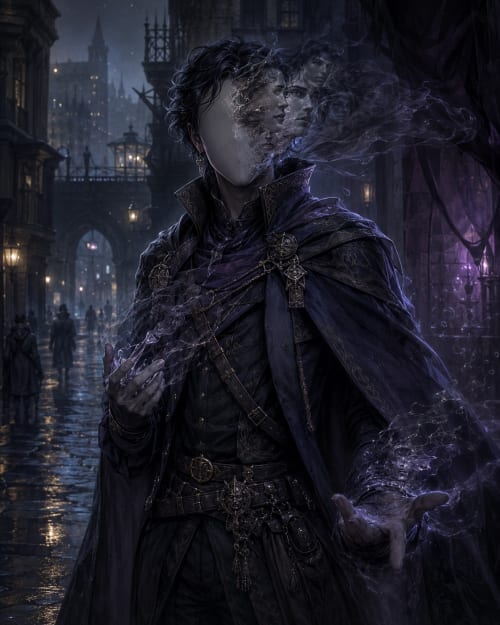
Changeling
Changeling · The Shapeshifting Race — Those Without a Fixed Face
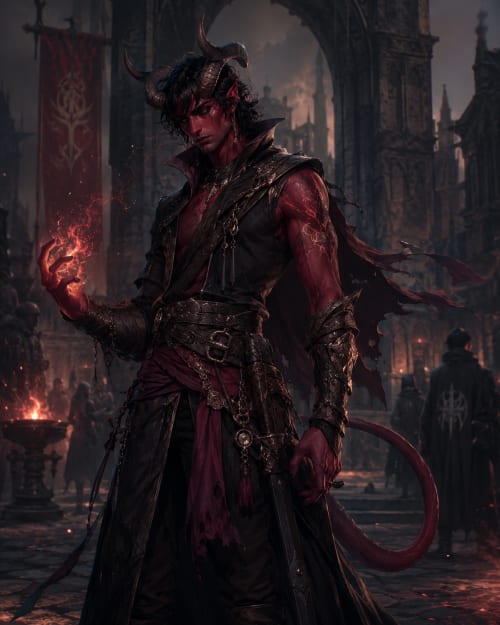
Tiefling
Tiefling · The Infernal-Blooded — Bearers of Hell's Lineage
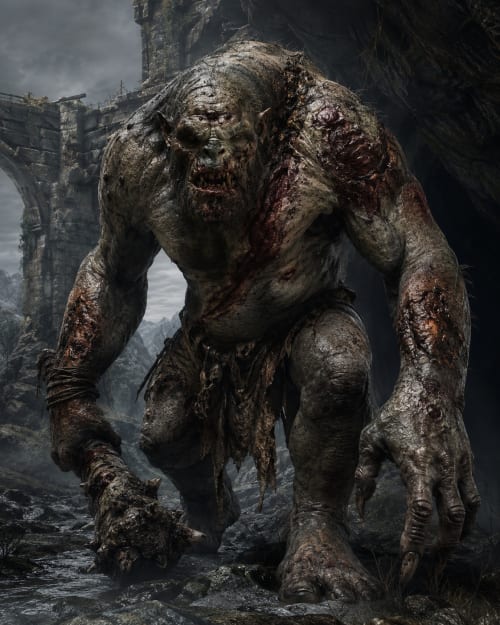
Troll
Troll · The Regenerating Giant — A Savage Race of Tenacious Vitality
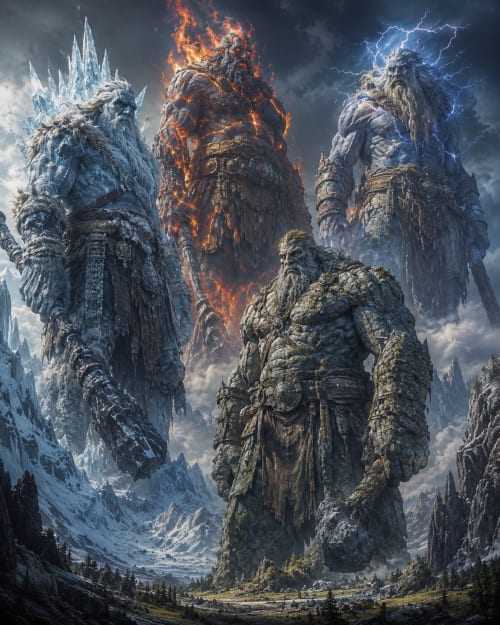
Giant-kin
Giant-kin · The Giant Race — Primal Titans Like Living Mountains
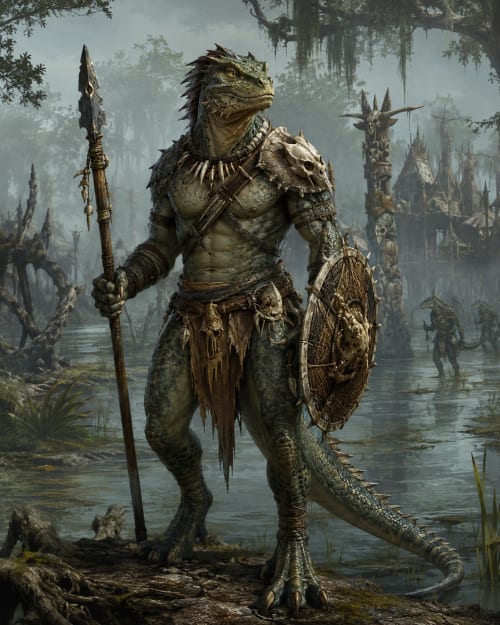
Lizardfolk
Lizardfolk · The Lizard People — Cold-Blooded Tribal Warriors of the Marsh
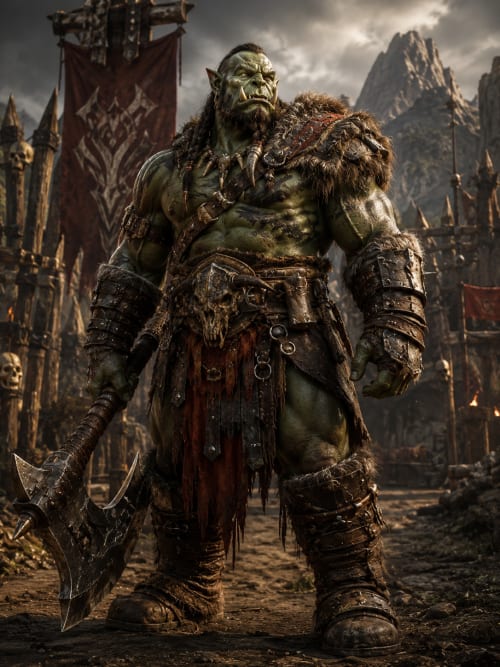
Orc
Orc · Warrior Tribes — A Fierce Race That Reveres Strength and Honor
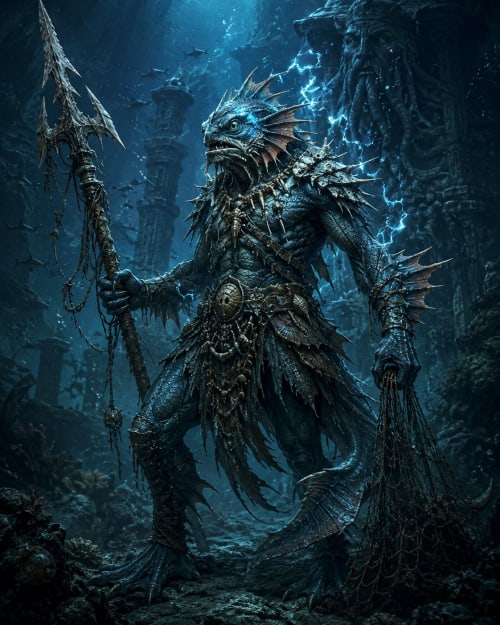
Fishfolk
Fishfolk · The Deep-Sea Fish People — Wild Tribes of the Abyss
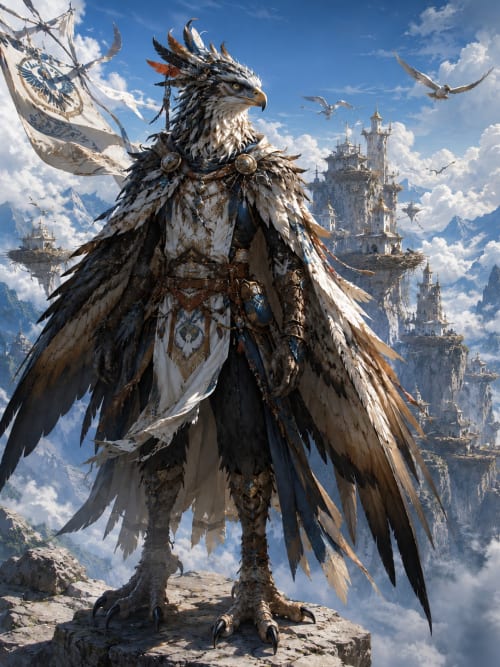
Birdfolk
Birdfolk · The Bird People — A Mountain-Peak Race That Flies the Skies