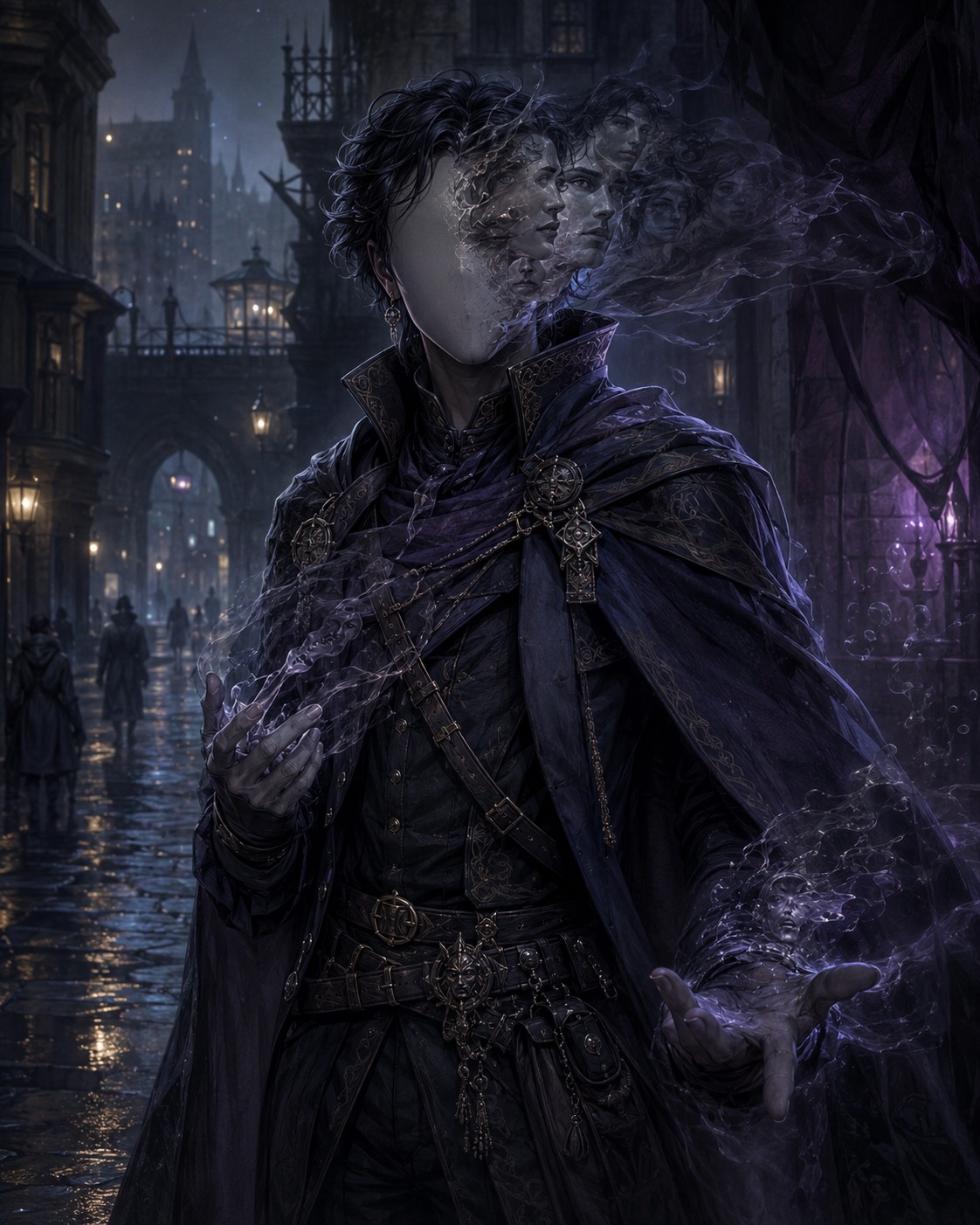
Changeling
Changeling · The Shapeshifting Race — Those Without a Fixed Face
Names in Other Languages
 체인질링한국어
Changeling · 변신 종족 — 고정된 얼굴이 없는 자
 チェンジリング日本語
Changeling · 変身種族 — 固定された顔を持たぬ者
 易形者繁體中文
Changeling · 變身種族 — 無固定面容者
 WechselbalgDeutsch
Changeling · Die Gestaltwandlerrasse — Jene ohne festes Gesicht
 ChangelinFrançais
Changeling · La race métamorphe — Ceux sans visage fixe
 CambianteEspañol
Changeling · La raza metamorfa — Aquellos sin un rostro fijo
 MetamorfoPortuguês
Changeling · A raça metamorfa — Aqueles sem um rosto fixo
 OdmieniecPolski
Changeling · Rasa zmiennokształtnych — ci bez stałej twarzy
 ПодменышРусский
Changeling · Раса оборотней — те, у кого нет постоянного лица
A people without a fixed face, who can shift appearance at will and copy the form and voice of others to perfection — and who are, for that reason, never quite sure who they themselves are. They live as spies, actors, diplomats, and fugitives, slipping through the seams of society under borrowed skins. The figure grows from the Celtic and Germanic folk-tale of the changeling — a fae or troll child secretly substituted for a human infant — collected canonically in William Butler Yeats' Fairy and Folk Tales of the Irish Peasantry (Walter Scott Publishing, London, 1888); Keith Baker's Eberron Campaign Setting (Wizards of the Coast, 2004) and White Wolf's Changeling games made the modern player-race.
Origin
The folk root of the changeling is the Celtic and Germanic peasant story in which a fairy or a troll secretly exchanges a fae child for a newborn human. One of the earliest first-person records is in Martin Luther's Table Talk (Tischreden, recorded 1531-46, ed. Aurifaber 1566), where Luther reports a 'Wechselbalg' he saw in Dessau, Saxony, and declares it a 'mass of devil's flesh' that may justly be drowned — a passage that later medical historians have read as evidence of harsh peasant treatment of disabled infants. William Butler Yeats's Fairy and Folk Tales of the Irish Peasantry (Walter Scott Publishing, London, 1888) is the canonical literary collection, gathering Irish tales in which the sidhe substitute a withered fairy elder for the stolen infant. The motif passes into J. M. Barrie's Peter Pan (stage premiere 1904; novel as Peter and Wendy, Hodder & Stoughton, 1911) in the Lost Boys, and into Hans Christian Andersen's Elfin Mound (Elverhoi, 1845). The modern fantasy-game changeling is the work of Keith Baker, who introduced the race in the Eberron Campaign Setting (Wizards of the Coast, 2004) as descendants of doppelgangers, and updated them for fifth edition in Eberron: Rising from the Last War (2019). White Wolf's tabletop line Changeling: The Dreaming (Stewart Wieck and others, 1995) and Changeling: The Lost (Ethan Skemp and others, 2007) frame changelings as humans kidnapped by the fae and remade into fae themselves, a psychoanalytic variation.
Features
- No fixed face; height, build, gender, and features can be reshaped in seconds
- Faultless mimicry of the appearance, voice, and habits of others (in fifth-edition D&D Eberron the Shapechanger trait)
- The 'true form' is conventionally silver hair, pale skin, blank or empty eyes — yet even that may be just another mask
- Suited to careers that require concealment: spy, actor, diplomat, fugitive, bodyguard
- Lifespan around eighty years in fifth-edition D&D Eberron, no native tongue but easy command of any language they have heard
Stories
Changelings are the canonical spy under cover, the wanderer who can trust no one, and the protagonist seeking a true self. They serve plots that turn on identity, trust, and the mask. Keith Baker's Eberron sets them as descendants of doppelgangers, embedding a moral ambivalence about their own kind into the race itself. White Wolf's Changeling: The Dreaming (1995) and Changeling: The Lost (2007) read the type through the loss of childhood, the cost of growing up, and the rift between two worlds; the founders of the Dominion in Star Trek: Deep Space Nine (Paramount, 1993-1999) carry the same kit into science fiction. The figure is a staple of mystery and drama wherever the question 'who are you really?' is the engine of the plot.
Weakness
The absence of a fixed self is itself the deepest weakness. Baker's Eberron Campaign Setting (2004) notes that changelings often fail to recognise their own face in a mirror; the fifth-edition rules formalise this through the optional persona mechanic. Trust is hard to win — human societies instinctively suspect a shifter, and once exposed, every disguise built around the changeling collapses at once. Even the supposed 'silver-haired true form' may itself be a mask, leaving the changeling perpetually doubting both self and others. The fifth-edition D&D rule that the shape reverts on death adds a final betrayal of cover. Structural isolation from family, community, and a stable religious place is the slow underlying wound.
Cultural Significance
Medical historians and folklorists, most notably D. L. Ashliman in A Guide to Folktales in the English Language (Greenwood, 1987) and Susan Schoon Eberly's article 'Fairies and the Folklore of Disability: Changelings, Hybrids and the Solitary Fairy' (Folklore vol. 99, 1988), have argued that the changeling motif is the mythological residue of peasant fear and rejection of disabled or autistic infants. The Bridget Cleary case of March 1895 in Clonmel, County Tipperary — in which Michael Cleary burned his wife to death believing she had been replaced by a changeling, leading to his conviction in Dublin on 5 July 1895 — is the canonical evidence that the belief was still alive in late-Victorian Ireland (records at the National Archives, Kew). Changeling: The Lost (White Wolf, 2007) wrote that dark history forward into the genre. Keith Baker said in a 2014 ENWorld interview that he tried, when designing the Eberron changeling, to invert old rural fears 'into a game-attractive figure without insulting the actual disabled children whose existence those folktales targeted'.
In Popular Culture
- Martin Luther, Table Talk / Tischreden (recorded 1531-46, ed. Aurifaber, 1566) — the Dessau Wechselbalg
- William Butler Yeats, ed., Fairy and Folk Tales of the Irish Peasantry (Walter Scott Publishing, London, 1888) — Irish changeling tradition
- J. M. Barrie, Peter Pan (1904 stage; Peter and Wendy, Hodder & Stoughton, 1911) — Lost Boys
- Hans Christian Andersen, Elfin Mound / Elverhoi (1845) — nineteenth-century literary fairy tale
- Stewart Wieck et al., Changeling: The Dreaming (White Wolf, 1995) — World of Darkness variation
- Keith Baker, Eberron Campaign Setting (Wizards of the Coast, 2004) — doppelganger-descended player race
- Ethan Skemp et al., Changeling: The Lost (White Wolf, 2007) — psychoanalytic fae-abduction horror
- Star Trek: Deep Space Nine (Paramount, 1993-1999) — the Founders of the Dominion
- Keith Baker, Eberron: Rising from the Last War (Wizards of the Coast, 2019) — fifth-edition D&D changeling
- Holly Black, The Cruel Prince (Little, Brown, 2018) — twenty-first-century young adult fantasy changeling
Trivia
- Entry 4513 of Luther's 1532 Table Talk, the 'Dessau changeling', is one of the most-cited primary sources in modern medical histories of how early-modern villages treated infants with hydrocephalus and other developmental conditions.
- The Bridget Cleary case of March 1895 in Clonmel, County Tipperary, in which Michael Cleary burned his wife alive in the belief that she had been replaced by a fae changeling, was tried in Dublin on 5 July 1895; the original court papers are preserved at the National Archives, Kew.
- Michael Westmore designed the prosthetic Founder appearance for Star Trek: Deep Space Nine, and ILM produced the liquid-to-humanoid transformation effects in 1995 by adapting the techniques developed for the T-1000 in Terminator 2 (1991).
- Keith Baker told ENWorld in 2014 that the 'true form' iconography of the Eberron changeling — silver hair, pale skin, blank eyes — was sketched after John Anster Fitzgerald's painting The Fairy Bower (1860, Victoria and Albert Museum, London).
Related
Goblin
Goblin · The Cunning Little Folk — Raiders Who Live by Numbers and Guile
Gnoll
Gnoll · The Hyena People — A Raiding Tribe Maddened by Hunger
Dark Elf
Dark Elf · Elves of Darkness — Intrigue and Black Magic of the Underworld
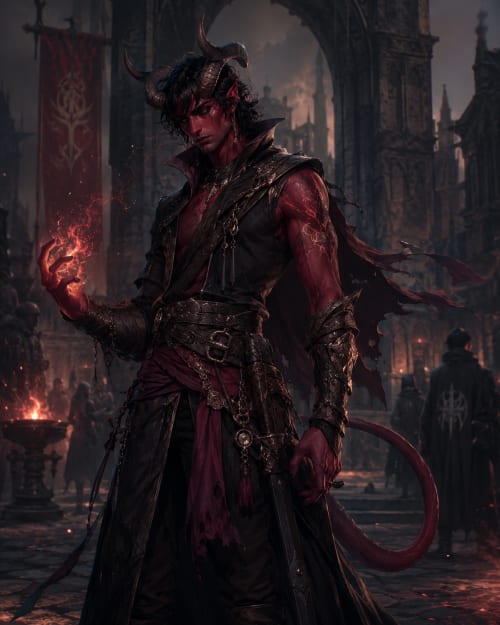
Tiefling
Tiefling · The Infernal-Blooded — Bearers of Hell's Lineage
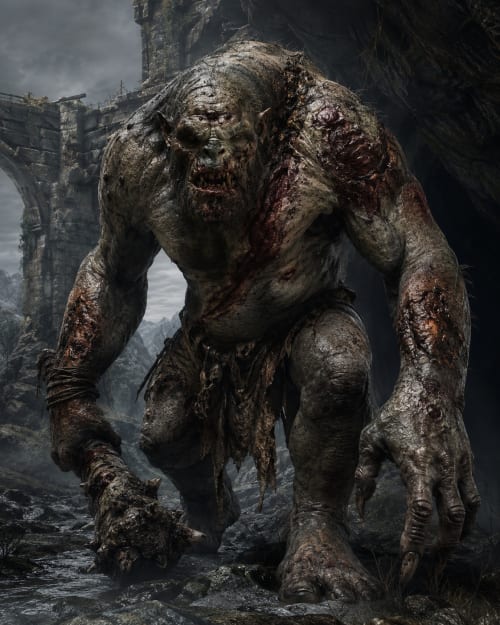
Troll
Troll · The Regenerating Giant — A Savage Race of Tenacious Vitality
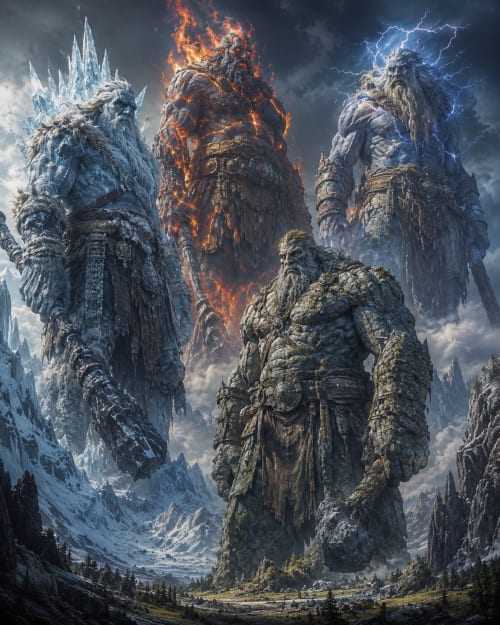
Giant-kin
Giant-kin · The Giant Race — Primal Titans Like Living Mountains
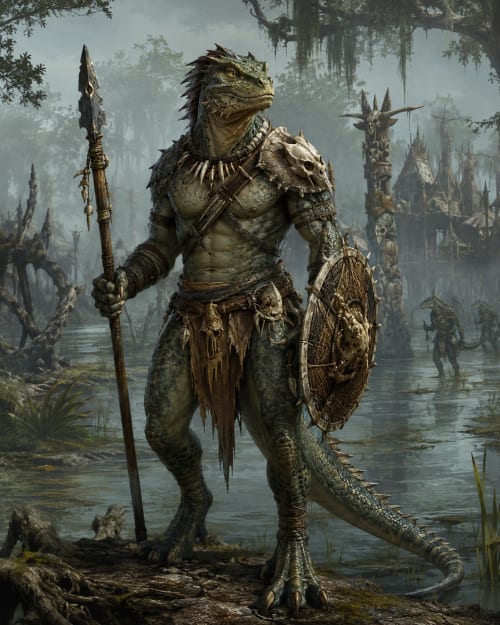
Lizardfolk
Lizardfolk · The Lizard People — Cold-Blooded Tribal Warriors of the Marsh
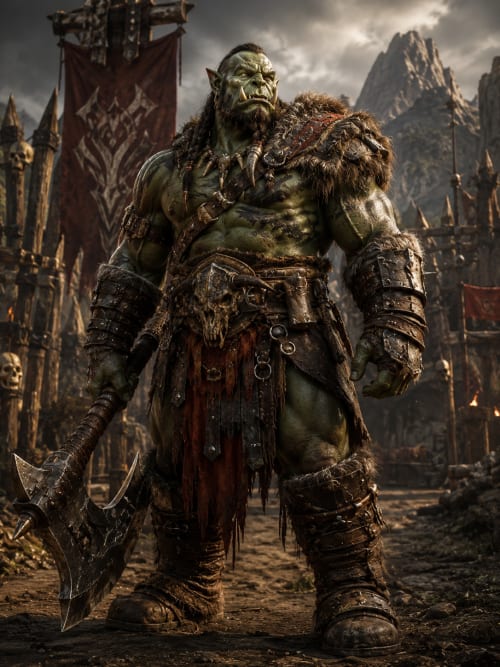
Orc
Orc · Warrior Tribes — A Fierce Race That Reveres Strength and Honor
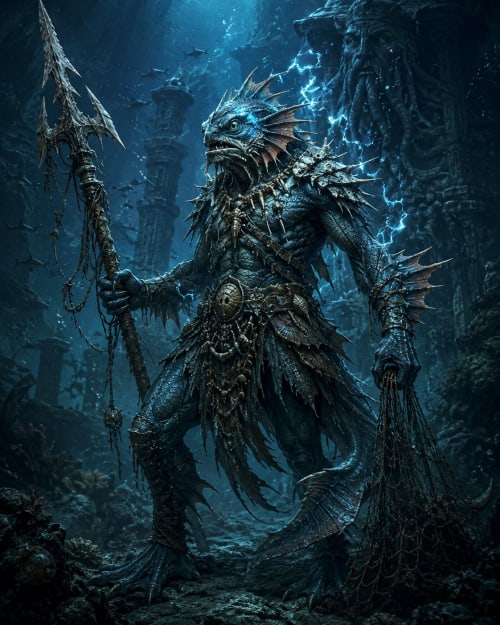
Fishfolk
Fishfolk · The Deep-Sea Fish People — Wild Tribes of the Abyss
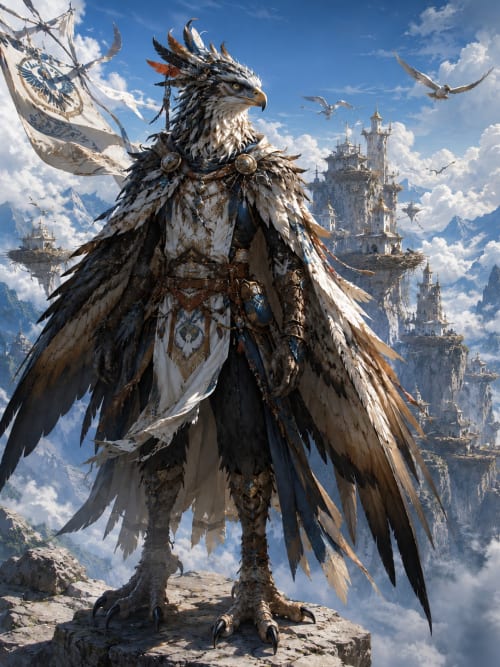
Birdfolk
Birdfolk · The Bird People — A Mountain-Peak Race That Flies the Skies
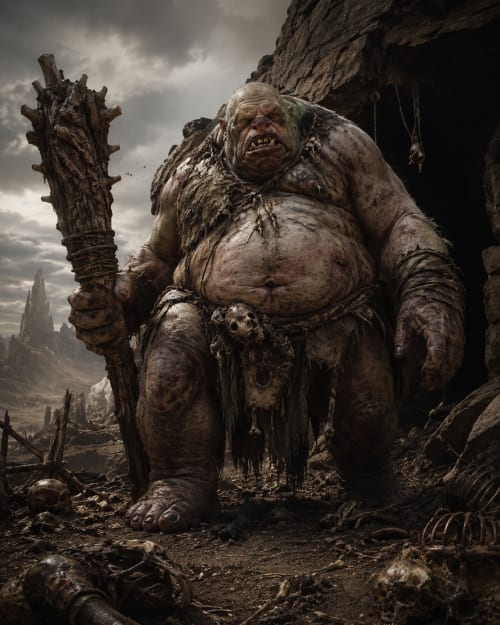
Ogre
Ogre · The Man-Eating Giant — A Dull, Cruel Tyrant of the Wilds
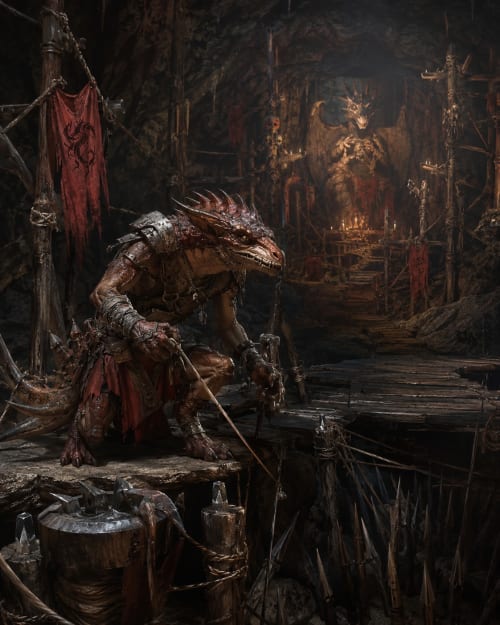
Kobold
Kobold · The Dragon-Serving Little Folk — Masters of Traps