Half-Elf
Half-Elf · Of Mixed Blood — Between the Worlds of Human and Elf
Names in Other Languages
 하프엘프한국어
Half-Elf · 혼혈 — 인간과 엘프, 두 세계의 경계인
 ハーフエルフ日本語
Half-Elf · 混血 — 人間とエルフ、二つの世界の境界人
 半精靈繁體中文
Half-Elf · 混血 — 人類與精靈,兩個世界的邊界人
 HalbelfDeutsch
Half-Elf · Von gemischtem Blut — Zwischen den Welten von Mensch und Elf
 Demi-elfeFrançais
Half-Elf · De sang mêlé — Entre les mondes de l'humain et de l'elfe
 SemielfoEspañol
Half-Elf · De sangre mestiza — Entre los mundos del humano y el elfo
 Meio-elfoPortuguês
Half-Elf · De sangue mestiço — Entre os mundos do humano e do elfo
 PółelfPolski
Half-Elf · Mieszanej krwi — między światami człowieka i elfa
 ПолуэльфРусский
Half-Elf · Смешанной крови — между мирами человека и эльфа
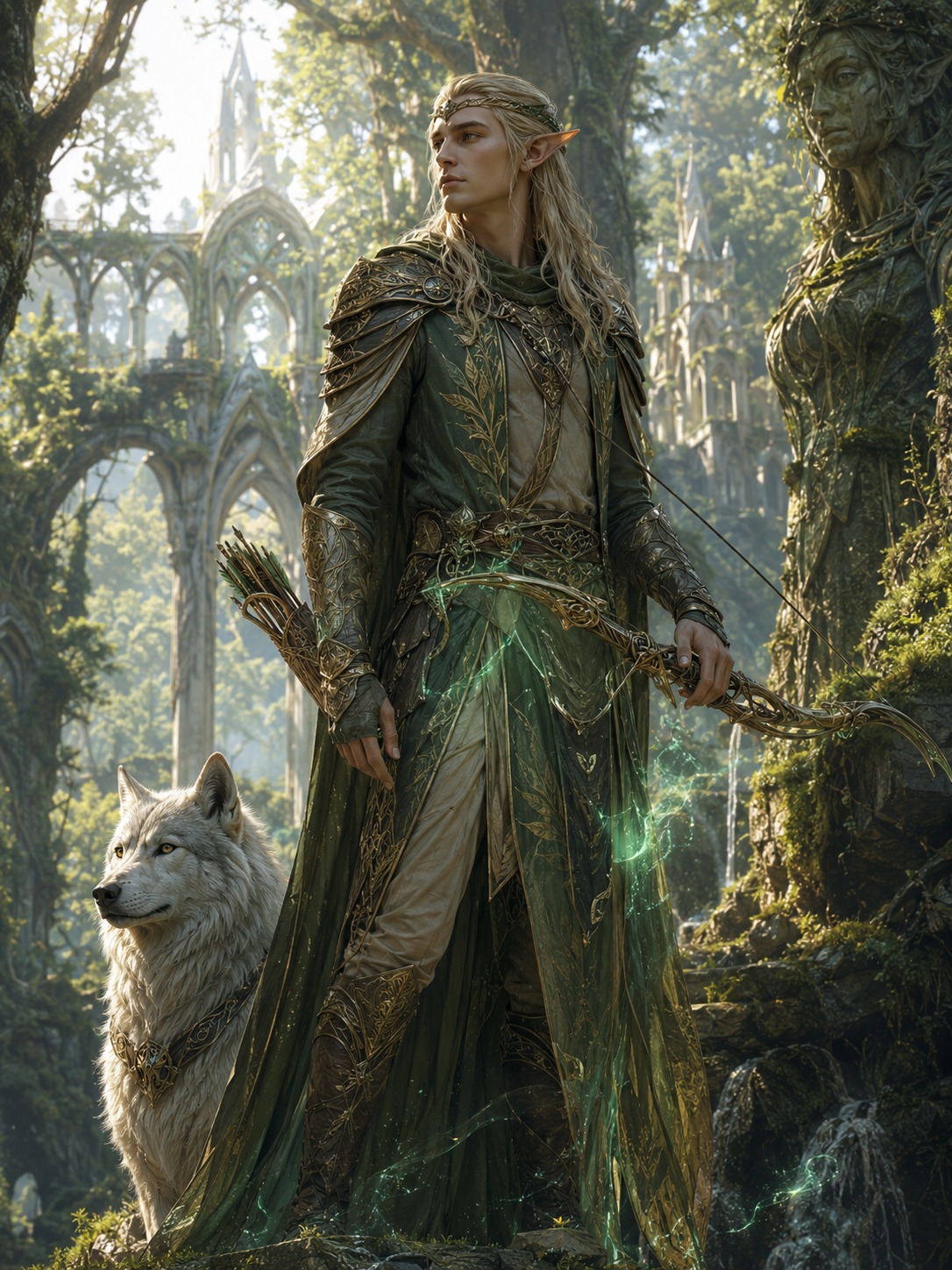
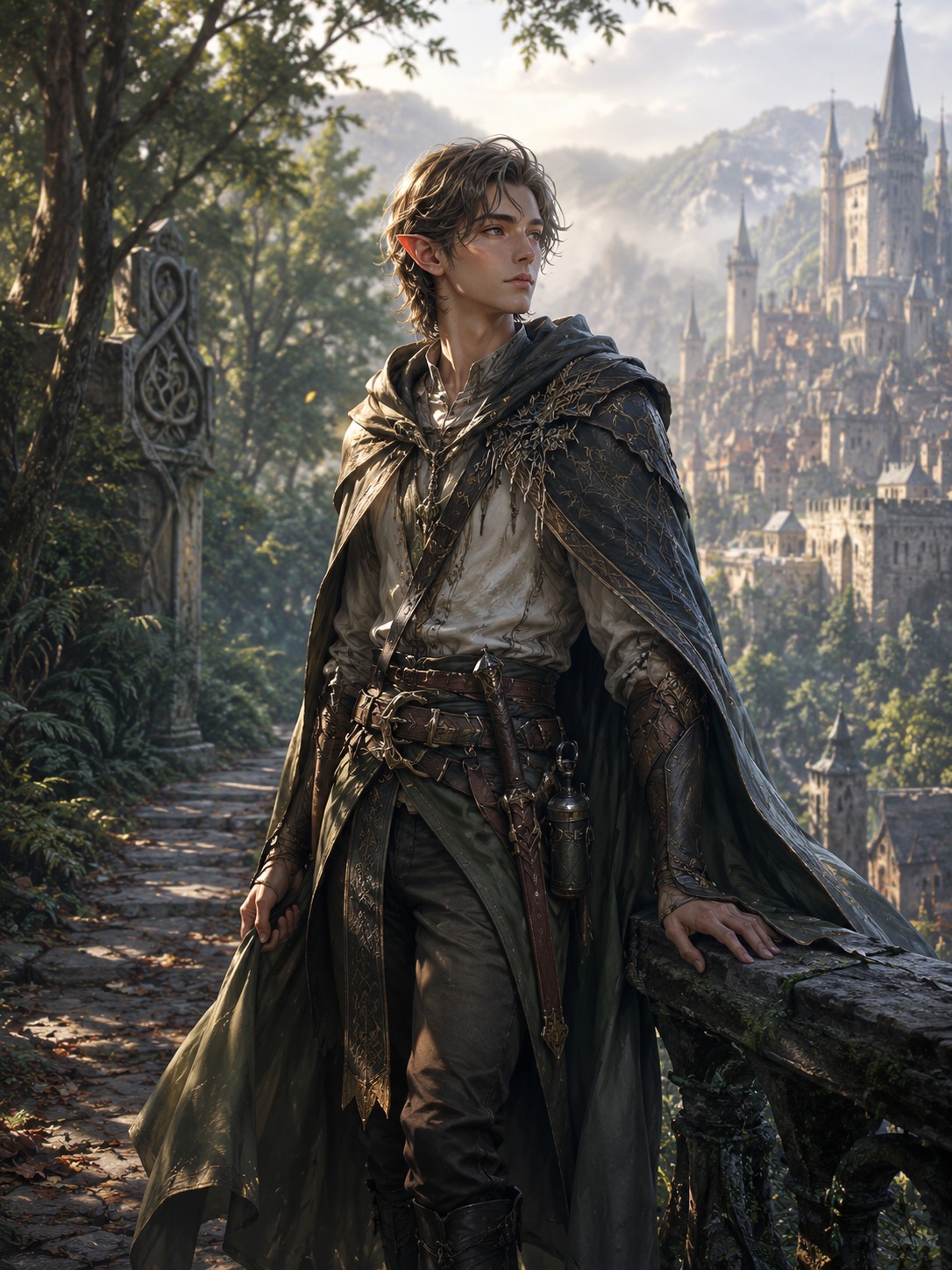
A people born of human and elven parents, between the two in features, longevity, and inheritance. Half-elves live longer than humans but shorter than elves, blend the gifts and looks of both lineages, and are remarkable for their adaptability and charisma; yet they belong fully to neither world. J. R. R. Tolkien's Peredhil lineage in The Silmarillion (George Allen & Unwin, 1977, edited by Christopher Tolkien) — Beren and Luthien, Tuor and Idril, Earendil and Elwing — and the standard half-elf race introduced by Dungeons & Dragons in 1974 together fixed the figure as the canonical 'walker between two worlds' of modern fantasy.
Origin
Tolkien's Peredhil mythos began as drafts in The Book of Lost Tales (c. 1916) and matured into The Silmarillion (1977). The pivotal moment is the choice offered at the end of the First Age to the twin sons of Earendil and Elwing: Elros chose human mortality and founded Numenor (Akallabeth section of The Silmarillion), while Elrond chose Elven immortality and became lord of Rivendell. Aragorn, descended through Numenorean kings, weds Elrond's daughter Arwen, and the Peredhil line is carried through to the end of the Third Age. In Appendix A of The Lord of the Rings (1955), Tolkien states that the right of choice was granted by the Valar to the last Peredhil siblings as a particular grace. Dungeons & Dragons introduced the Half-Elf as a standard player race in the original 1974 booklet Men & Magic, and Gary Gygax's Advanced Dungeons & Dragons Players Handbook (TSR, 1978) fixed the canonical lifespan at roughly 250 years, midway between humans (around 80) and elves (around 1200). Margaret Weis and Tracy Hickman's Dragonlance Chronicles trilogy (TSR, 1984-85) gave the type its enduring archetype in Tanis Half-Elven, the leader who belongs nowhere.
Features
- Height around five feet nine to six feet one (1.75-1.85 m), slightly taller than the human mean
- Lifespan of roughly 180-250 years, between human and elven
- Slightly pointed ears (less than full elves), darkvision out to sixty feet
- Native fluency in both Common and Elvish, a structural advantage in diplomacy
- In fifth-edition D&D: immunity to sleep and charm, ability bonus of +2 Charisma and two additional +1
Stories
The half-elf is the canonical figure of the mediator between worlds and the wanderer who seeks an identity. Tolkien's Elrond mediates between humans and elves through Rivendell, and Aragorn becomes the last bearer of the Peredhil line on the throne of Gondor. Tanis Half-Elven in Dragonlance, Aribeth de Tylmarande in BioWare's Neverwinter Nights (Atari, 2002), and the Brenatto twins Vax'ildan and Vex'ahlia in Critical Role campaign one Vox Machina (2015-17) have made the half-elf the foreground hero of twenty-first-century fantasy media. Themes of belonging, prejudice, and reconciliation usually open with the loss, separation, or rejection of one parent's people.
Weakness
The defining weakness is double marginality: human communities suspect them for their 'elven blood', and elven communities lament their 'mortal blood'. In Tolkien the Peredhil right of choice is one-time and irreversible; once one chooses mortality, immortality cannot be regained, and the tragic farewell of Arwen and Aragorn in The Lord of the Rings Appendix A is the weight of that bargain. Mechanically, in fifth-edition D&D the half-elf trades away the full versatility of humans and the strong magical aptitude of elves for a balanced middle position. Identity uncertainty drives them to the road but also keeps them from settling fully in any single community.
Cultural Significance
For Tolkien the metaphysics behind the Peredhil was about the weight of choosing between mortal and immortal lives; in a 1955 letter to The New York Times, the author wrote that 'Arwen's choice argues theologically that mortality opens a deeper love than immortality does'. Anglo-American tabletop role-playing translated that metaphysics into a sociological frame of identity and belonging, refined through Dragonlance in the 1980s, the Forgotten Realms in the 1990s, and BioWare's role-playing games in the 2000s. Japanese light novels and anime occasionally use the human-elf pairing in lighter school-story registers (for example Tomihiko Morimi's works), but the canonical tragic tone descends from the Tolkien-D&D lineage.
In Popular Culture
- J. R. R. Tolkien, The Silmarillion (Allen & Unwin, 1977, ed. Christopher Tolkien) — Beren and Luthien, Tuor and Idril, Earendil and Elwing
- Tolkien, The Lord of the Rings (1954-55), Appendices A and F — the Peredhil choice; Elrond, Arwen, Elros
- Gary Gygax and Dave Arneson, Dungeons & Dragons original set (TSR, 1974) — introduction of the Half-Elf
- Gary Gygax, Advanced Dungeons & Dragons Players Handbook (TSR, 1978) — canonical lifespan and statistics
- Margaret Weis and Tracy Hickman, Dragonlance Chronicles trilogy (TSR, 1984-85) — Tanis Half-Elven
- Enya, 'May It Be' (Warner Chappell Music, 2001) — soundtrack of The Lord of the Rings: The Fellowship of the Ring, alluding to Peredhil motifs
- BioWare, Neverwinter Nights (Atari, 2002) — Aribeth de Tylmarande
- Critical Role, Campaign 1 Vox Machina (2015-2017) — the Brenatto twins Vax'ildan and Vex'ahlia
- Larian Studios, Baldur's Gate 3 (2023) — Halsin and many half-elf companions and NPCs
Trivia
- Tolkien coined 'Peredhil' from the Sindarin elements per (half) and edhel (elf); the term is recorded in his manuscript The Etymologies (volume 5 of The History of Middle-earth) and dated to about 1937.
- The 1974 D&D Half-Elf was originally only a combination of human ability scores with elven charm immunity; the Players Handbook of 1978 redesigned the race around multi-classing as its mechanical signature.
- Margaret Weis stated in a 1984 internal TSR memo that Tanis Half-Elven was modelled on a friend with a white Missouri-born mother and a Syrian-born father, whose double identity inspired Tanis's wandering.
- The signature half-elf illustration of the 2014 fifth-edition Players Handbook was painted by concept artist Magali Villeneuve; designer Mike Mearls disclosed on Twitter in 2014 that the reference model was a Latino American actor.