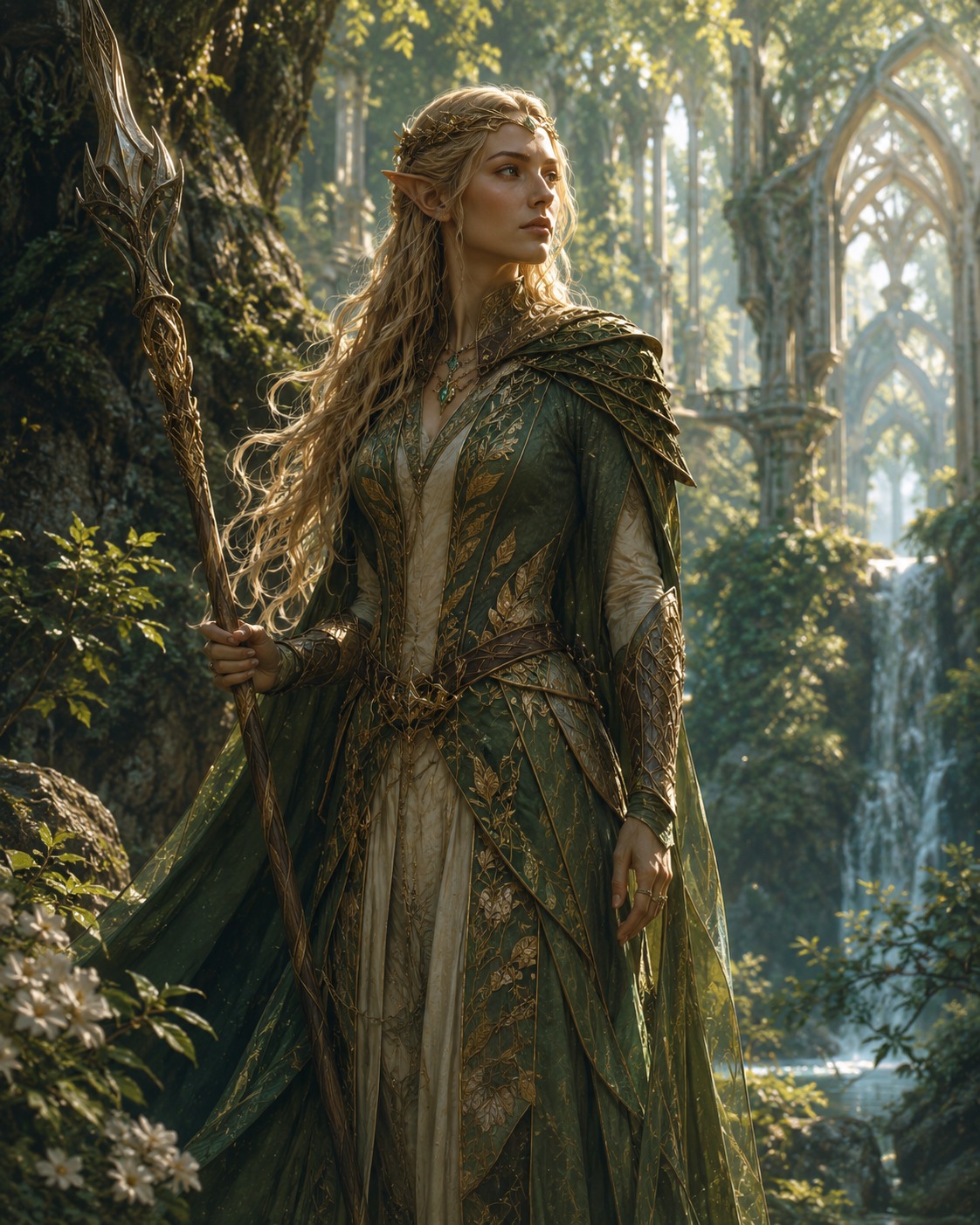
Elf
Elf · People of the Forest — Longevity, Magic, Guardians of Nature
Names in Other Languages
 엘프한국어
엘프한국어Elf · 숲의 종족 — 장수와 마법, 자연의 수호자
 エルフ日本語
Elf · 森の種族 — 長命と魔法、自然の守護者
 精靈繁體中文
Elf · 森林種族 — 長壽與魔法,自然的守護者
 ElfDeutsch
Elf · Volk des Waldes — Langlebigkeit, Magie, Hüter der Natur
 ElfeFrançais
Elf · Peuple de la forêt — Longévité, magie, gardiens de la nature
 ElfoEspañol
Elf · Pueblo del bosque — Longevidad, magia, guardianes de la naturaleza
 ElfoPortuguês
Elf · Povo da floresta — Longevidade, magia, guardiões da natureza
 ElfPolski
Elf · Lud lasu — długowieczność, magia, strażnicy natury
 ЭльфРусский
Elf · Народ леса — долголетие, магия, хранители природы
The standard race of modern fantasy: long pointed ears, slender and graceful frames, lifespans counted in centuries or millennia, deep communion with nature, and mastery of bow and elven magic. The earliest direct attestation is the Old Norse álfar of Snorri Sturluson's Prose Edda (c. 1220) and the Codex Regius (c. 1270); through Shakespeare's A Midsummer Night's Dream (1595-96) and Edmund Spenser's The Faerie Queene (1590-96) the figure entered English letters, and J. R. R. Tolkien's The Lord of the Rings (1954-55) and The Silmarillion (1977) recast the elf as the noble, near-immortal high race that has been the canon of modern fantasy ever since.
Origin
The earliest direct names for the elf are the Old Norse álfar (singular álfr) and the Old English ælf. Snorri Sturluson's Prose Edda, Gylfaginning chapter 17 (c. 1220), records that the Ljosalfar are fairer than the sun while the Dökkálfar are blacker than pitch; the Codex Regius (GKS 2365 4to, c. 1270, today at the Arni Magnusson Institute in Reykjavik) preserves the elf-king Alvíss in Alvíssmál and many álfar in the Voluspa. The Old English Beowulf (c. 1000 manuscript, British Library Cotton Vitellius A. xv) names eotenas, ylfe and orcneas as kin of Cain at line 112, and the Anglo-Saxon medical compendium Lacnunga (tenth century, British Library Harley MS 585) preserves the charm Wið færstice against the elven arrow-shot. Medieval German tradition called the figure Alb or Elbe and saw it as a forest and water spirit, an inheritance reflected in Goethe's Erlkonig (1782). Shakespeare's A Midsummer Night's Dream (1595-96) and Edmund Spenser's The Faerie Queene (1590-96) brought Puck, Oberon, Titania, and the Fairy Queen into English literary canon; Lord Dunsany's The King of Elfland's Daughter (G. P. Putnam's Sons, 1924) became the immediate bridge to twentieth-century fantasy. J. R. R. Tolkien's drafts from 1916 onward (The Book of Lost Tales, in The History of Middle-earth vols. 1-2, ed. Christopher Tolkien, 1983-84) crystallised in The Hobbit (Allen & Unwin, 1937), The Lord of the Rings (1954-55), and The Silmarillion (1977), where the elves are organised as Eldar and Avari with subbranches (Vanyar, Noldor, Teleri, Sindar, Umanyar) and given the constructed languages Quenya and Sindarin. Gary Gygax's original Dungeons & Dragons (TSR, 1974) borrowed Tolkien's nomenclature wholesale to make the elf a standard player race; the Advanced Dungeons & Dragons Monster Manual (1977) and the second-edition Players Handbook (1989) fixed the subraces High Elf, Wood Elf, Aquatic Elf, and Dark Elf.
Features
- Height roughly five foot six to six foot one (1.68-1.85 m), slender and graceful, with long pointed ears
- Lifespan around 750 to 1,200 years in fifth-edition D&D; effectively immortal in Tolkien, whose souls return to the Halls of Mandos
- Bow and light sword, plus a magic of nature, illusion, and healing; in fifth-edition D&D they are immune to sleep and resistant to charm
- Deep communion with nature — speaking with forest plants and animals, more awake under starlight and moonlight than under the sun
- Sophisticated invented languages: Tolkien's Quenya (Finnish phonology, Latin morphology) and Sindarin (Welsh phonology), the Elvish of D&D
Stories
Elves appear as the guardians of the wild, the keepers of ancient wisdom, and the enduring counterpoint to mortal humanity. Tolkien's Galadriel and Elrond are the last great elven monarchs of Middle-earth, and the wood-elf Legolas, fighting beside the dwarf Gimli, is the archetypal Fellowship elf. From fifth-edition Dungeons & Dragons onward, elves — High, Wood, and Drow — rank among the most popular non-human player races in published usage data. Warcraft's Night Elves (Warcraft III, 2002), the Elder Scrolls' Bosmer (1994 onward), and Andrzej Sapkowski's Aen Seidhe in the Witcher series (supeRNOWA, 1990s onward) are the canonical modern variations. Kanehito Yamada's manga Frieren: Beyond Journey's End (Shogakukan, 2020-) recasts the elf in a Japanese millennial register, with a thousand-year-old elven mage learning, through the death of human companions, what time and friendship can mean.
Weakness
Their long lifespan breeds a closed manner, slow change, and the temptation to disdain the brief human age. Tolkien's Feanor is the model: in his obsession with the Silmarils he leaves Valinor, brings the Doom of the Noldor down on his people, and starts the First Kinslaying. Slow reproduction makes population recovery hard, and the elven distance from human history can become passive when their forests are felled — Sapkowski's Aen Seidhe, hunted to near extinction by the spreading human kingdoms, write that tragedy plainly. Mechanically, fifth-edition D&D elves trade away hit points and divine spellcasting affinity for immunity to sleep and charm.
Cultural Significance
The elf is one of the central figures of comparative Indo-European mythology. Jacob Grimm gathered the Germanic Alb / Elbe lore systematically in Deutsche Mythologie (1835, chapter 17); the Brothers Grimm's Kinder- und Hausmaerchen (KHM 39, Die Wichtelmaenner, 1812) carried it into literary canon. Victorian fairy painters — John Anster Fitzgerald, and Richard Dadd in The Fairy Feller's Master-Stroke (1841, Tate, London) — built the nineteenth-century visual base. In Letter 163 of his Letters (1955), Tolkien wrote that the elves were 'embodied artists and musicians, eternal children of a kind', a definition that anchored the twentieth-century canon. Meanwhile Clement Clarke Moore's poem A Visit from St. Nicholas (1823) called Santa Claus 'a right jolly old elf', and from there American popular culture — the Keebler elves of 1968, Haddon Sundblom's Coca-Cola Santa illustrations of 1931 — built the parallel canon of the small Christmas elf, so that the Tolkienian noble elf and the popular Christmas elf coexist in two parallel traditions.
In Popular Culture
- Snorri Sturluson, Prose Edda (c. 1220) — Ljosalfar and Dökkálfar in Gylfaginning ch. 17
- Codex Regius (GKS 2365 4to, c. 1270) — Voluspa, Alvíssmál, the elf-king Alvíss
- Old English Beowulf (c. 1000 MS Cotton Vitellius A. xv, British Library), line 112 — eotenas, ylfe, orcneas
- William Shakespeare, A Midsummer Night's Dream (1595-96) — Puck, Oberon, Titania
- Edmund Spenser, The Faerie Queene (1590-96) — canonisation in English letters
- Johann Wolfgang von Goethe, Erlkonig (1782) — dark Germanic variation
- Jacob Grimm, Deutsche Mythologie (1835) — scholarly synthesis of Germanic elf lore
- Lord Dunsany, The King of Elfland's Daughter (G. P. Putnam's Sons, 1924) — direct bridge to twentieth-century fantasy
- J. R. R. Tolkien, The Hobbit (Allen & Unwin, 1937), The Lord of the Rings (1954-55), The Silmarillion (1977) — decisive canon
- Gary Gygax, Dungeons & Dragons original set (TSR, 1974) and Advanced Dungeons & Dragons Monster Manual (1977) — standard player race
Trivia
- The Old English aelf is the second element in many Anglo-Saxon personal names: Alfred (Aelfraed, elf-counsel), Alvin (Aelfwine, friend of elves) and the like; Tolkien, who taught Anglo-Saxon at Oxford, cited the etymology in his lectures from the 1920s onward.
- Tolkien wrote to W. H. Auden in Letter 163 (1955) that Quenya combined Finnish phonology and Latin morphology with a Greek lexicon, and that he had modelled Sindarin on the Welsh he had learned at Oxford.
- The TSR Tolkien Estate settlement of 1977 (Wisconsin court records) ruled that 'Hobbit' was protected and had to be renamed 'Halfling' in Dungeons & Dragons, but that 'Elf', 'Dwarf', and 'Orc' were generic common nouns that TSR could continue to use.
- The single line in Clement Clarke Moore's 1823 poem A Visit from St. Nicholas — 'a right jolly old elf' — is the origin of the entire American iconography of the small Christmas elf, an iconography wholly separate from the Tolkienian noble line.
Related
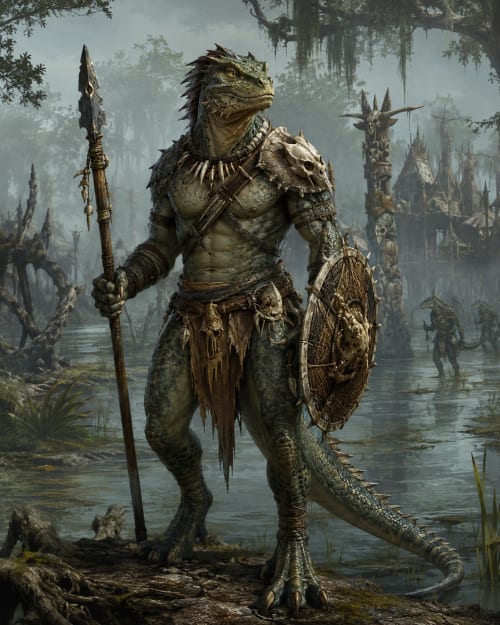
Lizardfolk
Lizardfolk · The Lizard People — Cold-Blooded Tribal Warriors of the Marsh
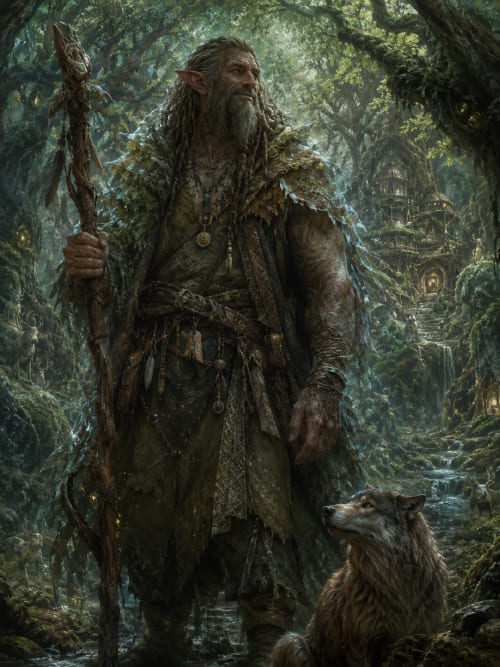
Firbolg
Firbolg · The Gentle Giant — A Reclusive Race of Giant Lineage Hidden in Forests
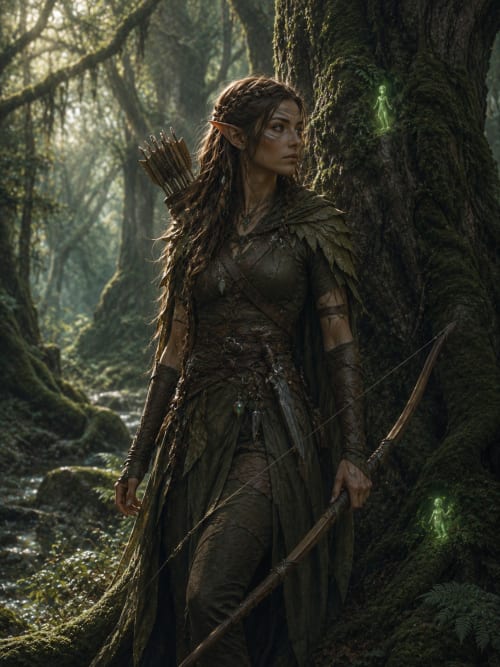
Wood Elf
Wood Elf · Forest Elves — Wild Archers and Nature Tribes
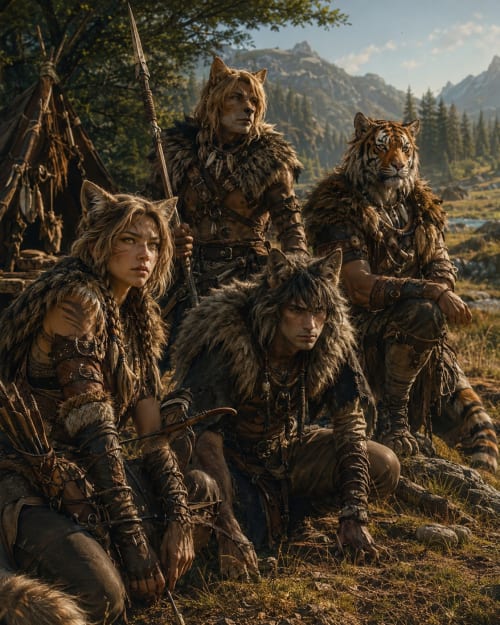
Beastkin
Beastkin · Beastfolk — Half-Human, Half-Beast Race
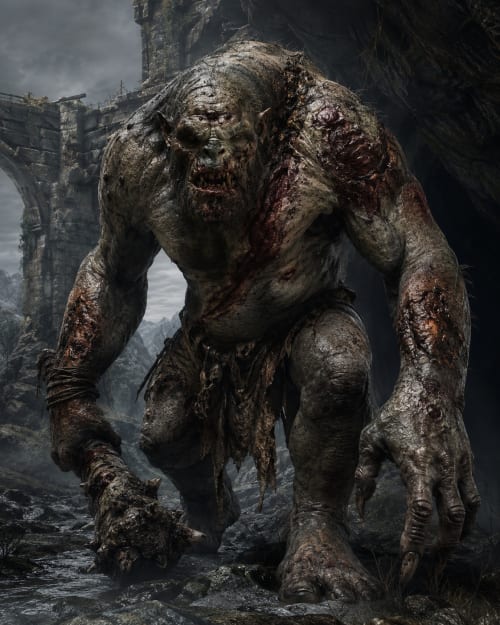
Troll
Troll · The Regenerating Giant — A Savage Race of Tenacious Vitality
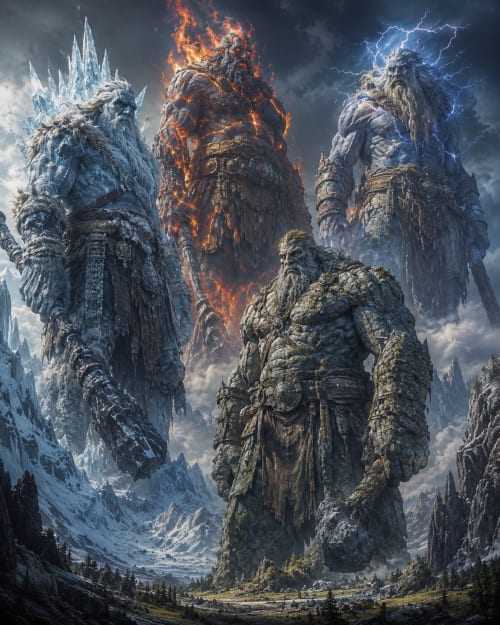
Giant-kin
Giant-kin · The Giant Race — Primal Titans Like Living Mountains
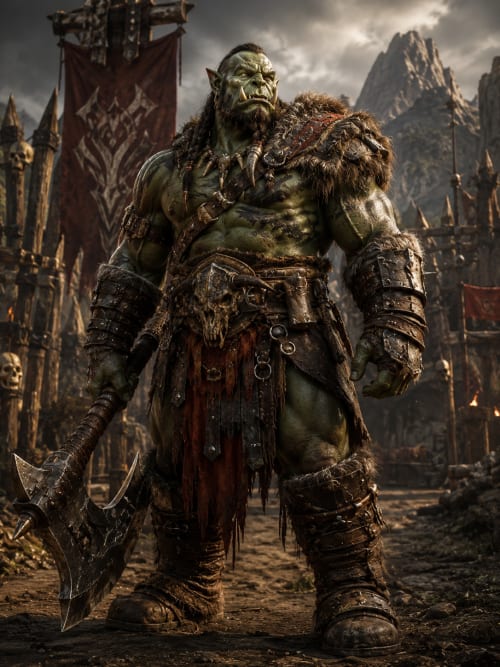
Orc
Orc · Warrior Tribes — A Fierce Race That Reveres Strength and Honor
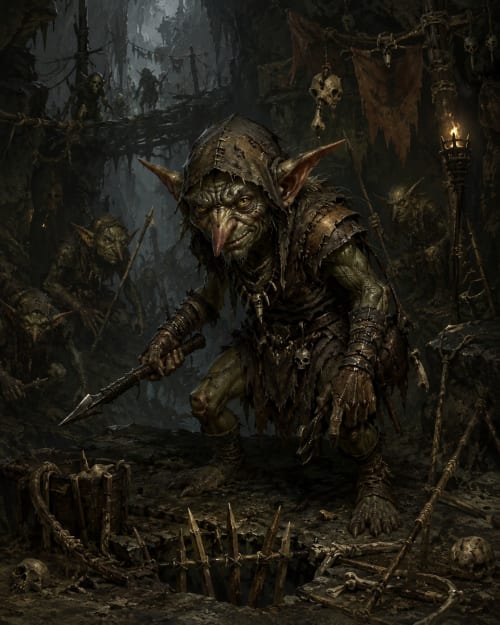
Goblin
Goblin · The Cunning Little Folk — Raiders Who Live by Numbers and Guile
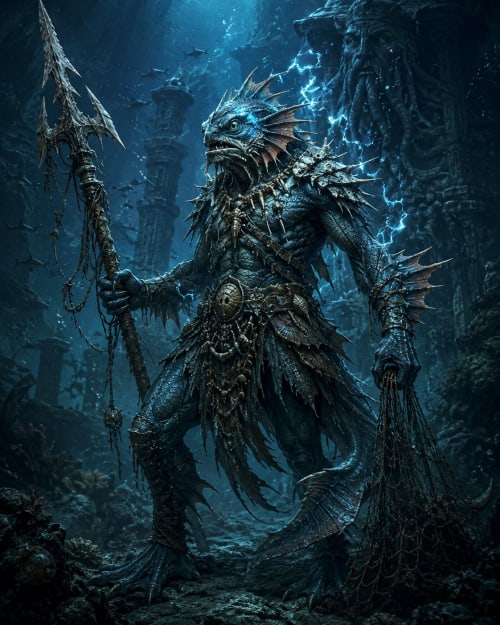
Fishfolk
Fishfolk · The Deep-Sea Fish People — Wild Tribes of the Abyss
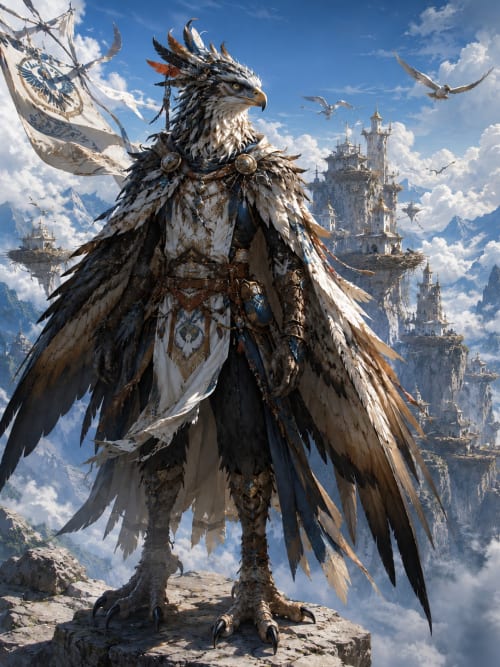
Birdfolk
Birdfolk · The Bird People — A Mountain-Peak Race That Flies the Skies
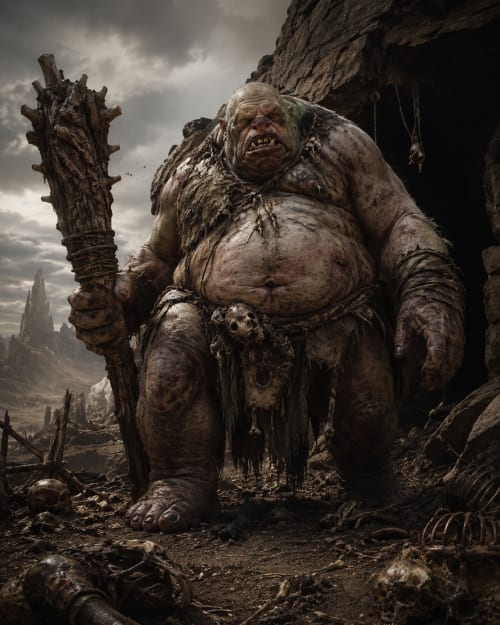
Ogre
Ogre · The Man-Eating Giant — A Dull, Cruel Tyrant of the Wilds
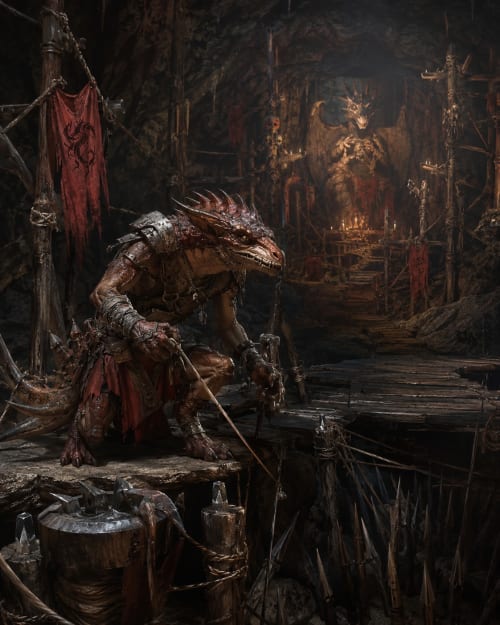
Kobold
Kobold · The Dragon-Serving Little Folk — Masters of Traps