Beastkin
Beastkin · Beastfolk — Half-Human, Half-Beast Race
Names in Other Languages
 수인한국어
수인한국어Beastkin · 수인족 — 짐승의 특징을 지닌 반인반수 종족
 獣人日本語
獣人日本語Beastkin · 獣人族 — 獣の特徴を持つ半人半獣種族
 獸人族繁體中文
Beastkin · 獸人 — 具獸類特徵的半人半獸種族
 TiermenschDeutsch
Beastkin · Tiervolk — Halb Mensch, halb Tier
 Homme-bêteFrançais
Beastkin · Peuple-bête — Race mi-humaine mi-bête
 BestiahumanoEspañol
Beastkin · Pueblo bestia — Raza mitad humana, mitad bestia
 Besta-humanaPortuguês
Beastkin · Povo besta — Raça meio humana, meio besta
 BestioczłekPolski
Beastkin · Lud bestii — rasa pół człowiek, pół bestia
 ЗверолюдРусский
Beastkin · Народ зверя — раса наполовину человек, наполовину зверь
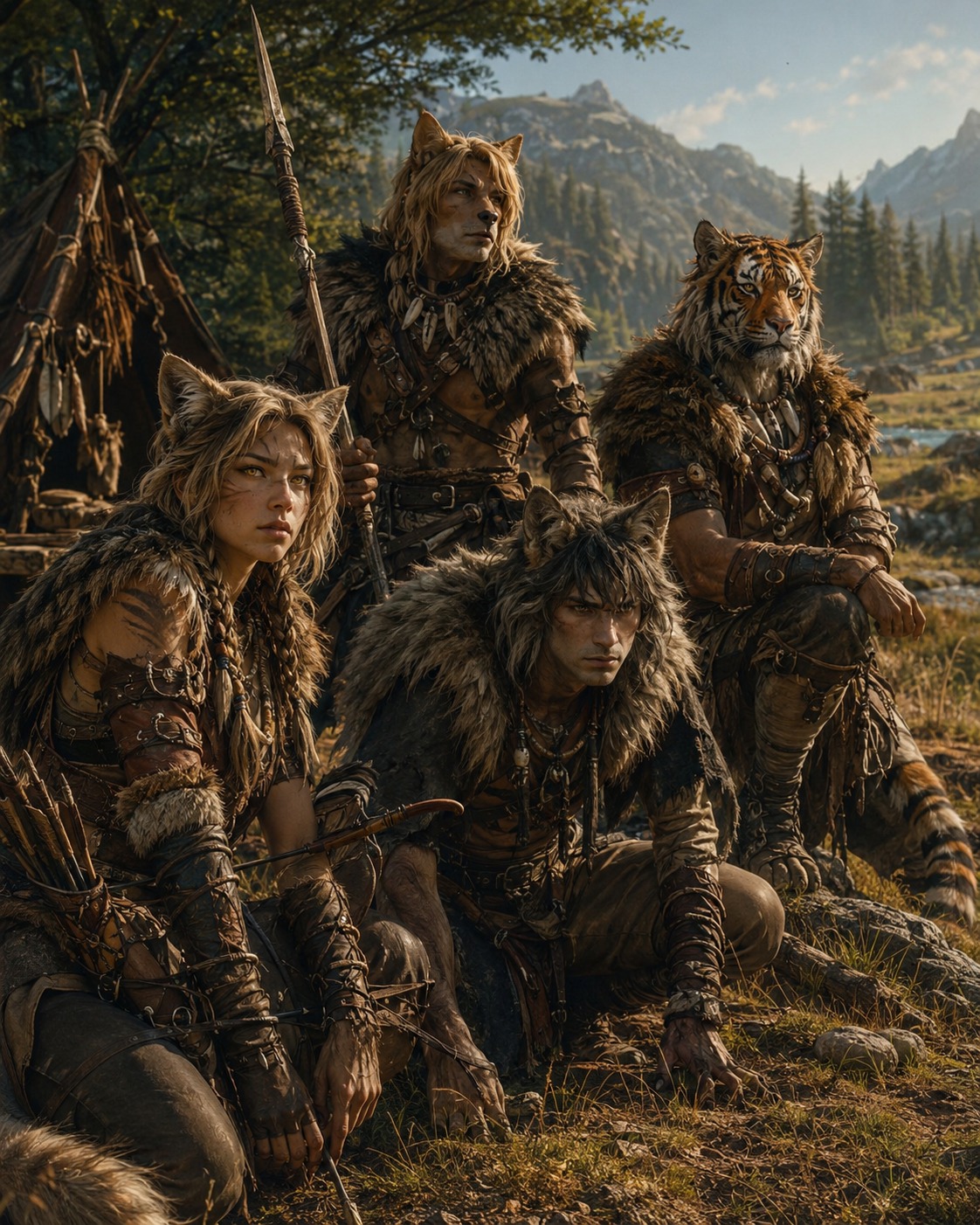
A half-human, half-beast people whose human bodies bear the ears, tails, fur, and claws of an animal kin, divided into many subraces — catfolk, dogfolk, tigerfolk, wolffolk, bullfolk, and so on — by their animal lineage. They carry the senses, instincts, and physical gifts of their kin and usually live in tribal hunter or pastoral societies. The figure crystallises traditions that span the Egyptian therianthropic gods (Anubis, Bastet, Horus, attested in the Pyramid Texts c. 2400 BCE), Greek myth (Minotaur and Centaur, Hesiod Theogony c. 700 BCE), Indic myth (Hanuman in the Ramayana, c. 400 BCE), Japanese fox and tanuki shapeshifters, and European werewolf lore (Petronius, Satyricon ch. 62, c. 60 CE), and the fantasy template was fixed by Dungeons & Dragons (Monster Manual, TSR, 1977; Volo's Guide to Monsters, 2016) and Blizzard's Tauren in Warcraft III (2002).
Origin
The earliest direct attestation is the jackal-headed Anubis and the falcon-headed Horus in the Pyramid Texts of the fifth-dynasty pharaoh Unas (c. 2400 BCE, Saqqara). The cat-headed goddess Bastet is fixed by the Bastet Bronze in the Egyptian Museum, Cairo (c. 600 BCE). In Greece, Hesiod's Theogony (c. 700 BCE) and Apollodorus' Library 3.1 give us the Minotaur, born of Pasiphae and the Cretan Bull, and the Centaurs descended from Ixion and a cloud. In India, the monkey-god Hanuman appears in Valmiki's Ramayana (c. 400 BCE), the elephant-headed Ganesha is canonised in the Ganesha Purana (c. 11th century CE), and the lion-man Narasimha in the Bhagavata Purana 7. Japanese tanuki shapeshifters are attested in the Nihon Ryoiki (c. 822) and fox shapeshifters in the Konjaku Monogatari (c. 1120). The European werewolf canon descends from Petronius' Satyricon ch. 62 (c. 60 CE), the first direct description, with Gervase of Tilbury's Otia Imperialia (c. 1210) fixing the medieval template. The modern fantasy beastkin begins with Gygax's AD&D Monster Manual (TSR, 1977) for lycanthropes and minotaurs; tabaxi (catfolk) were introduced in Ed Greenwood's Forgotten Realms Adventures (TSR, 1989) and made a standard player race in Volo's Guide to Monsters (Wizards of the Coast, 2016). Blizzard's Tauren in Warcraft III (2002) and World of Warcraft (2004), and the Worgen wolf-folk in Cataclysm (2010), provide the dominant modern popular variations.
Features
- Human body with animal ears, tail, fur, claws, and pronounced canines
- Subraces by animal lineage: catfolk (Tabaxi, Mithra), dogfolk (Wargen), tigerfolk (Khajiit lineage in Elder Scrolls), wolffolk (Worgen, lycanthrope), bullfolk (Minotaur, Tauren), birdfolk (Aarakocra)
- Sharpened scent, hearing, and night vision; physical traits varying by source animal (cat balance, wolf pack-hunting, bull strength)
- Tribal or clan-based hunter or pastoral societies, totemic religion, and ancestor or animal-spirit guides
- Fifth-edition D&D lifespan of about 80 to 150 years (influenced by source animal), with distinct tongues such as Tabaxi and Taur-ahe
Stories
Beastkin appear as wild warriors, trackers, and tribal heroes, and they are a staple race for stories that turn on the conflict between instinct and reason, wild and civilisation. The fifth-edition D&D Tabaxi is the curious wanderer with a plus-two bonus to acrobatics and slashing claws; Blizzard's Tauren are pastoral plain peoples drawn from North American Indigenous cultures, a borrowing that has remained critically debated. The Japanese light novel Spice and Wolf (Isuna Hasekura, Dengeki Bunko, 2006), whose protagonist Holo is a wolf-deity in girl form, and Paru Itagaki's manga Beastars (Akita Shoten, 2016-20), an inter-species school drama, are the headline twenty-first-century Japanese variations. From the 2010s onward beastkin stories have increasingly served as allegories for marginalised peoples — communities deemed savage by a human-centric society, struggles with the acceptance of one's own identity.
Weakness
Instinct and impulse can override reason, and beastkin face systemic prejudice in human-centric societies that treat them as savages. Animal-specific weaknesses are mechanically encoded: catfolk are weak to overwhelming scent and hot water, wolf-kin take silver damage (the silver weakness fixed in Gervase of Tilbury's Otia Imperialia and carried into fifth-edition D&D lycanthrope rules), and bird-folk suffer in enclosed spaces. Berserker rage can endanger their own companions, and pack-dependence makes separation from the tribe psychologically corrosive — a trait shared by Warcraft Tauren and Blizzard's Worgen.
Cultural Significance
Beastkin are the crystallisation of a worldwide hunter-gatherer animal-spirit and totem tradition; Claude Levi-Strauss read the figure as a universal expression of the human-nature boundary in the first chapter of his Anthropologie structurale (Plon, Paris, 1958). Japanese kemonomimi subculture was popularised by the catfolk character Misaki Shinjiro in the personal-computer game To Heart (Leaf, 1997) and has been a standard character mode of anime, manga, and light novels since the 2000s. In North America, the furry fandom that took shape from the late 1980s established its principal annual convention Anthrocon in Pittsburgh in 1997, growing to about thirteen thousand registrants by 2023 (anthrocon.org figures). The borrowing of Lakota and Cherokee visual elements for Warcraft's Tauren has, since Blizzard's 2020 statement in response to the Black Lives Matter movement, become subject to internal review of certain names and ornaments.
In Popular Culture
- Egyptian Pyramid Texts (c. 2400 BCE, Saqqara) — Anubis and Horus, the prototypical beast-headed gods
- Hesiod, Theogony (c. 700 BCE) and Apollodorus, Library 3.1 — Minotaur and Centaurs
- Valmiki, Ramayana (c. 400 BCE) — Hanuman, the monkey god
- Petronius, Satyricon ch. 62 (c. 60 CE) — the first direct werewolf episode
- Nihon Ryoiki (c. 822) and Konjaku Monogatari (c. 1120) — Japanese tanuki and fox shapeshifters
- Gervase of Tilbury, Otia Imperialia (c. 1210) — medieval werewolf canon
- Gary Gygax, Advanced Dungeons & Dragons Monster Manual (TSR, 1977) — lycanthropes and minotaurs
- Ed Greenwood, Forgotten Realms Adventures (TSR, 1989) and Wizards of the Coast, Volo's Guide to Monsters (2016) — Tabaxi catfolk
- Blizzard, Warcraft III (2002), World of Warcraft (2004), and Cataclysm (2010) — Tauren and Worgen
- Paru Itagaki, BEASTARS (Akita Shoten, 2016-2020) — high-point of twenty-first-century Japanese beastkin subculture
Trivia
- The 'jackal-headed' Anubis of nineteenth-century English Egyptology is now thought, on the basis of Claudio Sillero-Zubiri's 2015 Current Biology DNA study, to depict the African golden wolf (Canis lupaster) rather than the true jackal.
- The first Anthrocon convention in Pittsburgh in 1997 had only six hundred registrants; by 2023 the convention reported about thirteen thousand, making it the largest furry convention in the United States (anthrocon.org).
- The Tabaxi illustration on the cover of Volo's Guide to Monsters (2016) by Tyler Jacobson rendered them as a leopard pattern; the 2024 reprint as Mordenkainen Presents: Monsters of the Multiverse diversified the line into tiger, cheetah, liger, and other felid patterns.
- In an Akita Shoten interview reprinted in CoroCoro Comic in 2017, Paru Itagaki explained that her anatomically precise animal depictions in Beastars were guided by her grandfather, the taxidermist Itagaki Keisuke.
Related
Lizardfolk
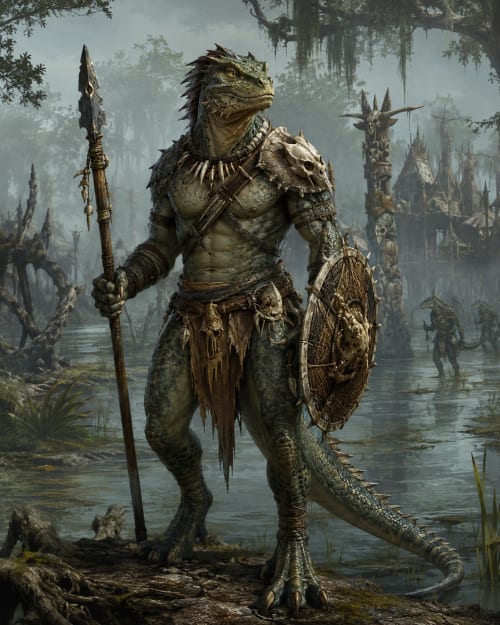
Lizardfolk · The Lizard People — Cold-Blooded Tribal Warriors of the Marsh
Elf
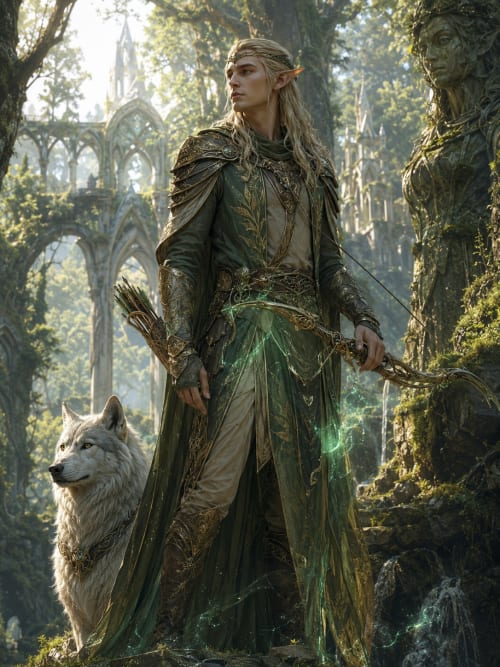
Elf · People of the Forest — Longevity, Magic, Guardians of Nature
Firbolg
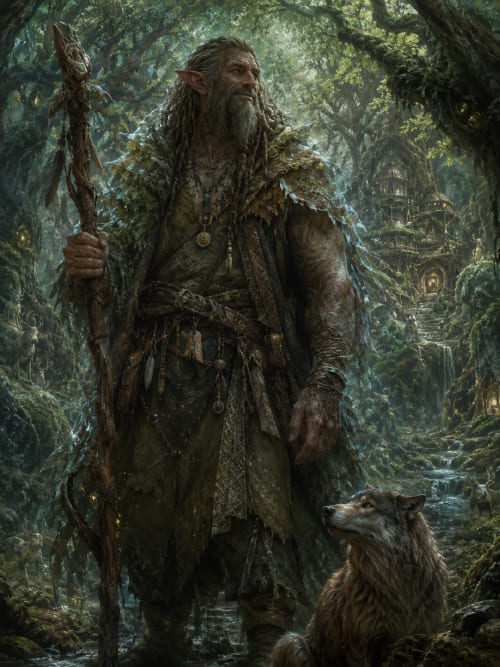
Firbolg · The Gentle Giant — A Reclusive Race of Giant Lineage Hidden in Forests
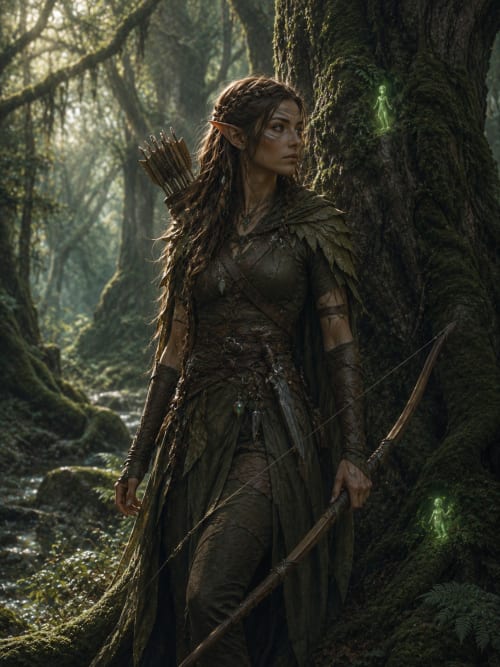
Wood Elf
Wood Elf · Forest Elves — Wild Archers and Nature Tribes
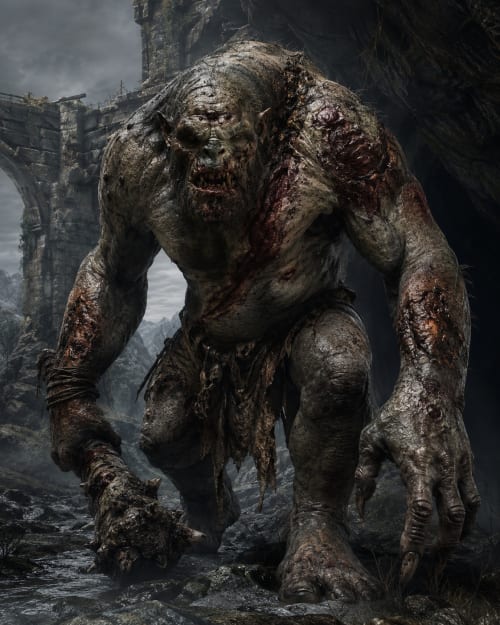
Troll
Troll · The Regenerating Giant — A Savage Race of Tenacious Vitality
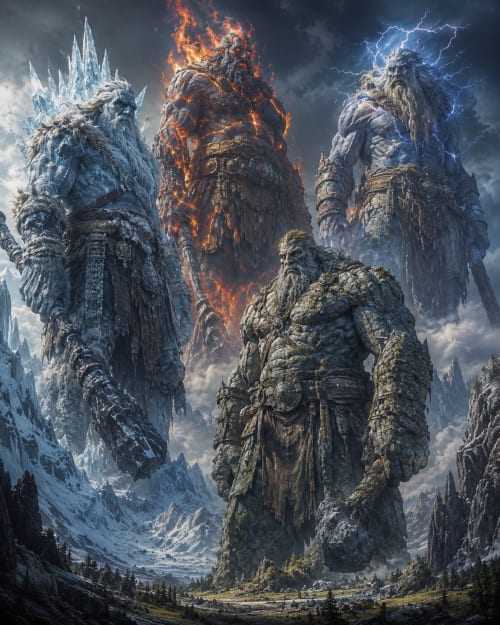
Giant-kin
Giant-kin · The Giant Race — Primal Titans Like Living Mountains
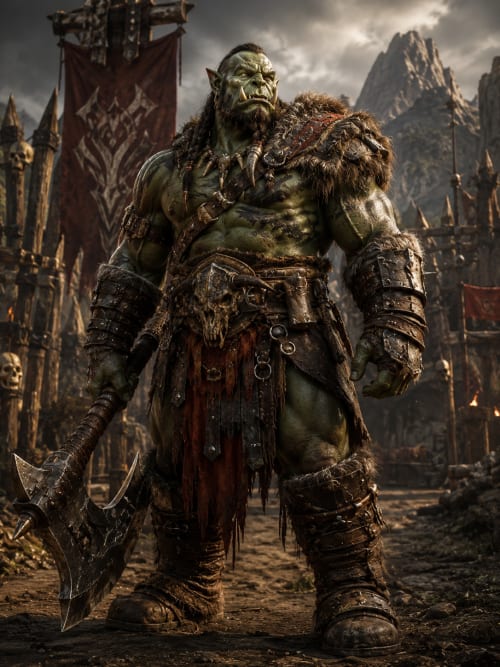
Orc
Orc · Warrior Tribes — A Fierce Race That Reveres Strength and Honor
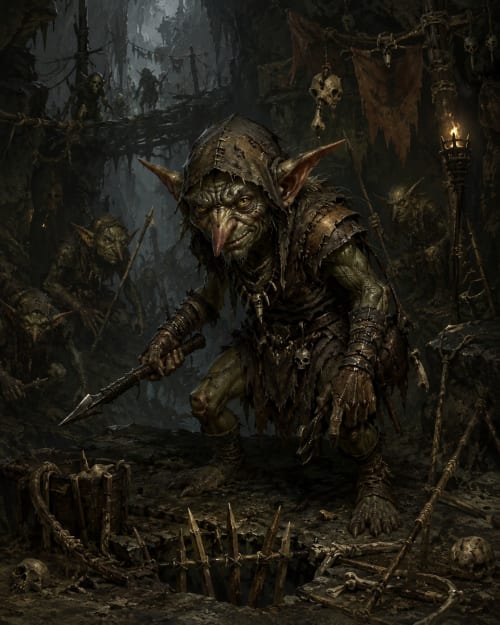
Goblin
Goblin · The Cunning Little Folk — Raiders Who Live by Numbers and Guile
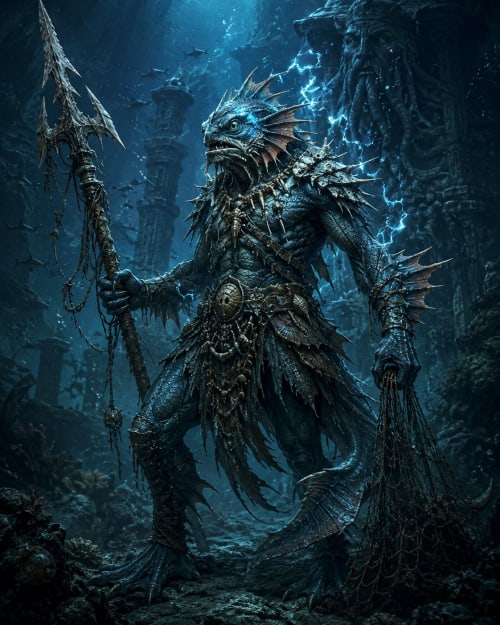
Fishfolk
Fishfolk · The Deep-Sea Fish People — Wild Tribes of the Abyss
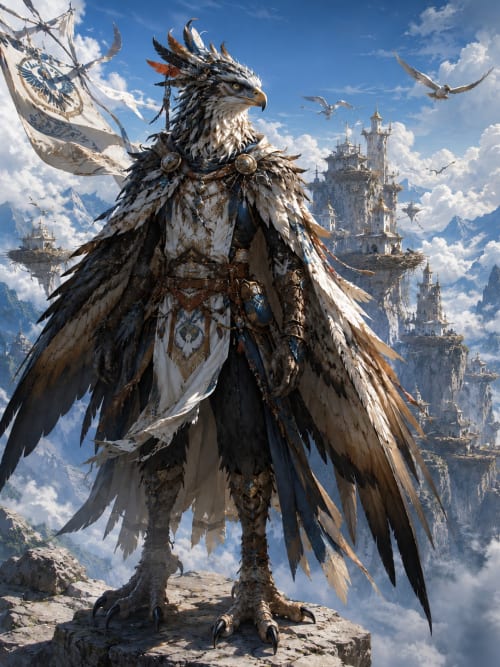
Birdfolk
Birdfolk · The Bird People — A Mountain-Peak Race That Flies the Skies
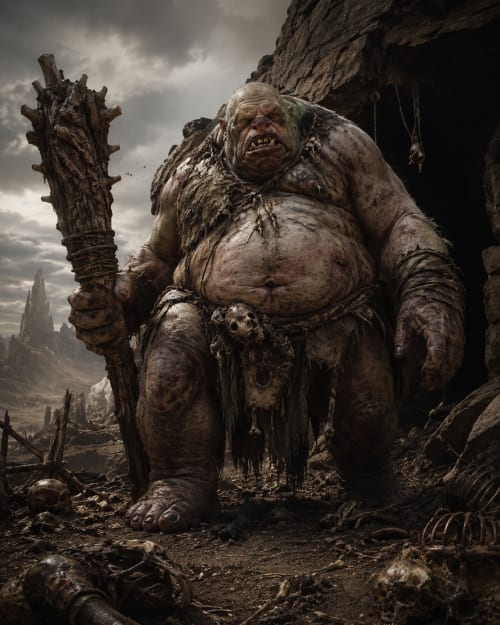
Ogre
Ogre · The Man-Eating Giant — A Dull, Cruel Tyrant of the Wilds
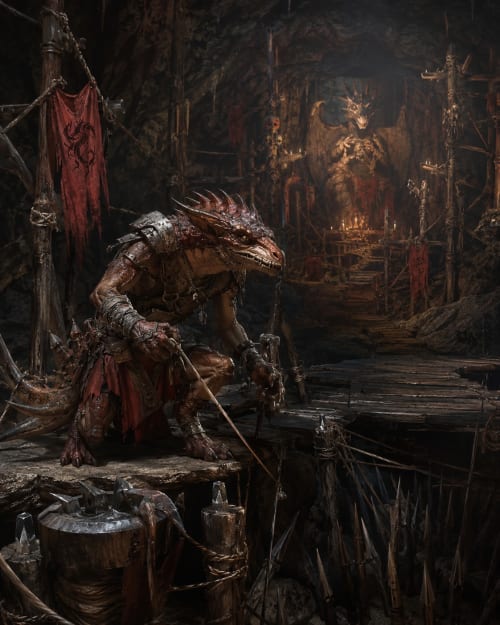
Kobold
Kobold · The Dragon-Serving Little Folk — Masters of Traps