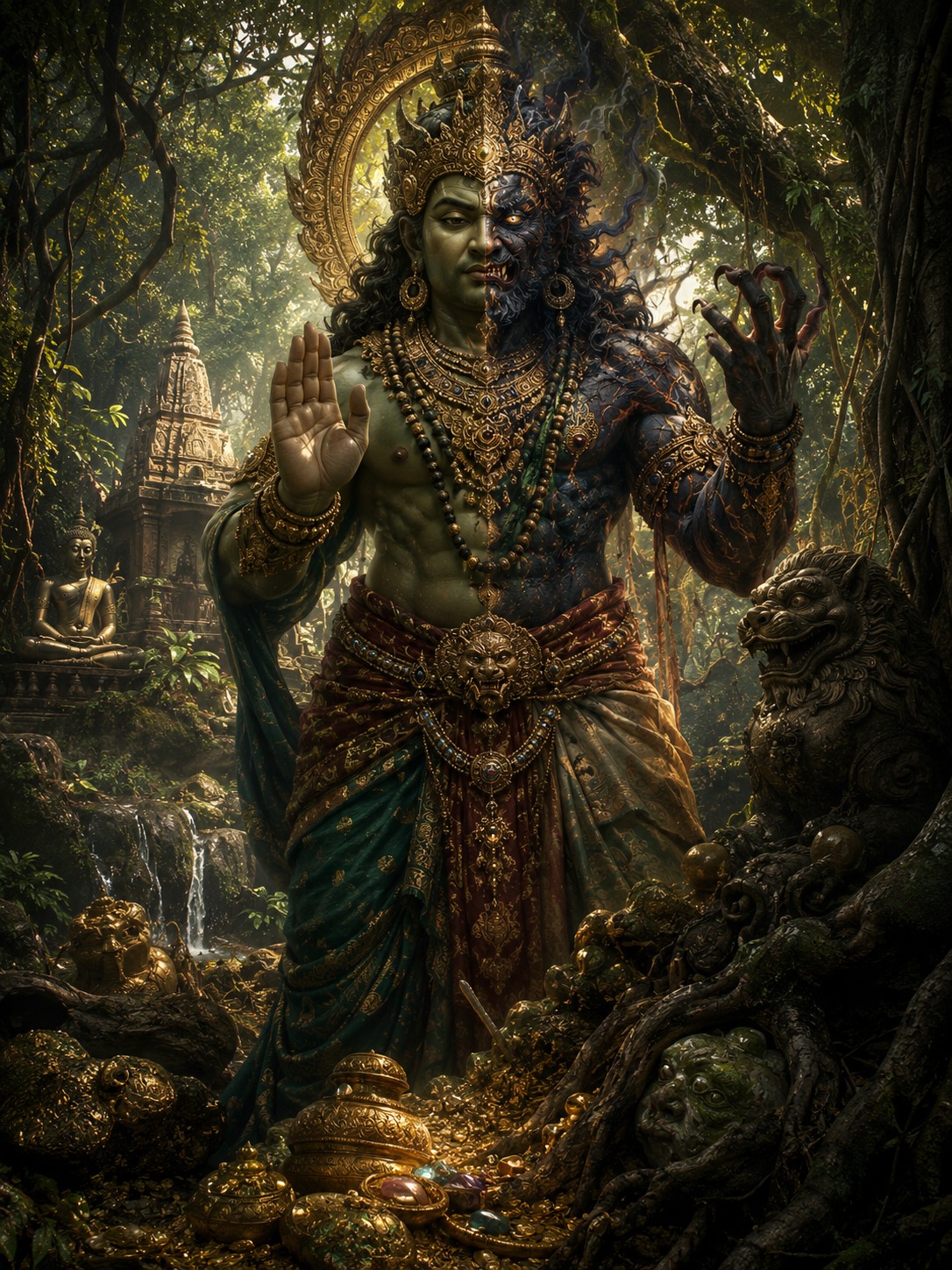
Yaksha
Yaksha · Nature Spirit of India and Buddhism — A Two-Faced Spirit Guarding Treasure
The Yaksha (Sanskrit Yakṣa; Pali Yakkha) is the canonical iconographic figure of an ambivalent spirit, originating in ancient Indian nature-and-treasure spirit belief, absorbed into both Hinduism and Buddhism, and transmitted to East Asia. The Yaksha is the guardian of forests, trees, ponds, and underground treasure, an attendant of the wealth-god Kubera (Sanskrit Kubera), both a benevolent guardian deity granting abundance and fertility, and a fierce demon that devours humans. The decisive textual canon is the Yakṣa Praśna (the Yaksha's Questions) of the Vana Parva (Book of the Forest) of the Mahabharata, compiled between the fifth and third centuries BC — in which the eldest of the Pandava brothers, Yudhishthira, answers the questions of a Yaksha (revealed to be the god of justice, Dharma, in disguise) and revives his slain brothers — establishing the decisive canon of Yaksha iconography. The Yaksha and Yakṣī reliefs of the Bharhut stupa in Madhya Pradesh, India, of the second to first century BC — the oldest extant Yaksha visual canon — are the iconographic canon. After the transmission of Buddhism, the Yaksha was canonised as one class of the Eight Legions (Aṣṭasena) attendant on Vaiśravaṇa (the Buddhist identification of Kubera), and the character Xiao of miHoYo's video game Genshin Impact, released in September 2020 — as the sole surviving Yaksha of the Seven Yakshas of Liyue — settled the twenty-first-century global gaming canon.