LoreArc

판타지

27 items tagged with "판타지"

🐉Humanoids(24)
troll

Troll

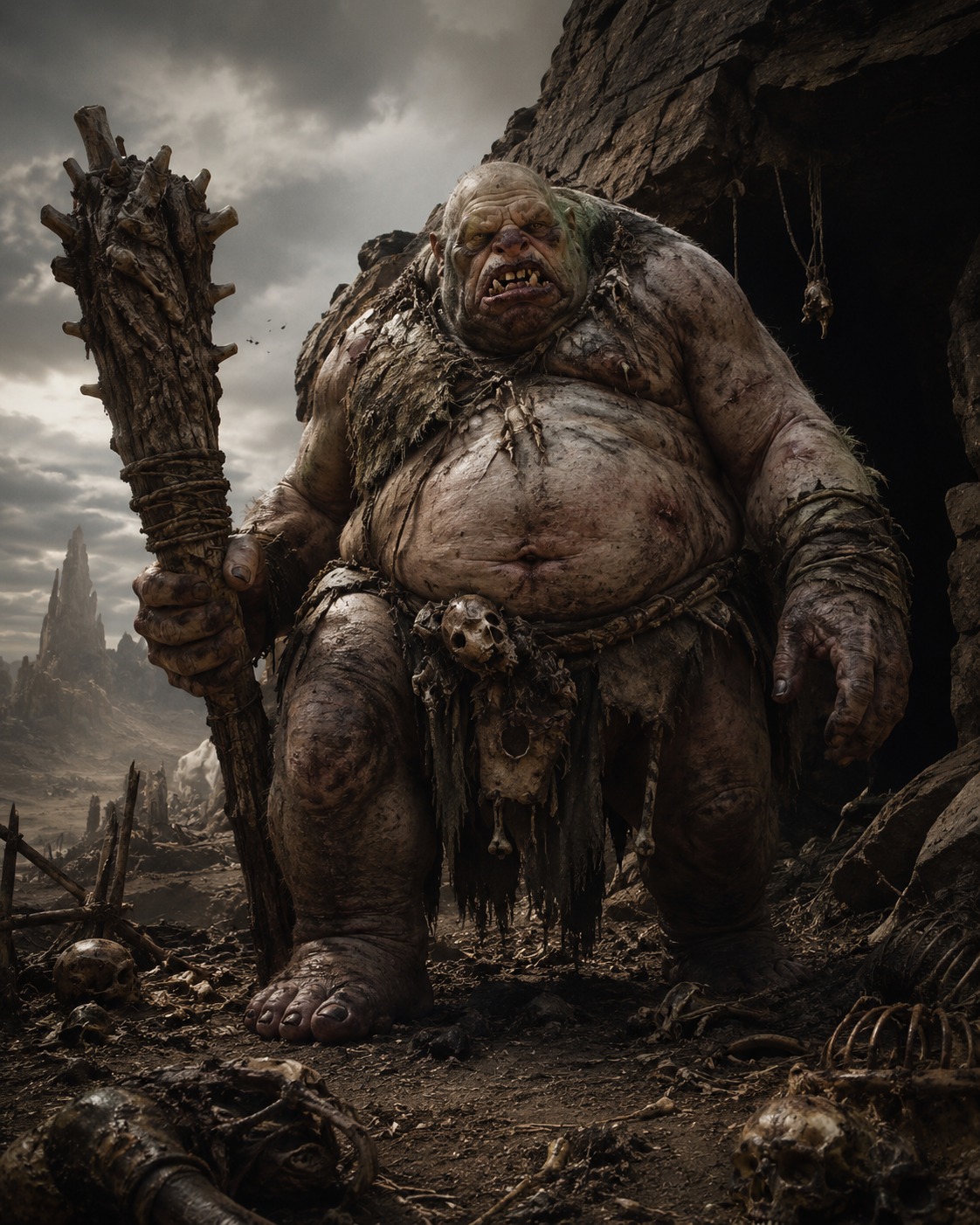
Troll · The Regenerating Giant — A Savage Race of Tenacious Vitality

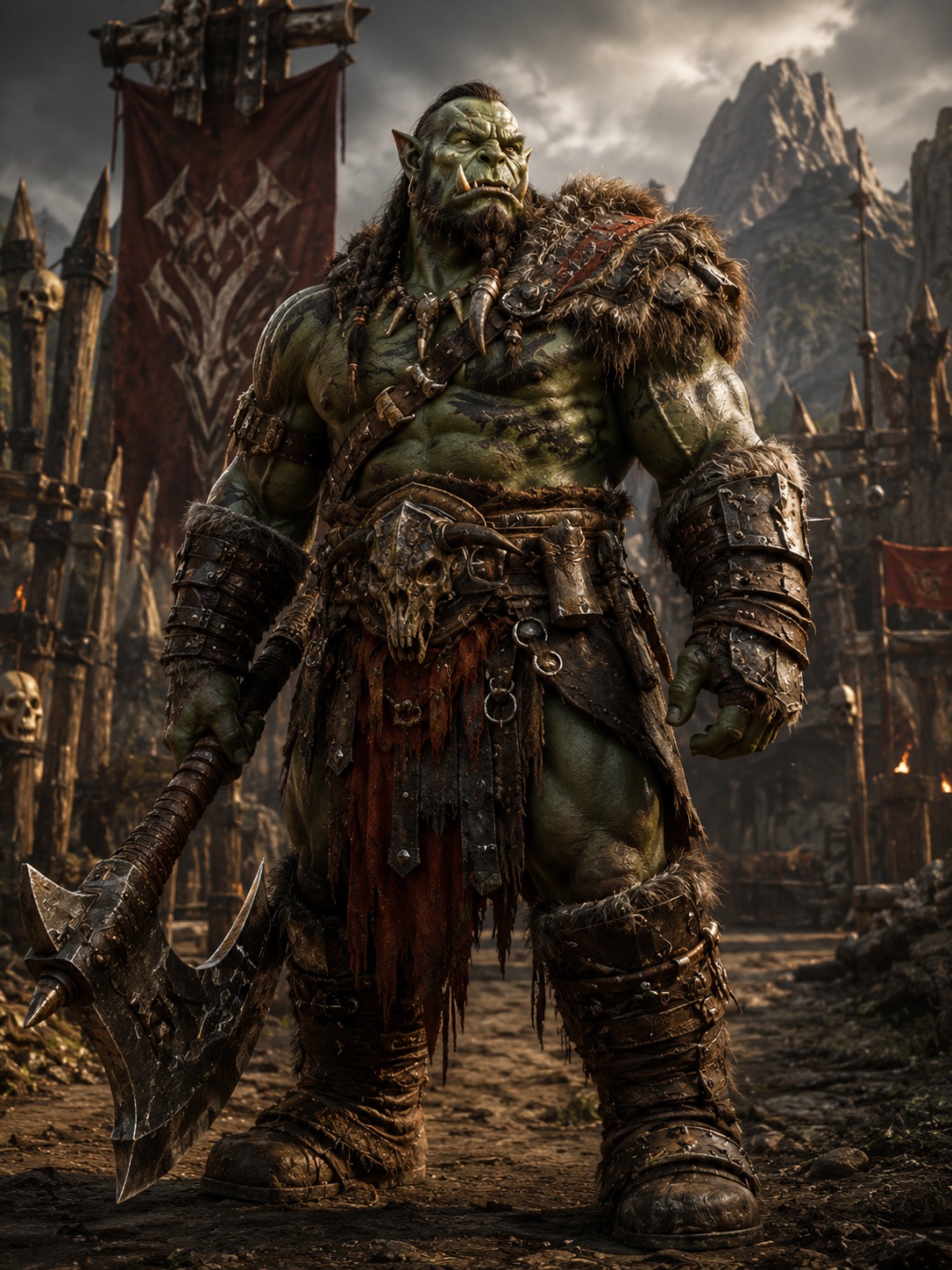
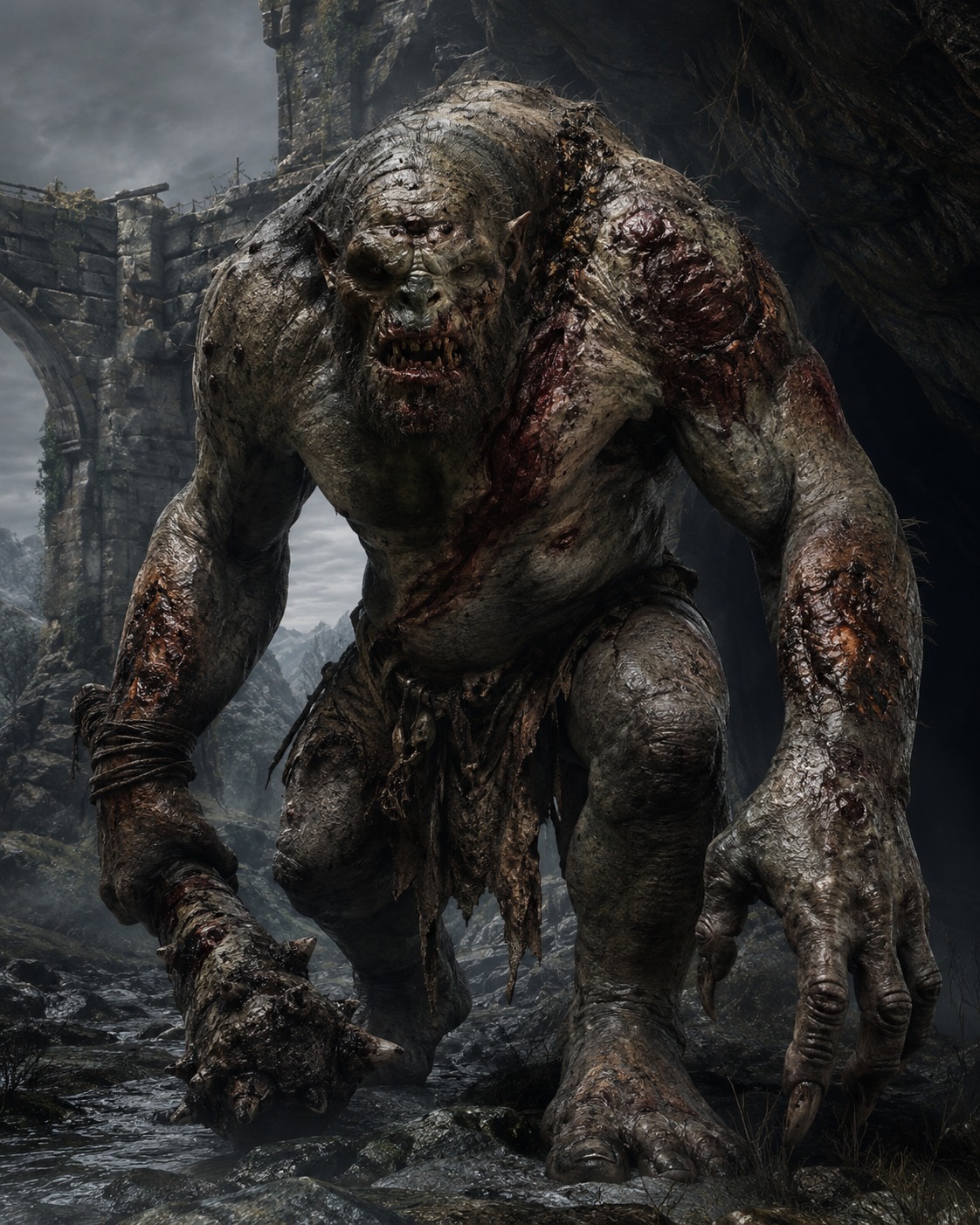
The troll, from Old Norse 'troll' (proto-Germanic *trullaz, 'magical being, monster'), is a giant of Norse mythology who dwells in mountains, caves and under bridges. The fullest medieval source is Snorri Sturluson's prose 'Edda', Gylfaginning chapter forty-eight (c. 1220), and the 'Þrymskviða' of the Poetic Edda preserved in the Codex Regius manuscript (GKS 2365 4to, c. 1270, Árni Magnússon Institute, Reykjavik), in which trolls are great human-shaped jǫtnar or wicked magicians. The modern fantasy troll — two hundred and thirty to three hundred centimetres tall, green or green-yellow skinned, with long sinewy limbs and the signature trait of astonishing regeneration (severed parts regrow at once) — is the direct invention of Poul Anderson's science-fantasy novel 'Three Hearts and Three Lions' (Doubleday, 1962), chapter eight, in which the hero Holger Danske finds his sword cuts wholly futile against a regenerating troll. Gary Gygax borrowed Anderson's troll wholesale for the D&D original boxed set of 1974 and codified the figure in the 1977 AD&D Monster Manual. In the fifth-edition Monster Manual (2014) the troll is Challenge Rating 5, 84 hit points, AC 15, with three attacks per turn (one bite and two claws) and the Regeneration trait (regain 10 hit points at the start of its turn unless it has taken fire or acid damage during the previous turn). The same iconography runs through the three trolls William, Bert and Tom in J.R.R. Tolkien's 'The Hobbit' (1937), the cave trolls and Olog-hai of 'The Lord of the Rings' (1954-55), the troll tribal cards of 'Magic: The Gathering' (from 1993), the Darkspear and Amani trolls of Blizzard's 'World of Warcraft' (from 2004), and the friendly rock-spirit reinterpretation in Disney's 'Frozen' (2013).

goblin

Goblin

Goblin · The Cunning Little Folk — Raiders Who Live by Numbers and Guile

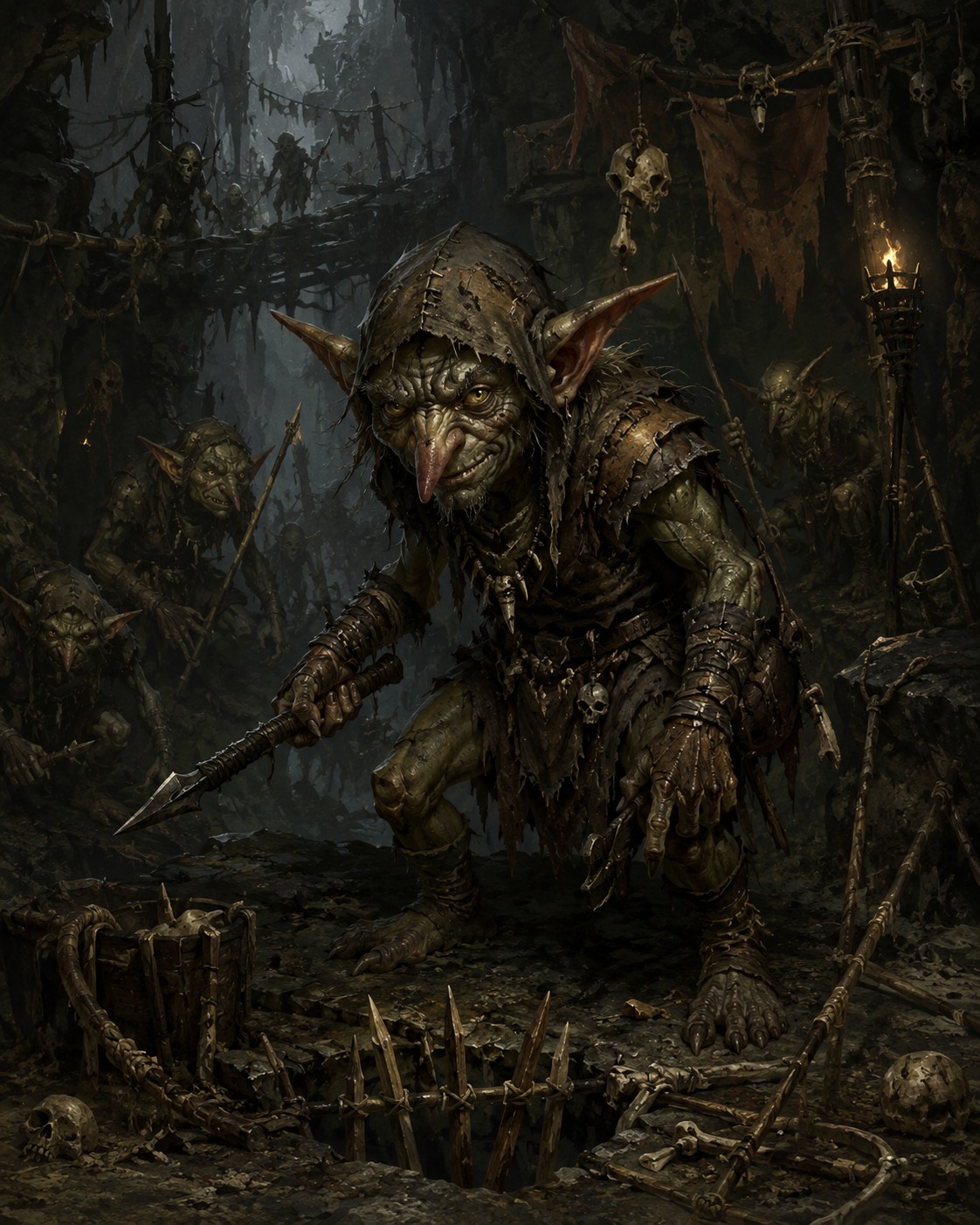
The goblin is the most pervasive 'small raiding humanoid' of modern Anglophone fantasy, descended from the spiteful little fairies of medieval European folklore and codified through three textual layers: the Victorian children's literature of Christina Rossetti's 'Goblin Market' (1862) and George MacDonald's 'The Princess and the Goblin' (Edinburgh, 1872), J.R.R. Tolkien's 'The Hobbit' (1937) — chapters four to six, the Goblins of the Misty Mountains — and the 1974 Dungeons & Dragons original boxed set by Gary Gygax and Dave Arneson. Goblins stand ninety to one hundred and twenty centimetres tall with wiry, sinewy bodies, oversized ears and noses, yellow-green or ashen skin, yellow eyes and sharp canines. They live in tribal warrens in caves, ruins and dark forests, surviving on traps, ambushes and raids. Their individual combat power is low — Challenge Rating 1/4 (7 hit points, AC 15) in the fifth-edition D&D Monster Manual (2014) — but their numbers, cunning and improvisation make them an enduring threat. Their alignment was fixed as Neutral Evil in the 1977 AD&D Monster Manual and remains so. The same lineage appears in the Greenskins of Warhammer Fantasy (from 1983), the Gringotts goblins of J.K. Rowling's 'Harry Potter' (1997 onward), the Kezan goblins of Blizzard's 'World of Warcraft' (2004 onward) and the post-colonial readings of R.F. Kuang's 'Babel' (2022).

birdfolk

Birdfolk

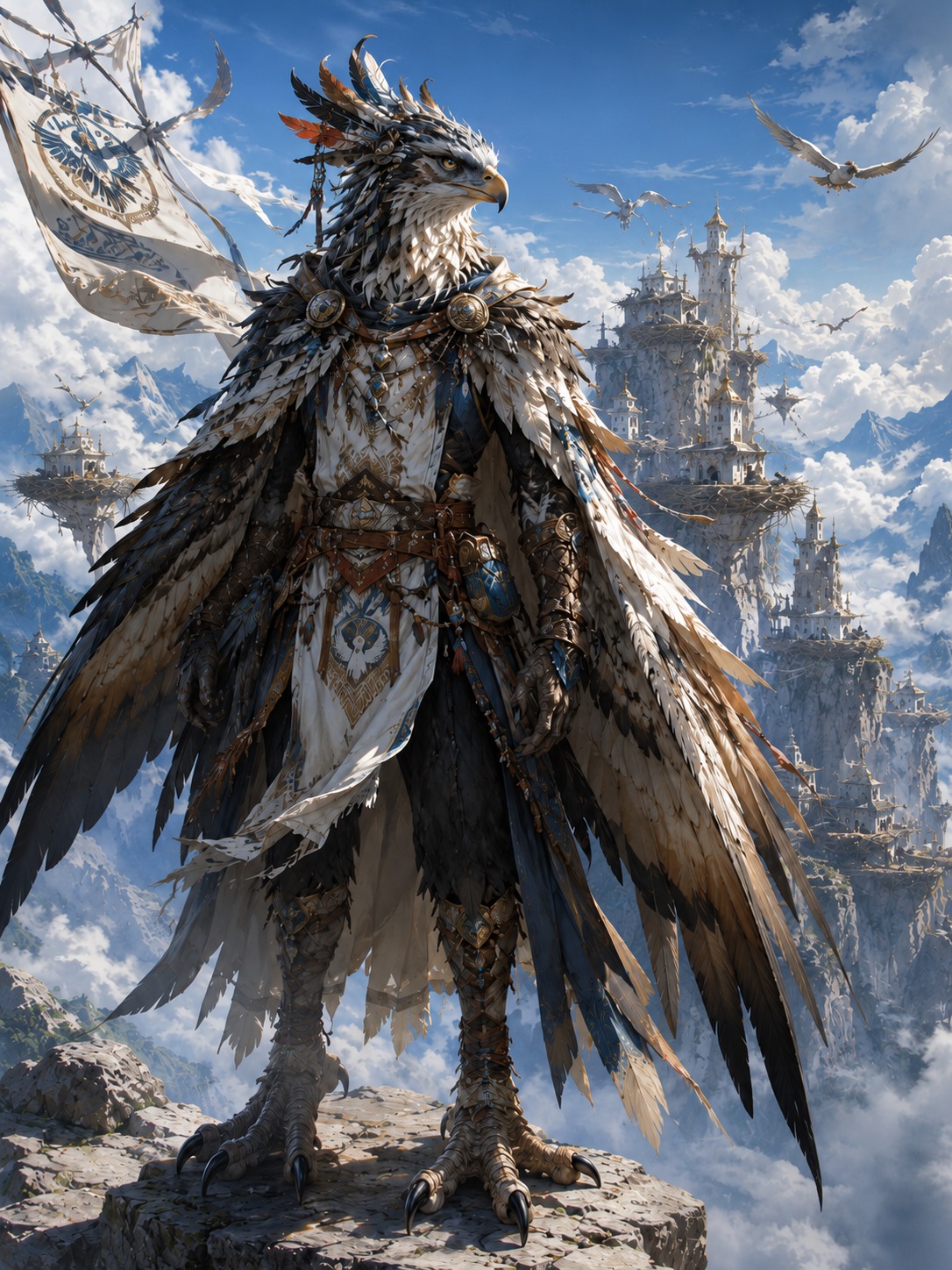
Birdfolk · The Bird People — A Mountain-Peak Race That Flies the Skies

Birdfolk are an avian humanoid race with feathers, wings and beaks. The mythic substrate runs through four ancient traditions: the falcon-headed god Horus of ancient Egypt (attested from the Narmer Palette of the thirty-first century BCE, Cairo Museum), the giant bird Garuḍa of Vedic India (Rigveda Mandala 10, c. 1500-1200 BCE, the mount of Vishnu), the Japanese Tengu of the Heian period (recorded in the 'Nihon Shoki' of 720 CE) and the Greek Harpies of Hesiod's 'Theogony' (c. 720 BCE) and Apollonius of Rhodes's 'Argonautica' (third century BCE). The D&D standardisation begins with the Aarakocra race introduced by Gary Gygax in 'Dragon Magazine' issue 109 (August 1986) for his World of Greyhawk campaign, codified across 'Forgotten Realms Adventures' (1989), 'Monstrous Compendium Volume 2' (1990), the third-edition 'Forgotten Realms Campaign Setting' (2000), the fifth-edition 'Elemental Evil Player's Companion' (2015) and 'Mordenkainen Presents: Monsters of the Multiverse' (2022). Birdfolk stand 150 to 180 centimetres tall, weigh 35 to 50 kilograms with light, slender build, and have wings spanning six to seven metres (eagle, hawk, owl or parrot varieties), taloned legs in place of feet, a beak and the keen sight of an eagle. Fifth-edition racial traits are +2 Dexterity, +1 Wisdom, flying speed 50 feet (about 15 metres) and a talon natural weapon (1d4). Their tribal societies nest on high mountain peaks above four thousand metres in the Andes or Himalayas or in cloud-borne airborne cities, and the iconography extends to the Sky Tribes of Skypiea in Eiichiro Oda's 'One Piece' (from 1997), the Arakkoa of Blizzard's 'World of Warcraft' (from 2004), the Aven of 'Magic: The Gathering' (from 1993) and the Ikran Riders of James Cameron's 'Avatar' (2009).

kobold

Kobold

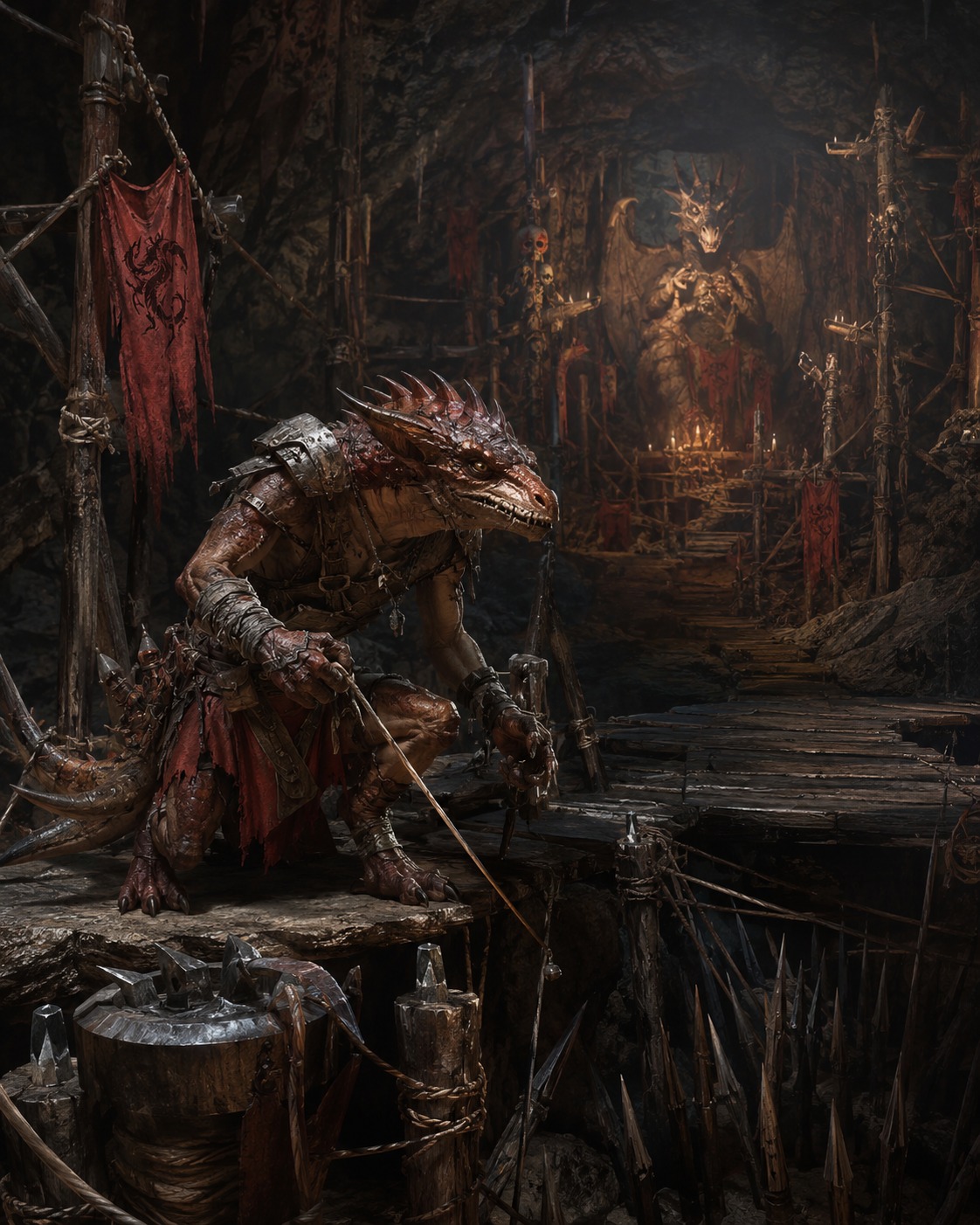
Kobold · The Dragon-Serving Little Folk — Masters of Traps

The kobold is a small reptilian, dog-like humanoid race introduced by Gary Gygax and Dave Arneson in the 1974 Dungeons & Dragons original boxed set and codified in the 1977 AD&D Monster Manual as a Lawful Evil (Challenge Rating 1/8) cave-dwelling trapsmith race that worships dragons. The name descends from sixteenth-century German mining folklore, where 'Kobold' was a mine-haunting sprite blamed for arsenic poisoning of silver-ore miners, attested in Georgius Agricola's 'De re metallica' (Leipzig, 1556), book six, under the form 'cobaltus'; the chemical element cobalt was later named after the same sprite by the Swedish chemist Georg Brandt in 1735. In fifth-edition Dungeons & Dragons the kobold stands sixty to ninety centimetres tall, with red-brown, dark blue-green or black scales, small horns, a thin tail and a body proportioned as a miniature dragon — 'Volo's Guide to Monsters' (2016) and 'Fizban's Treasury of Dragons' (2021) codify that kobolds hatch from dragon eggs or are otherwise a magical by-product of the dragon. Kobolds live in tribal warrens of fifty to two hundred members in mines, caves and underground labyrinths and give blind religious devotion to a dragon overlord or a great kobold chieftain. They specialise in elaborate traps — spinning blades, slippery slopes, falling stones, poison gas, deadfall pits — and although individual combat power is minimal (5 HP, AC 12 at Challenge Rating 1/8), their numbers, cunning and precise ambushes make them a persistent threat.

gnoll

Gnoll

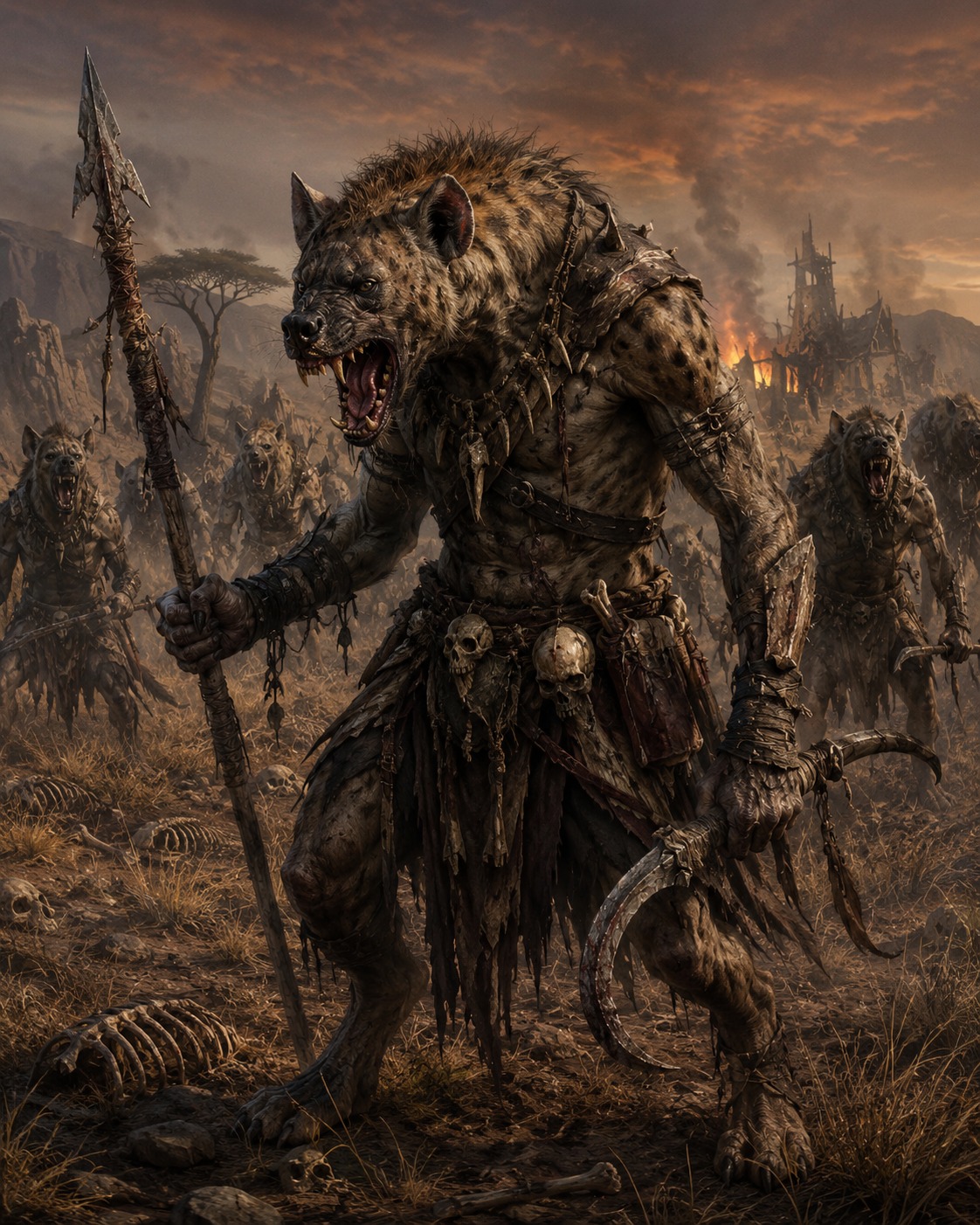
Gnoll · The Hyena People — A Raiding Tribe Maddened by Hunger

The gnoll is a hyena-headed humanoid raider race introduced by Gary Gygax in the 1974 Dungeons & Dragons original boxed set and codified in the 1977 AD&D Monster Manual as a Chaotic Evil scavenger tribe (Challenge Rating 1/2) that worships the demon-prince of hunger and slaughter, Yeenoghu. The name was acknowledged by Gygax himself, in 'Strategic Review' issue six (1976) and in his 'Dragon Magazine' issue one hundred interview of 1985, as a borrowing from the 'gnole' of Lord Dunsany's short story 'How Nuth Would Have Practised His Art upon the Gnoles' in 'The Book of Wonder' (1912); the form is also commonly read as a portmanteau of 'gnome' and 'troll'. Gnolls stand two hundred and ten to two hundred and twenty centimetres tall, with the rough muscular build of a hominid, the head and brown-grey spotted coat of the spotted hyena (Crocuta crocuta), human-like clawed fingers and a chilling whooping laughter taken from the spotted hyena's territorial call. They live in nomadic packs of four to twelve in savannas, badlands and arid wastes, and obey a Gnoll Fang of Yeenoghu — a warrior touched by the demon-prince. The fifth-edition 'Volo's Guide to Monsters' (2016) makes the canon explicit: gnolls are not a naturally breeding species but the result of Yeenoghu's demon-ichor mutating spotted hyenas. The lineage is borrowed in the Gnoblars of Games Workshop's Warhammer Fantasy, the marogh of BioWare's 'Dragon Age: Inquisition' (2014) and the gnoll raiders of Black Isle's 'Baldur's Gate' series (from 1998).

halfling

Halfling

Halfling · The Little Folk — Peaceful Farming Folk

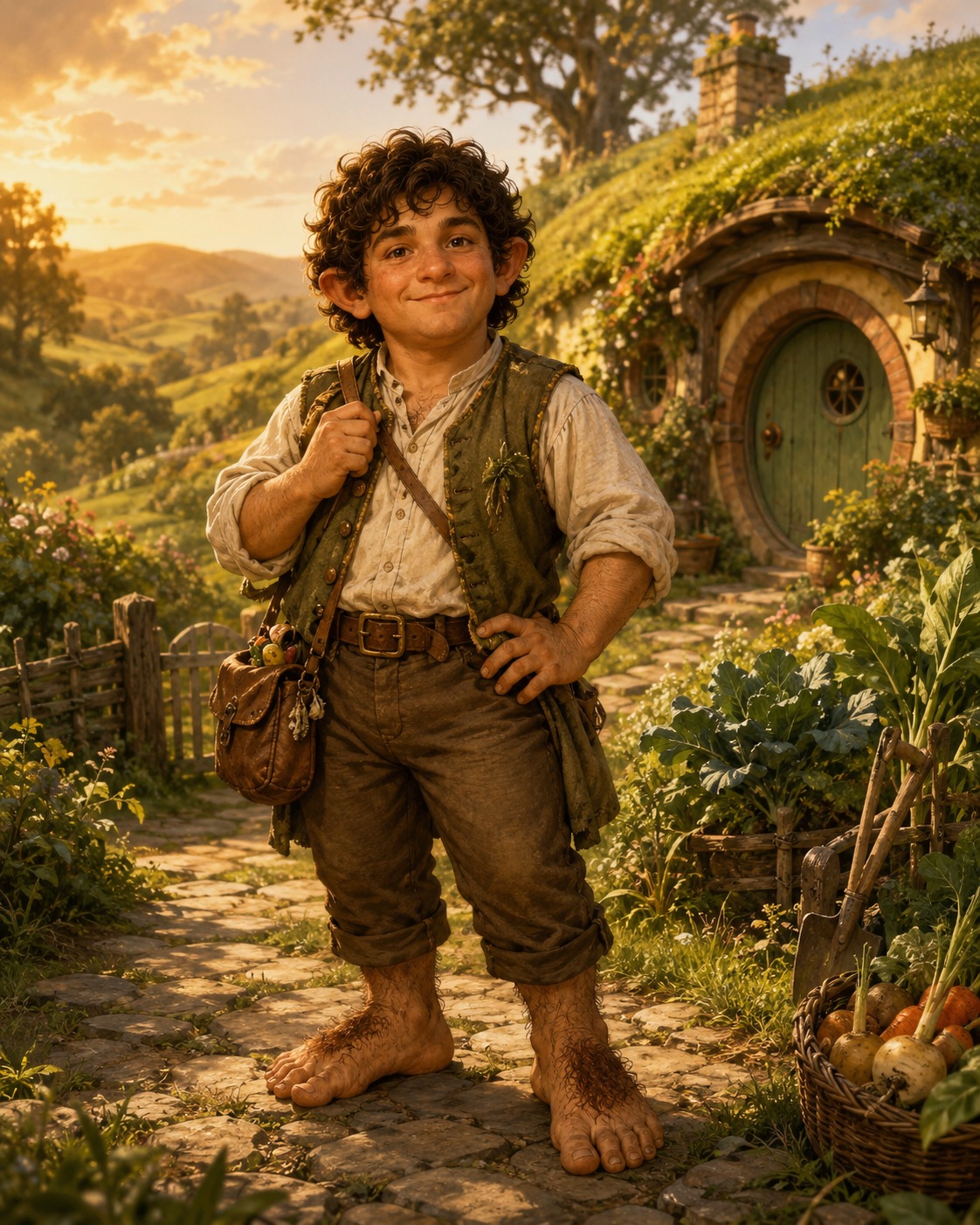
The halfling is the generic D&D name for J.R.R. Tolkien's hobbit, the small humanoid race introduced in 'The Hobbit, or There and Back Again' (George Allen & Unwin, London, 21 September 1937) and 'The Lord of the Rings' (1954-55). The word 'Halfling' itself is Tolkien's own term — in Appendix F of 'The Lord of the Rings', he gives it as the common designation by which Men of Middle-earth called the hobbits, derived from Old English 'half + -ling' ('one half-grown'). After Saul Zaentz's Tolkien Enterprises filed a trademark claim against TSR in July 1977 over the use of 'Hobbit', 'Ent', 'Balrog', 'Mithril' and 'Nazgûl', the AD&D Player's Handbook (1977) renamed Gygax's 1974 'Hobbit' race 'Halfling', and the name has been canonical since. In the fifth-edition Player's Handbook (2014), halflings stand ninety to one hundred and five centimetres tall, weigh eighteen to twenty-two kilograms, and bear curly brown or fair foot-hair on large bare feet with thick leather soles, round faces, curly brown, fair or red hair and an average lifespan of one hundred and fifty years. Their society is built on peaceful farming and herding communities, Shire-style chimney-houses and a famously elaborate seven-meal day (first breakfast, second breakfast, elevenses, luncheon, afternoon tea, dinner, supper). Fifth-edition racial traits are +2 Dexterity, Lucky (reroll natural 1s), Brave (advantage on fear saves) and Halfling Nimbleness (move through larger creatures' spaces), with the two canonical subraces Lightfoot (+1 Charisma, stealth advantage) and Stout (+1 Constitution, poison resistance). The same iconography is visible in the Halfling counties of Warhammer Fantasy (Games Workshop, from 1986) and is locked into modern popular imagination by Peter Jackson's 'Lord of the Rings' trilogy (2001-2003) and 'Hobbit' trilogy (2012-2014).
dragonborn

Dragonborn

Dragonborn · Dragon-Kin — Warrior Race of Draconic Lineage

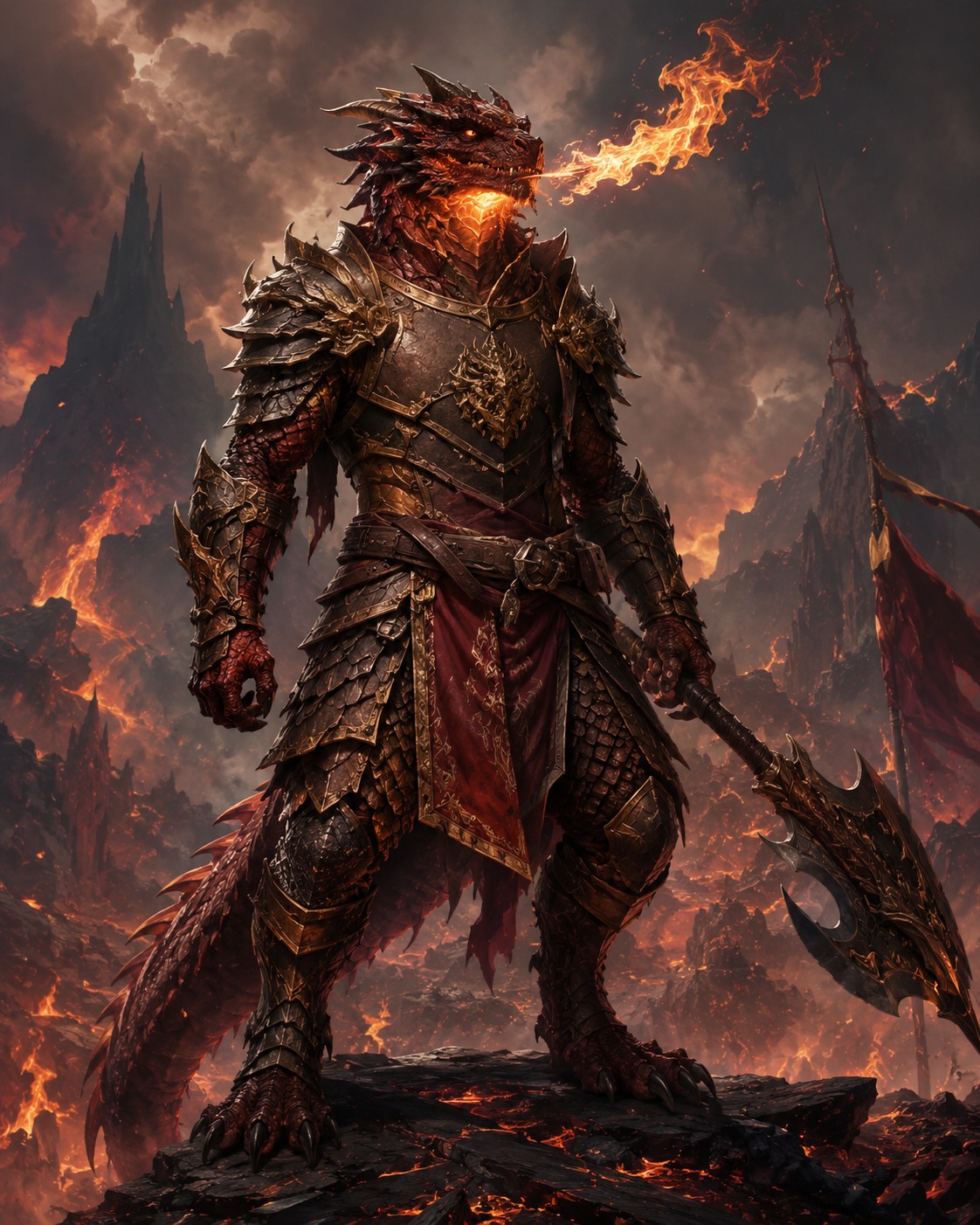
The dragonborn is a draconic humanoid race that descends from dragons, formally introduced as a player race in the Dungeons & Dragons fourth-edition Player's Handbook (Wizards of the Coast, June 2008) and standardised across the English-language fantasy mainstream by the fifth-edition Player's Handbook (2014). The earliest D&D antecedent is the 'Dragon-kin' of the 1990 AD&D 'Council of Wyrms' boxed set (TSR), with the half-dragon template of 'Races of the Dragon' (Wizards of the Coast, 2006) as a transitional form. Dragonborn stand 180 to 200 centimetres tall, weigh 90 to 110 kilograms, with a robust muscular build and scales in chromatic (red, blue, green, white, black — the line of Tiamat) or metallic (gold, silver, copper, bronze, brass — the line of Bahamut) colouring; they have a dragon's head with short horns and a hooked beak and stand upright without a tail. Fifth-edition racial traits are +2 Strength, +1 Charisma, Draconic Ancestry (the elemental damage type set by the parent dragon: fire for red and gold, cold for white and silver, lightning for blue and bronze, acid for black and copper, poison for green), a Breath Weapon (a fifteen-foot cone or thirty-foot line of the chosen damage, recharged on a short or long rest) and Damage Resistance to that same type. The fullest cultural canon is in 'Fizban's Treasury of Dragons' (2021), which paints dragonborn as warriors of clan honour descended from the dragon-gods Bahamut and Tiamat. The same iconography has been borrowed for the Dovahkiin of Bethesda's 'The Elder Scrolls V: Skyrim' (2011), BioWare's 'Dragon Age: Inquisition' (2014), the Draconids of 'Magic: The Gathering' (from 1993) and the Dracthyr of Blizzard's 'World of Warcraft: Dragonflight' (2022).