Dragonborn
Dragonborn · Dragon-Kin — Warrior Race of Draconic Lineage
Names in Other Languages
 드래곤본한국어
Dragonborn · 용인 — 용의 혈통을 이은 전사 종족
 ドラゴンボーン日本語
Dragonborn · 竜人 — 竜の血統を継ぐ戦士種族
 龍裔繁體中文
Dragonborn · 龍人 — 繼承龍之血統的戰士種族
 DrachenblütigerDeutsch
Dragonborn · Drachenvolk — Kriegerrasse drakonischer Abstammung
 Sang-dragonFrançais
Dragonborn · Peuple draconique — Race guerrière de lignée draconique
 DracónidoEspañol
Dragonborn · Pueblo dragón — Raza guerrera de linaje dracónico
 DraconatoPortuguês
Dragonborn · Povo dragão — Raça guerreira de linhagem dracônica
 DraceninPolski
Dragonborn · Lud smoka — wojownicza rasa smoczego rodu
 ДраконорождённыйРусский
Dragonborn · Народ дракона — воинская раса драконьего рода
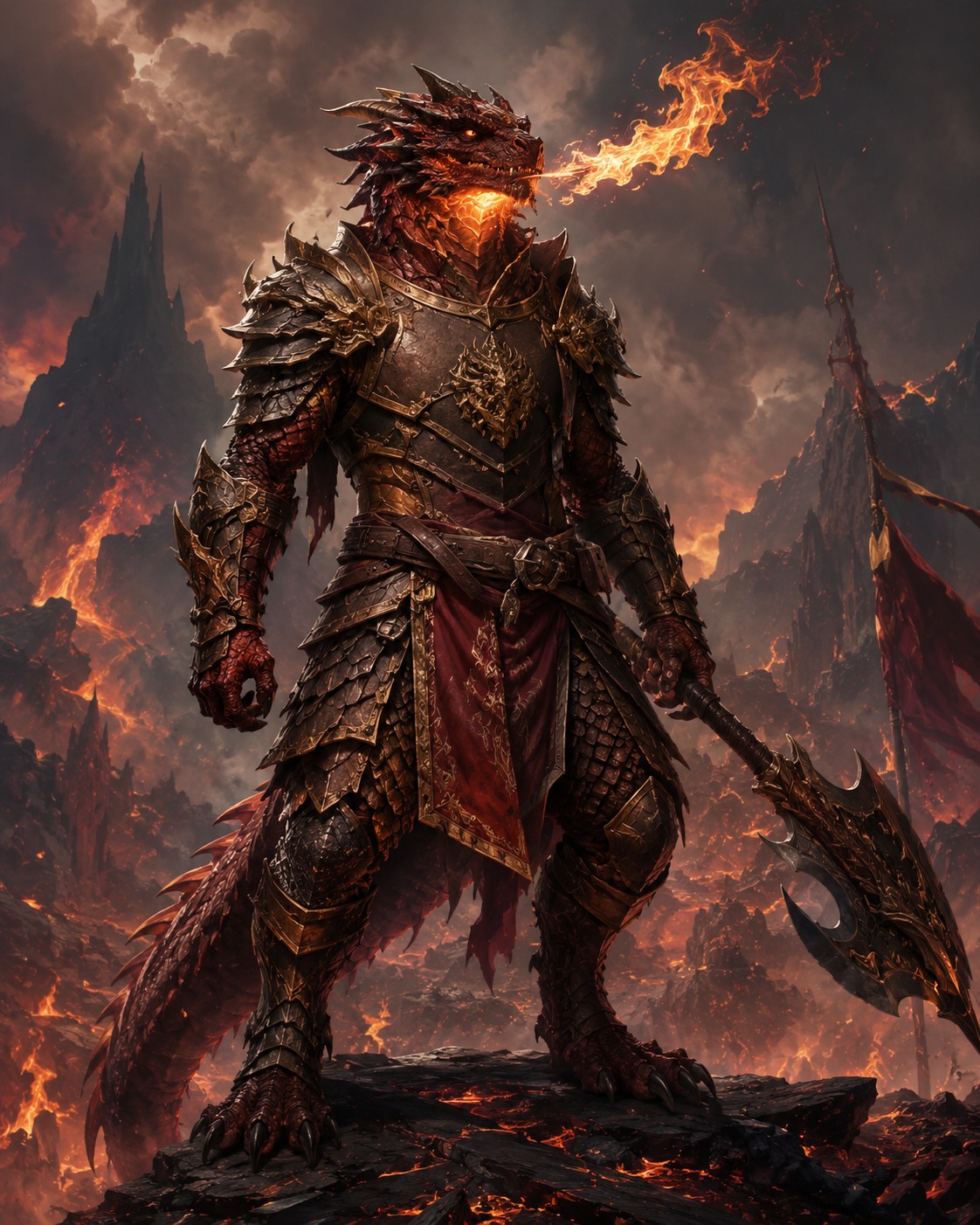
The dragonborn is a draconic humanoid race that descends from dragons, formally introduced as a player race in the Dungeons & Dragons fourth-edition Player's Handbook (Wizards of the Coast, June 2008) and standardised across the English-language fantasy mainstream by the fifth-edition Player's Handbook (2014). The earliest D&D antecedent is the 'Dragon-kin' of the 1990 AD&D 'Council of Wyrms' boxed set (TSR), with the half-dragon template of 'Races of the Dragon' (Wizards of the Coast, 2006) as a transitional form. Dragonborn stand 180 to 200 centimetres tall, weigh 90 to 110 kilograms, with a robust muscular build and scales in chromatic (red, blue, green, white, black — the line of Tiamat) or metallic (gold, silver, copper, bronze, brass — the line of Bahamut) colouring; they have a dragon's head with short horns and a hooked beak and stand upright without a tail. Fifth-edition racial traits are +2 Strength, +1 Charisma, Draconic Ancestry (the elemental damage type set by the parent dragon: fire for red and gold, cold for white and silver, lightning for blue and bronze, acid for black and copper, poison for green), a Breath Weapon (a fifteen-foot cone or thirty-foot line of the chosen damage, recharged on a short or long rest) and Damage Resistance to that same type. The fullest cultural canon is in 'Fizban's Treasury of Dragons' (2021), which paints dragonborn as warriors of clan honour descended from the dragon-gods Bahamut and Tiamat. The same iconography has been borrowed for the Dovahkiin of Bethesda's 'The Elder Scrolls V: Skyrim' (2011), BioWare's 'Dragon Age: Inquisition' (2014), the Draconids of 'Magic: The Gathering' (from 1993) and the Dracthyr of Blizzard's 'World of Warcraft: Dragonflight' (2022).
Origin
The direct textual source is the Dungeons & Dragons fourth-edition Player's Handbook of June 2008 (Wizards of the Coast, lead designers Mike Mearls and James Wyatt), which introduced the dragonborn as one of the eleven canonical fourth-edition player races and standardised its iconography, culture and racial traits all together. The earliest D&D antecedent is the 'Dragon-kin' race (offspring of dragon and humanoid) of the 'AD&D Council of Wyrms' boxed set (TSR, 1990), and the immediate predecessor is the half-dragon template formalised in 'Races of the Dragon' (Wizards of the Coast, 2006). The mythic substrate is a synthesis of four global dragon-descendant traditions: (1) the East-Asian 'dragon descendant' cults — the Chinese imperial 'longsun' or 'descendants of the dragon' from the Han period, the Japanese Heian-era cult of being descended from the Dragon King Ryūjin and the Silla foundation myth of Lady Aryeong being born from the side of the rooster-dragon Gyeryong; (2) the Greek myth of the Spartoi, the warrior-men born from the dragon's teeth sown by Cadmus at Thebes; (3) the Persian Zahhak of the 'Avesta', a king on whose shoulders two serpents grew; and (4) the Norse Fáfnir, the dwarf who transformed into a dragon. The standardisation was completed in the fifth-edition Player's Handbook (2014) and the cosmology fully developed in 'Fizban's Treasury of Dragons' (2021).
Features
- 180-200 centimetres tall, 90-110 kilograms, robust muscular humanoid
- Scales in chromatic (red, blue, green, white, black) or metallic (gold, silver, copper, bronze, brass) colouring
- Dragon's head with short horns and a hooked beak, upright stance with no tail
- Fifth-edition +2 Strength, +1 Charisma, Draconic Ancestry by parent dragon
- Breath Weapon — fifteen-foot cone or thirty-foot line of the chosen damage type
- Clan-honour warrior culture descended from the dragon-gods Bahamut and Tiamat
Stories
The canonical race for fighter, paladin and sorcerer character classes in tabletop role-playing games, with the clan-honour and dragon-worship philosophy making it the centrepiece of chivalric narrative, duels and oath-bound story arcs. The same iconography has been borrowed for the Dovahkiin (Dragonborn) of Bethesda's 'The Elder Scrolls V: Skyrim' (2011), the dragon races of BioWare's 'Dragon Age: Inquisition' (2014), the Draconids of 'Magic: The Gathering' (from 1993) and the Dracthyr of Blizzard's 'World of Warcraft: Dragonflight' (2022), making it the standard image of the 'dragon-blooded race' across English-language fantasy gaming.
Weakness
An obsession with honour limits flexibility, and the dread of clan shame leaves dragonborn vulnerable in diplomatic situations that demand compromise or retreat. Strong pride means they cannot easily decline a challenge, and the enemy's honour-baiting easily pulls them off mission. In fifth-edition rules they are resistant to their own ancestral damage type but the rules give them no special vulnerability to the opposite, so the weaknesses are cultural and psychological rather than mechanical.
Cultural Significance
The figure is a synthesis of four global dragon-descendant traditions — the East-Asian imperial 'longsun', the Greek Spartoi of Cadmus, the Persian Zahhak and the Norse Fáfnir — codified by the D&D fourth edition in 2008 and now the most actively extended race image in twenty-first-century English-language fantasy gaming, literature and film. Bethesda's Dovahkiin in 'Skyrim' (2011) is the most famous popular-culture instance, marrying the dragonborn to the Norse bard-hero archetype.
In Popular Culture
'Dragon-kin' in the AD&D 'Council of Wyrms' boxed set (1990), the half-dragon of 'Races of the Dragon' (Wizards of the Coast, 2006), the dragonborn standardisation in the D&D fourth-edition Player's Handbook (Wizards of the Coast, June 2008), the fifth-edition Player's Handbook (2014), 'Fizban's Treasury of Dragons' (2021), the Dovahkiin of Bethesda's 'The Elder Scrolls V: Skyrim' (2011), BioWare's 'Dragon Age: Inquisition' (2014), the Draconids of 'Magic: The Gathering' (from 1993), the Dracthyr of Blizzard's 'World of Warcraft: Dragonflight' (2022) and the dragonborn character Sboorn in Paramount's 'Dungeons & Dragons: Honor Among Thieves' (2023).
Trivia
The 'Fizban's Treasury of Dragons' (2021) cosmology — dragonborn descended from the ancestral metallic dragon Lunariel and the ancestral chromatic dragon Solarpia — was confirmed by game designer Wyllow Hailo in a 'Dragon+' magazine interview the same year. The 'Thu'um' (Dragon Shout) of Bethesda's Dovahkiin in 'Skyrim' (2011) — 'Fus Ro Dah', 'Yol Toor Shul' and so on — was acknowledged by lead designer Todd Howard in a 2011 IGN interview as drawing on the 'Dragon Tongue' article in 'Dragon Magazine' issue 152 (December 1989).
Related
Troll
Troll · The Regenerating Giant — A Savage Race of Tenacious Vitality
Giant-kin
Giant-kin · The Giant Race — Primal Titans Like Living Mountains
Lizardfolk
Lizardfolk · The Lizard People — Cold-Blooded Tribal Warriors of the Marsh
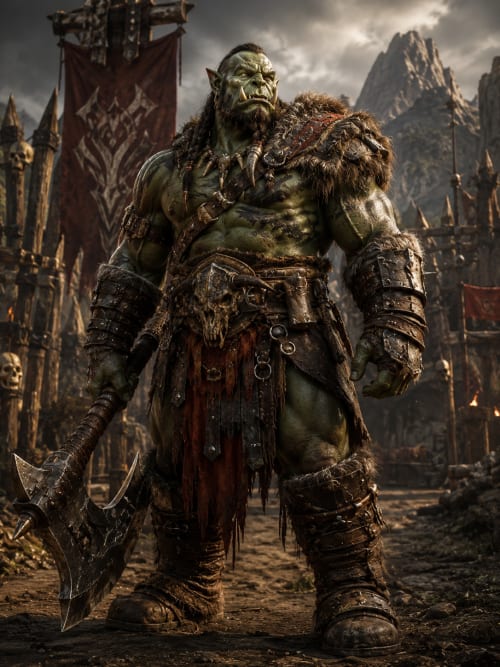
Orc
Orc · Warrior Tribes — A Fierce Race That Reveres Strength and Honor
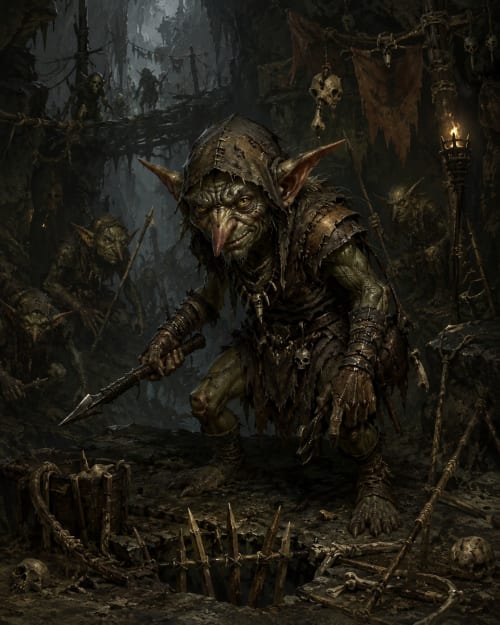
Goblin
Goblin · The Cunning Little Folk — Raiders Who Live by Numbers and Guile
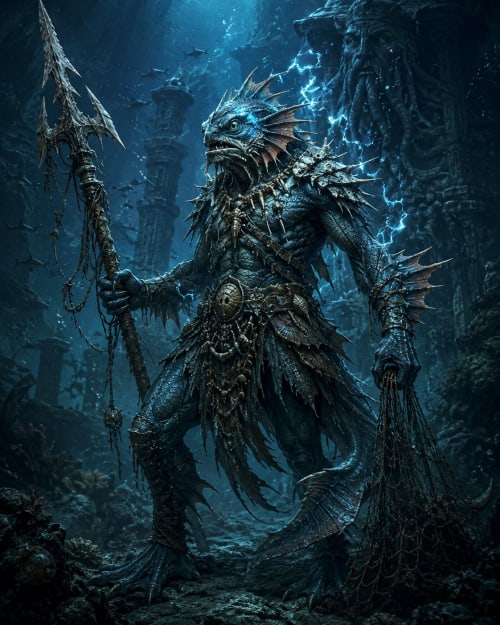
Fishfolk
Fishfolk · The Deep-Sea Fish People — Wild Tribes of the Abyss
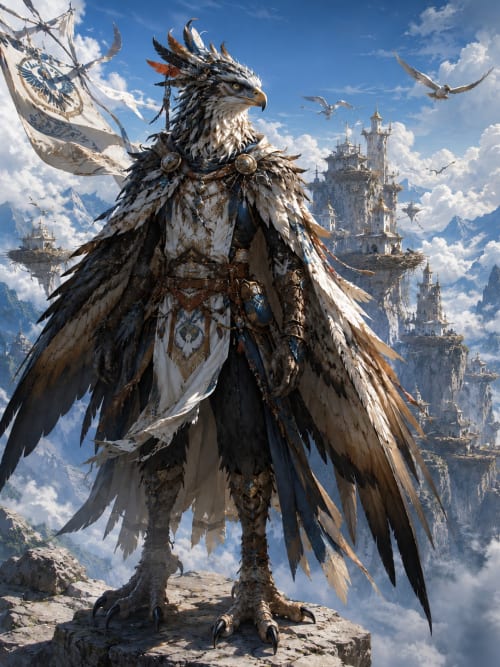
Birdfolk
Birdfolk · The Bird People — A Mountain-Peak Race That Flies the Skies
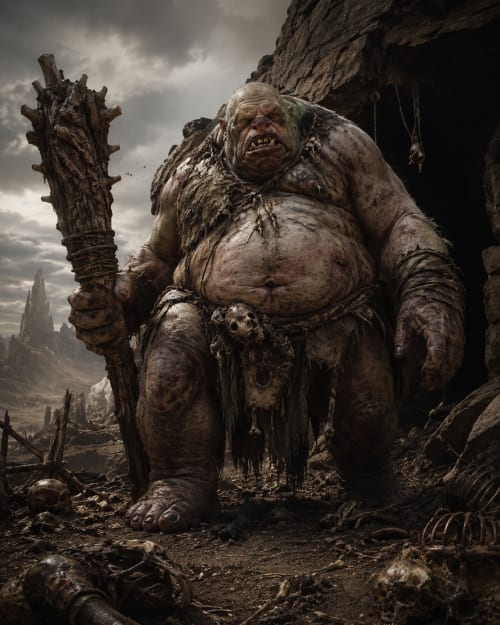
Ogre
Ogre · The Man-Eating Giant — A Dull, Cruel Tyrant of the Wilds
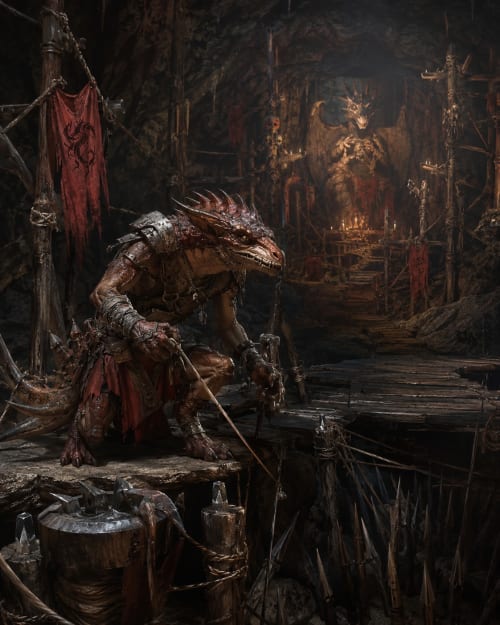
Kobold
Kobold · The Dragon-Serving Little Folk — Masters of Traps
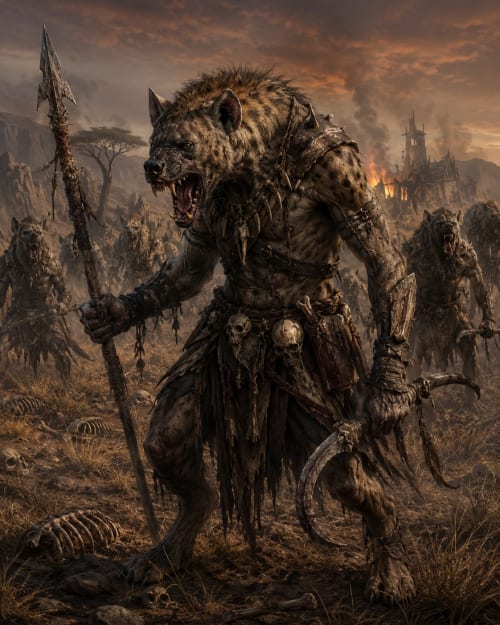
Gnoll
Gnoll · The Hyena People — A Raiding Tribe Maddened by Hunger
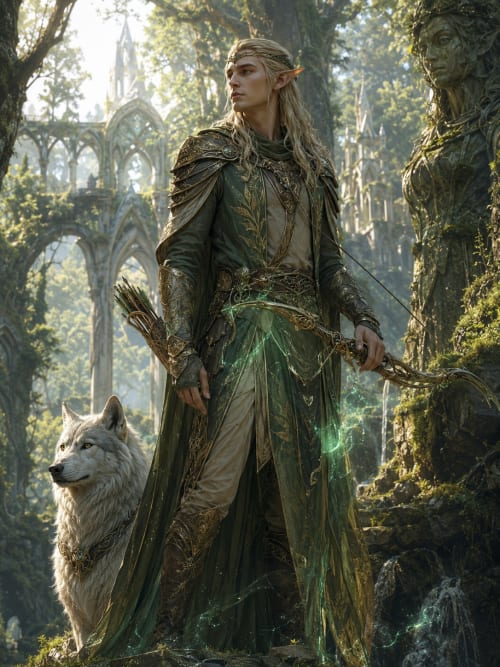
Elf
Elf · People of the Forest — Longevity, Magic, Guardians of Nature
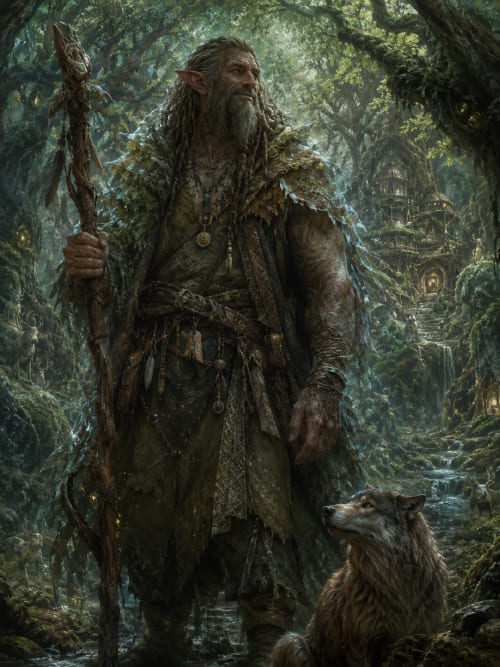
Firbolg
Firbolg · The Gentle Giant — A Reclusive Race of Giant Lineage Hidden in Forests